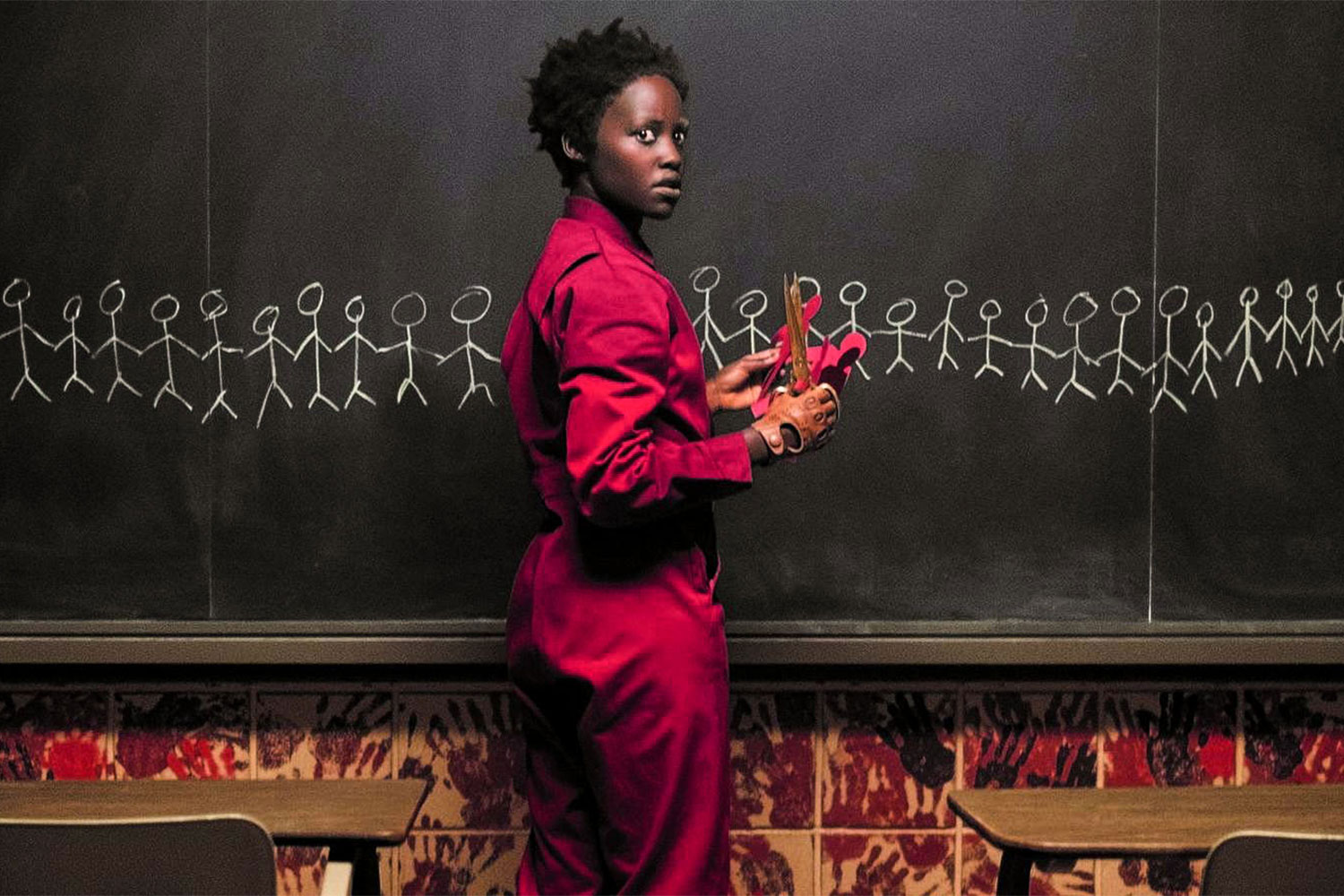
Yesterday I wrote a review of Jordan Peele’s new movie, Us, which unexpectedly blew up the box office this past weekend. Unlike most reviews, which take me about an hour to bang out, this one took all damn day, and it gave me fits. It dislocated my brain.
This morning, I scrapped that review. My suspicion was that it gave the impression that I liked the movie less than I did, and that wasn’t fair. So my failed review now hangs, ravaged and cannibalized, on the sinews and tendons of this new one.
Oodles and oodles of print have already been spilled on Us, and I haven’t read a lick of it, though I’ve caught the drift. Peele’s horror movie about a family being stalked and hunted by a mirror family of malevolent doppelgängers is about: the Biblical end times; the duality of good and evil; the revenge of the American underclass; Trump; an existential nightmare; a Chinese puzzle of tangled implications, none of which are good.
Extend the list ad infinitum.
At the center of the movie is Adelaide (the fantastic Lupita Nyong’o) and her family — a perfectly pleasant middle-class suburban bunch, including husband Gabe (Winston Duke), daughter Zora (Shahadi Wright Joseph) and son Jason (Evan Alex) — who are suddenly besieged in their Santa Cruz summer cottage by their deranged and brutal selves, a family of “tethereds” who proceed to terrorize them with merciless persistence.
To Gabe’s question of who in the hell these people are, Adelaide’s double replies in a strangled voice: “We’re Americans.”
This response sent a shiver through me, and I only wish Peele had let the mystery rest on that haunting moment. Instead, the film goes into hyper-drive, unleashing a heady stew of backstory and exposition, suggesting to me that Peele — as talented and ambitious as he is — lost control of his material. Us tries to say and do a bit too much, and as fun as all the thematic and symbolic threads are to watch spool out, they just don’t come together.
Enlarge
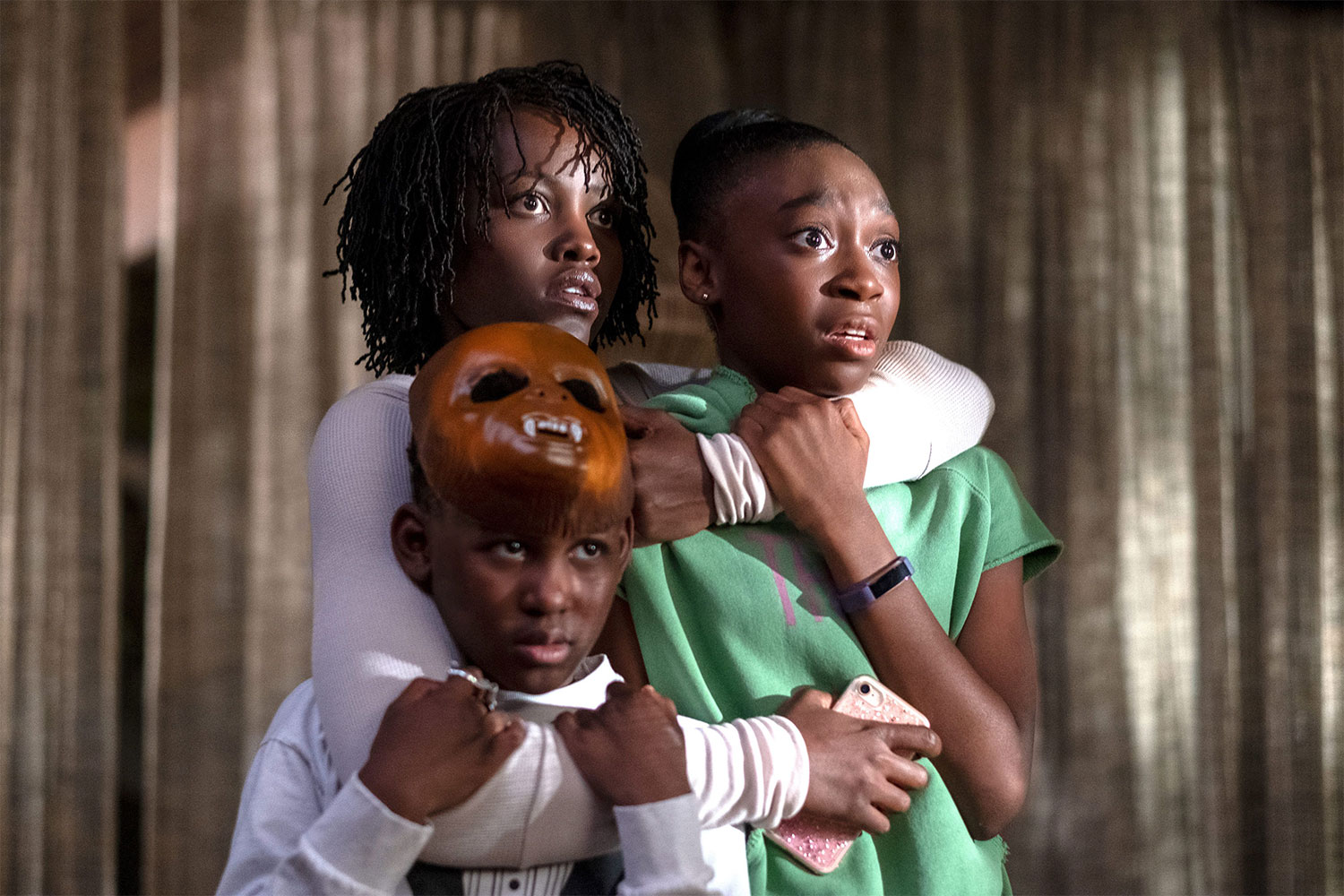
Photo courtesy: Claudette Barius/Universal Studios
This thematic chaos is mirrored in the carnivalesque tone of the film, which employs a series of genre tropes that jangle and jar, sometimes gloriously, sometimes not. A master of technique, Peele is capable of hitting the bull’s-eye at any given moment — dark comedy, satire, suspense, spoof, horror — but the collision of these aspects weakens the cohesion of the movie, which would seem to call for the kind of singleness of purpose that Peele brought so brilliantly to his debut, Get Out.
I suspect that once all the vigorous debate about the meaning of Us dies down, enthusiasm for the movie itself will find its balance — that it will be seen as a really strong, really ambitious sophomore effort by a young director who is steadily approaching greatness, and whose facility as an auteur, in terms of style, intent and artistic reach, seems almost boundless.
Despite any perceived shortcomings, Us is an important film on several fronts. The cast is first-rate, especially Nyong’o and Elizabeth Moss (as Adelaide’s friend Kitty), both of whom give incredible performances in dual roles; like Toni Collette (Hereditary) and Emily Blunt (A Quiet Place) before them, these women have completely upped the ante on the artistry that can be brought to horror films.
More importantly, Peele proves with Us that he’s not going to be content resting on his laurels, and that he’s fearless and talented enough to hold a mirror up to our own worst selves — literally, it turns out. This, regardless of the why and the how, is the most memorable thing about his new movie: The sense that evil we do, and the evil we suppress and ignore as we enjoy its fruits, will come back with a vengeance.
A Note From the Publisher

Dear Readers,
The last two years have been some of the hardest in Eugene Weekly’s 43 years. There were moments when keeping the paper alive felt uncertain. And yet, here we are — still publishing, still investigating, still showing up every week.
That’s because of you!
Not just because of financial support (though that matters enormously), but because of the emails, notes, conversations, encouragement and ideas you shared along the way. You reminded us why this paper exists and who it’s for.
Listening to readers has always been at the heart of Eugene Weekly. This year, that meant launching our popular weekly Activist Alert column, after many of you told us there was no single, reliable place to find information about rallies, meetings and ways to get involved. You asked. We responded.
We’ve also continued to deepen the coverage that sets Eugene Weekly apart, including our in-depth reporting on local real estate development through Bricks & Mortar — digging into what’s being built, who’s behind it and how those decisions shape our community.
And, of course, we’ve continued to bring you the stories and features many of you depend on: investigations and local government reporting, arts and culture coverage, sudoku and crossword puzzles, Savage Love, and our extensive community events calendar. We feature award-winning stories by University of Oregon student reporters getting real world journalism experience. All free. In print and online.
None of this happens by accident. It happens because readers step up and say: this matters.
As we head into a new year, please consider supporting Eugene Weekly if you’re able. Every dollar helps keep us digging, questioning, celebrating — and yes, occasionally annoying exactly the right people. We consider that a public service.
Thank you for standing with us!
Publisher
Eugene Weekly
P.S. If you’d like to talk about supporting EW, I’d love to hear from you!
jody@eugeneweekly.com
(541) 484-0519