Lviv, Ukraine, a city of 710,000 people, sees as few as three funerals per week, or as many as two a day, a resident says. Twenty-year-old Uliana Halas says each city in Ukraine has its own military graveyard for the soldiers who lived there so the soldiers can return home one final time.
Saturday, May 10, marked another military burial service for three soldiers who lost their lives defending their country: Taras Skobolo, 36, 5th Assault Brigade, a fire safety inspector who heeded his country’s call at the onset of the war; Vasil Dovbush, 34, Special Operations Unity A5018, who was a computer tech; and Pavlo Stasishin, 33, 47th Mechanized Brigade, who was an automotive locksmith at the beginning of the invasion.
These three soldiers are part of a greater 46,000 Ukrainian military deaths since the start of the war, according to President Volodymyr Zelensky in an interview with NBC, since Feb. 16, 2025.
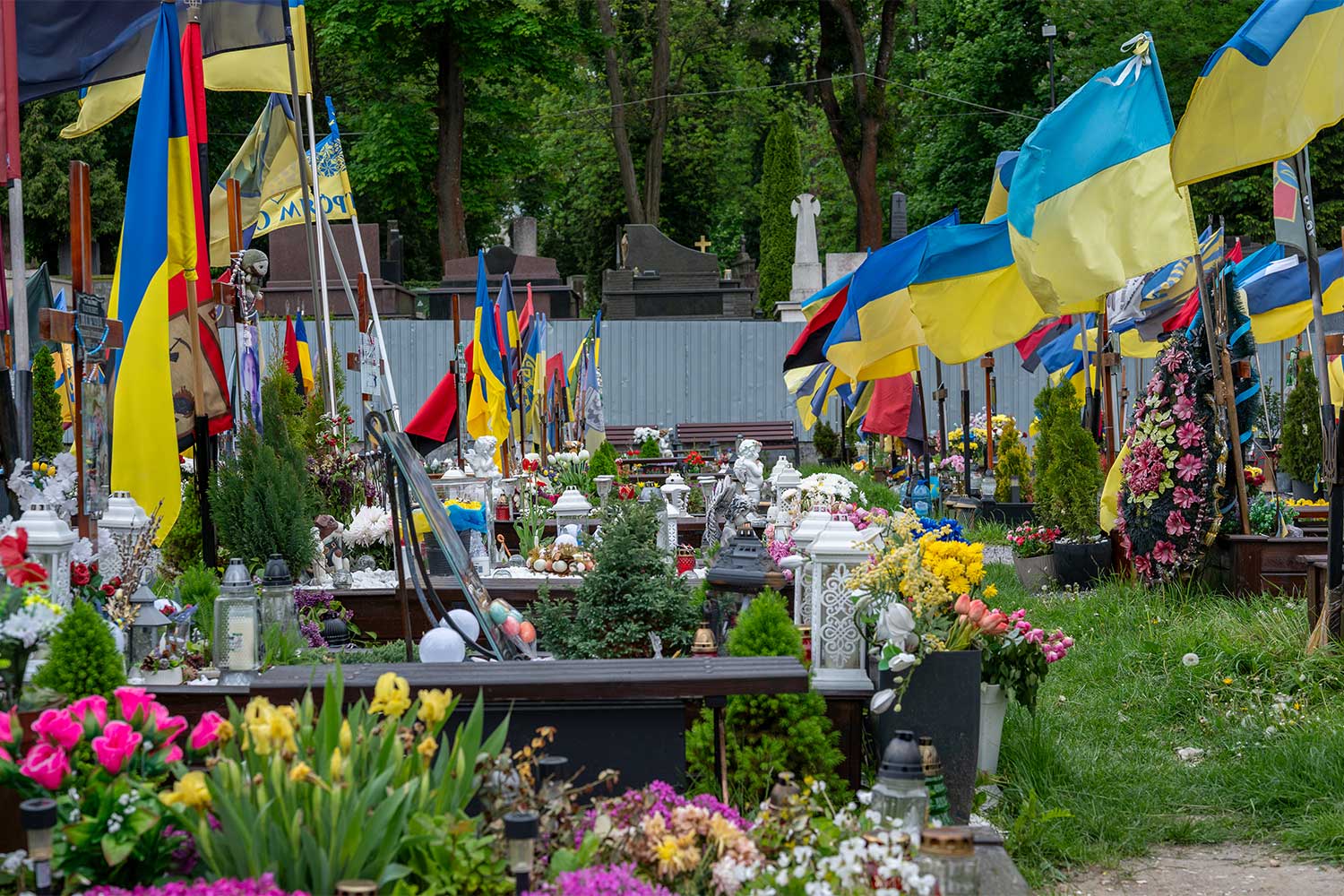
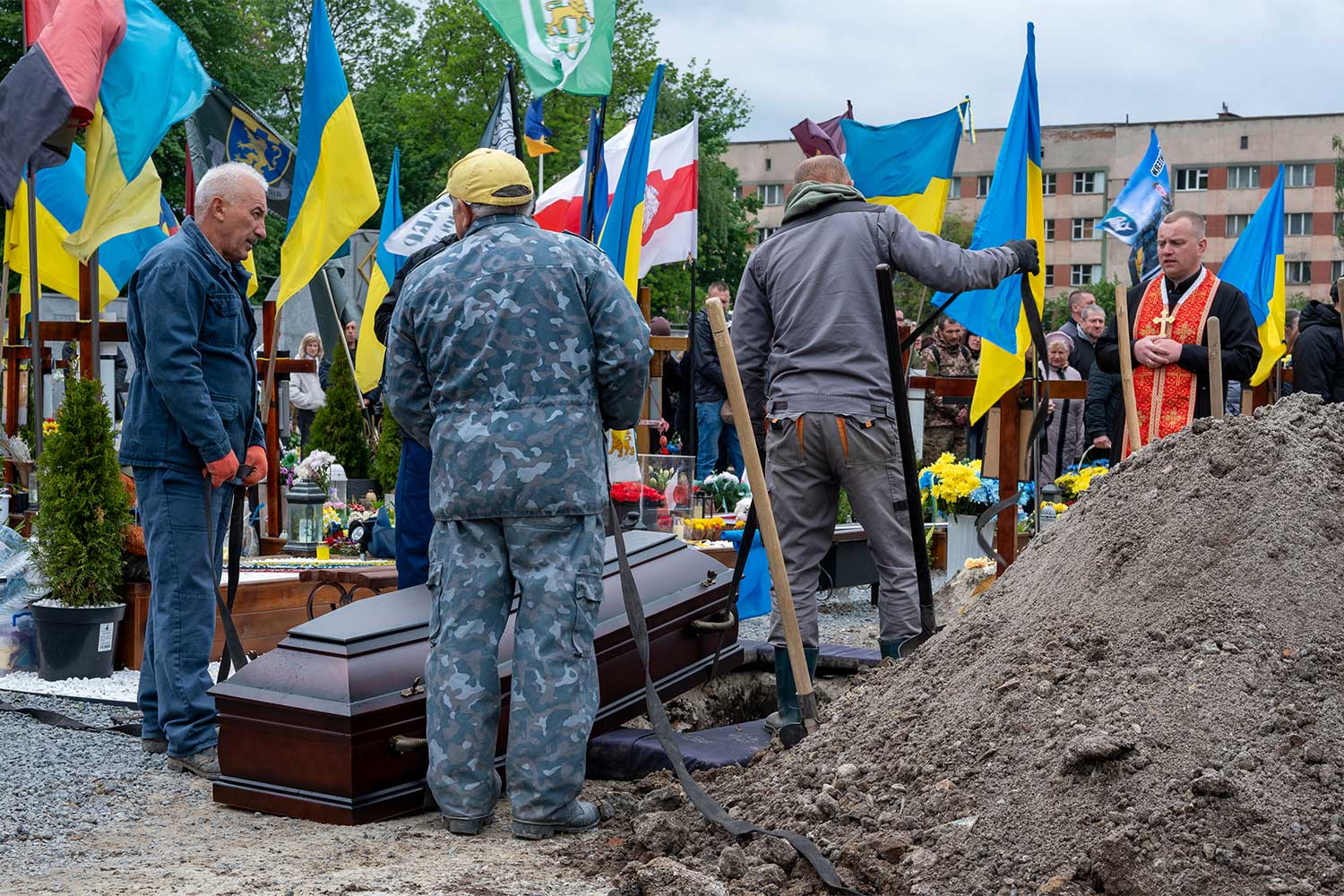
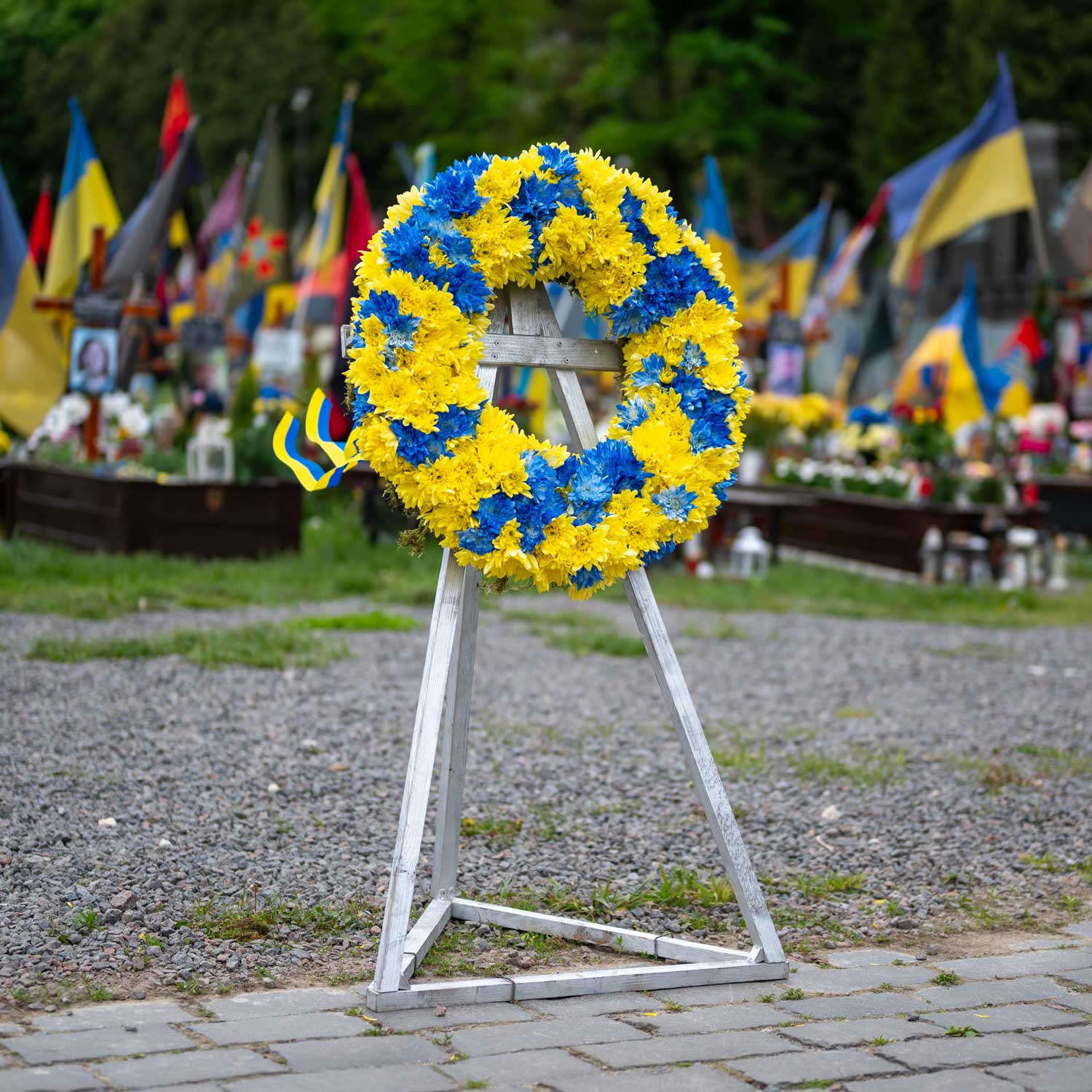
These mass grave sites are ornate. They’re adorned with a seemingly endless sea of flowers, flags and candles. Each shrine, which is placed above the ground where each soldier is buried, is meticulously kept and unique.
While most attendees did not know these men personally, Halas says attending these funerals had become a “civic duty” and that most people make an effort to go. Halas goes once a month “at minimum.”
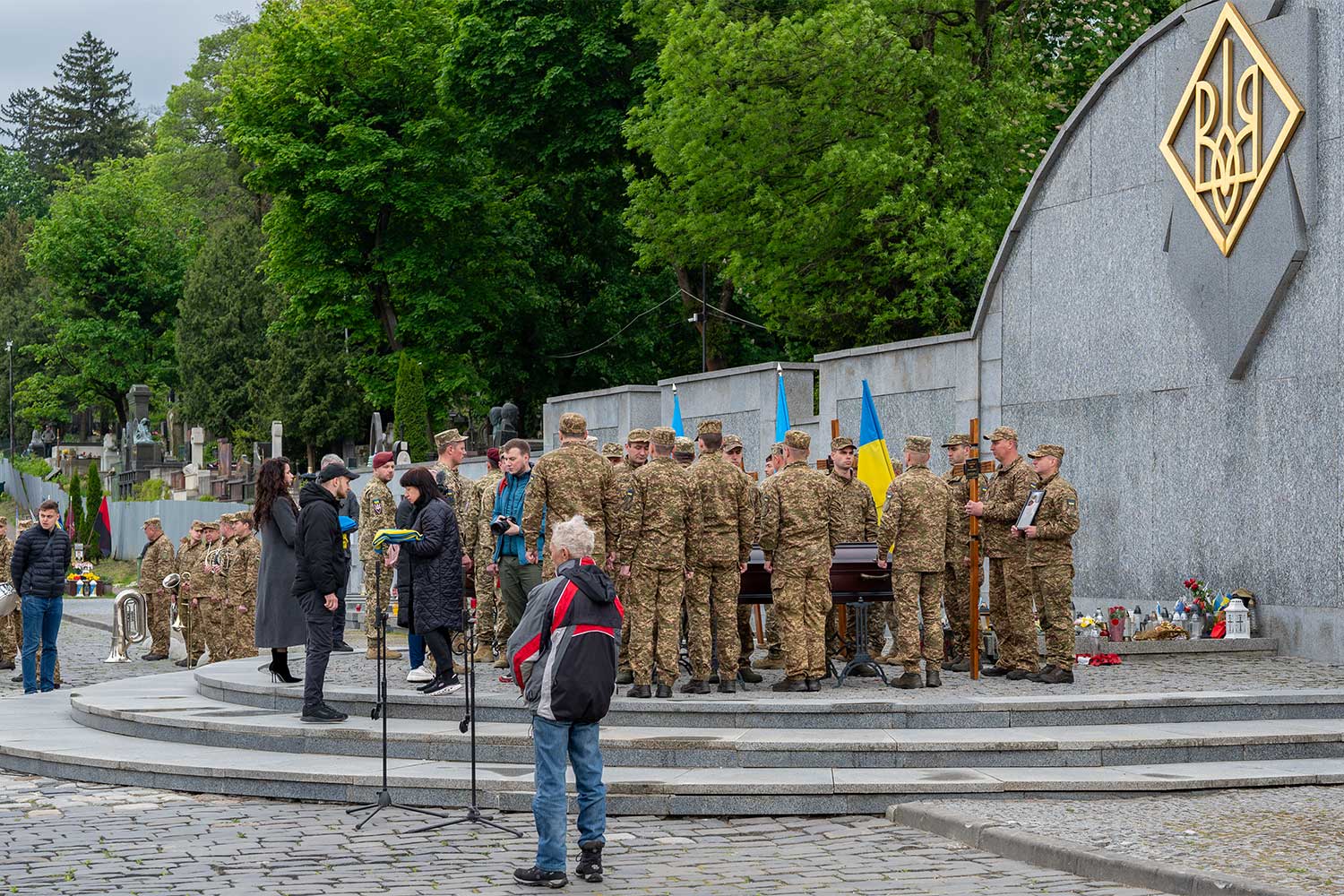
The service began with a small eulogy from a military officer, followed by a multi-gun salute at the front of the cemetery. Then, the family members of each soldier were escorted from the crowd surrounding the speakers to receive flags.
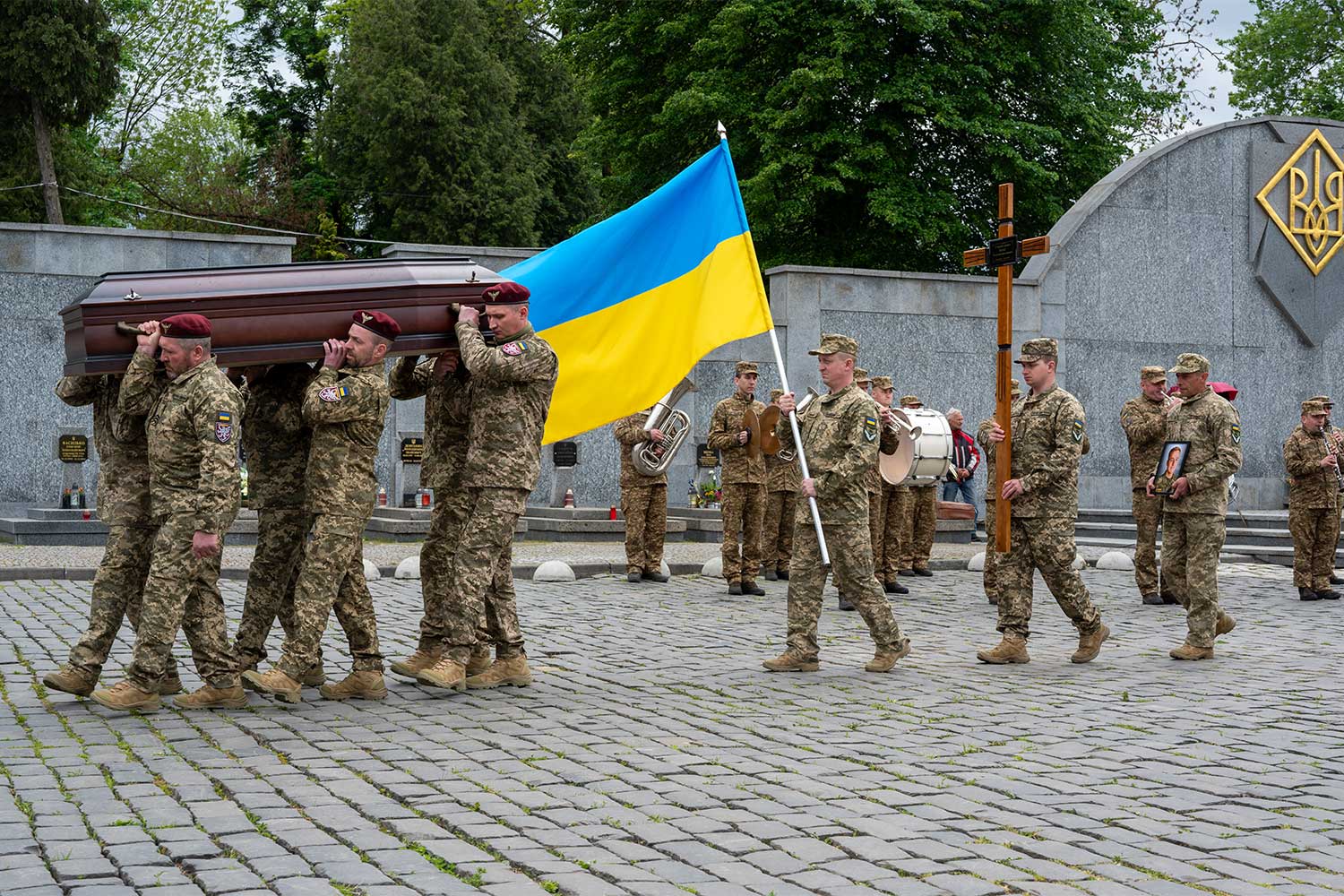
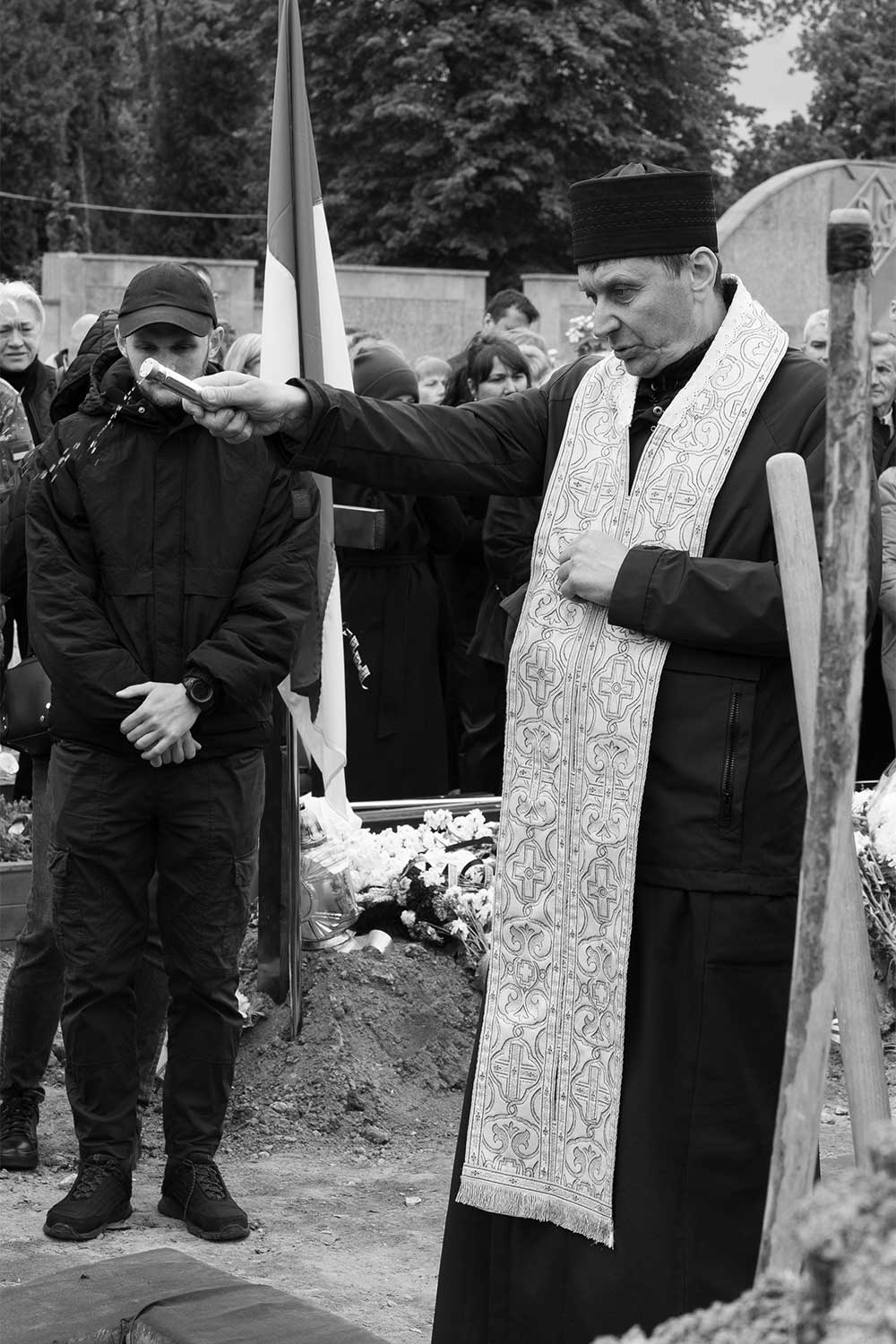
After the flags are taken, able-bodied soldiers lift the caskets to their shoulders and carry them towards the burial spots. Closely behind the parade of soldiers was a group of Eastern Orthodox priests who chanted prayers.
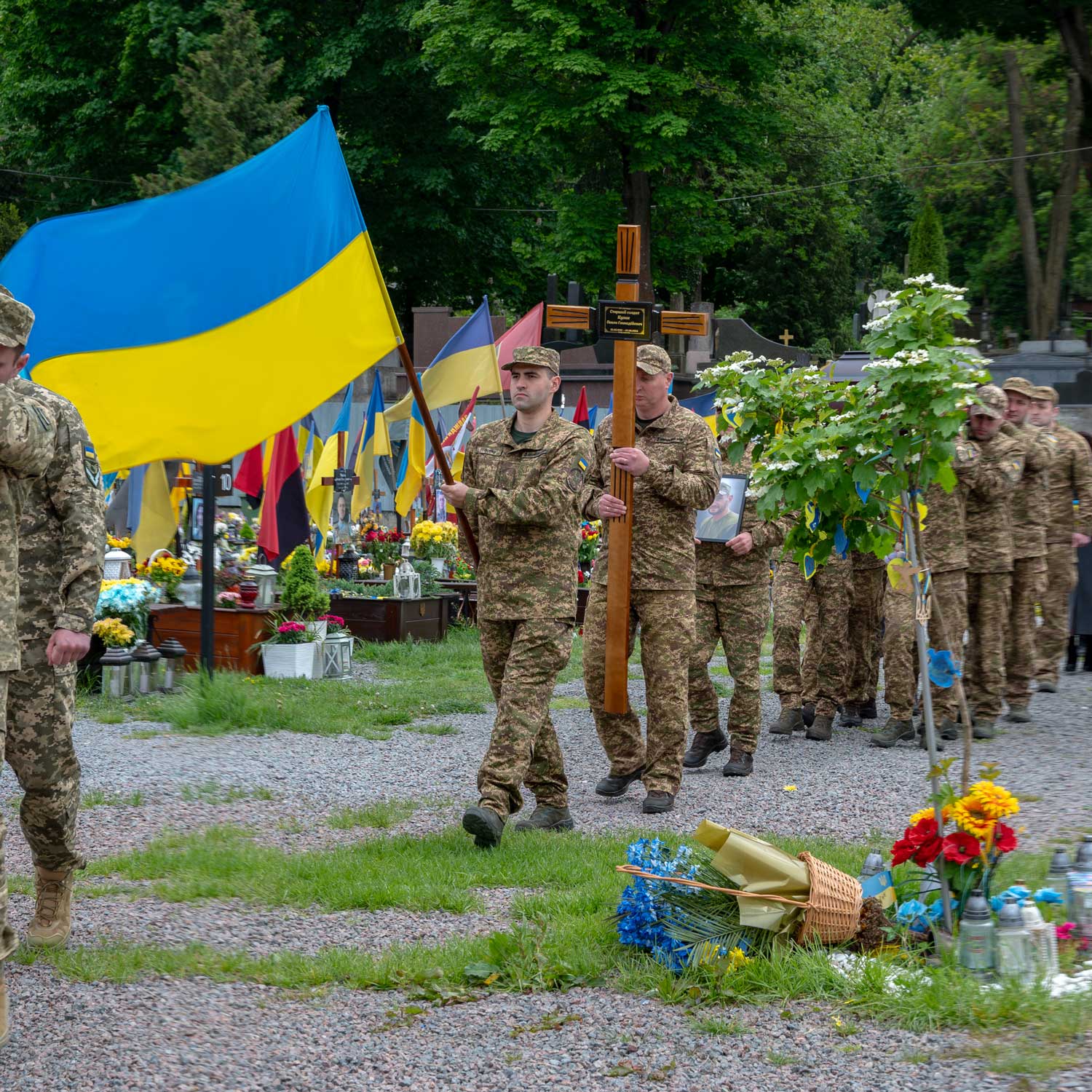
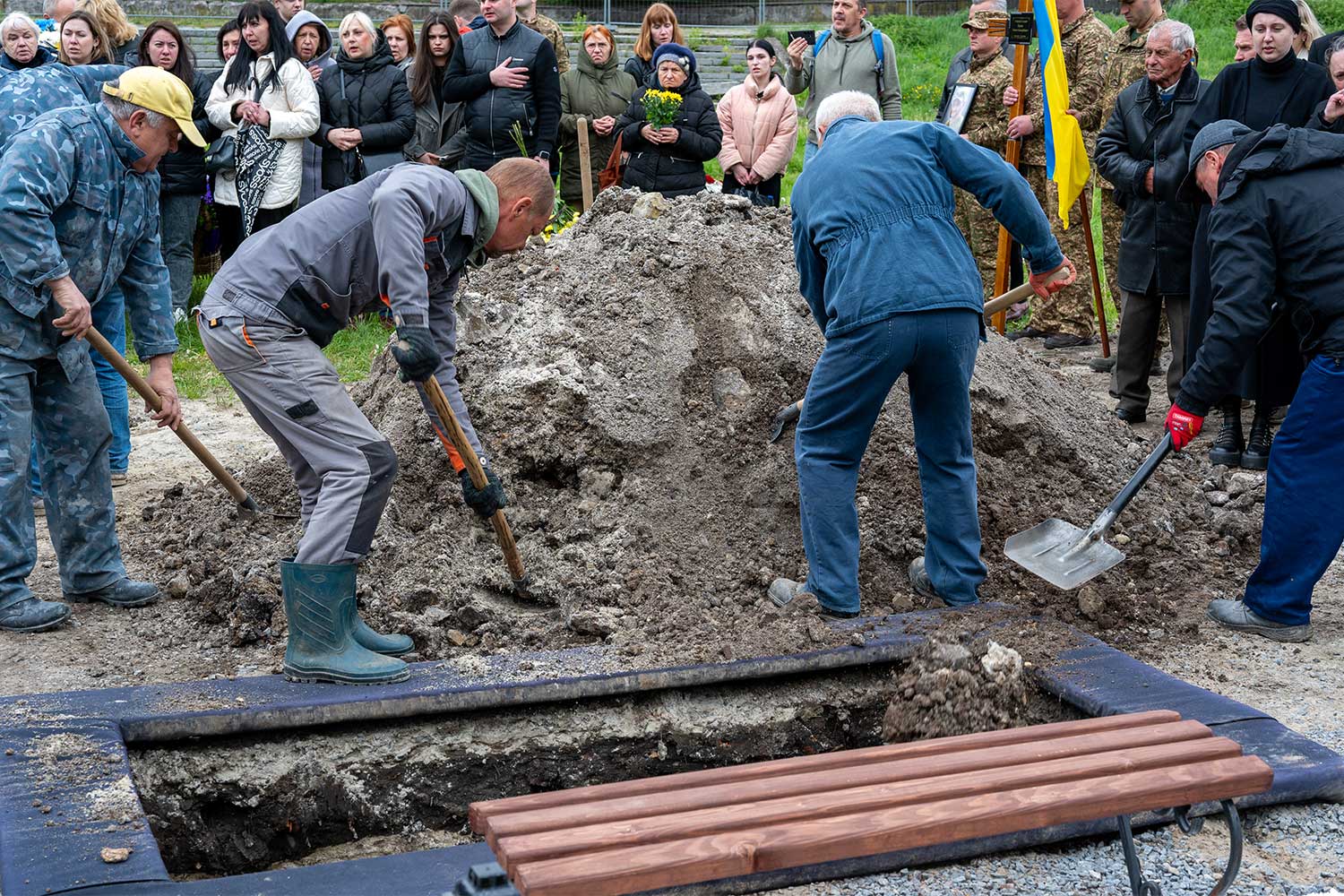
Eventually, the group and parade make their way to the final burial sites where the fathers and uncles of the soldiers, or in the case of limited family, very close friends, take over the carrying of the caskets. Straps are then used to help the family members lower the caskets into the grave. Halas says, “It’s tradition. It’s a right to be able to bury your own.”
Once the caskets were lowered, the Orthodox priests sprinkle holy water out of ornate cylinders onto the tops of the caskets. Once a final prayer had been uttered, the family members who lowered the soldier shovel dirt onto the casket as onlookers placed blue and yellow flowers around the shrine by each grave site.