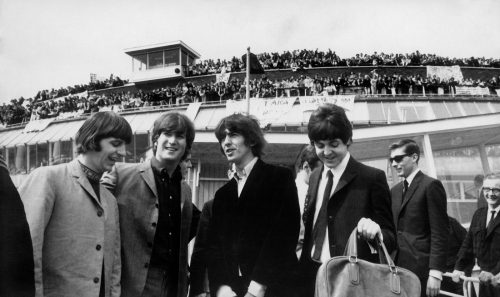
Ron Howard has said that he hoped to make Eight Days a Week both for dedicated Beatles fans and for a younger generation that has little sense of who The Beatles were. I’m not sure where this leaves me, as I’m neither a millennial nor a Beatles diehard, but a person who appreciates a good music documentary. And Eight Days is fine — a solid mix of archival footage, new interviews with Paul McCartney and Ringo Starr, crowd-sourced footage and reminiscences from musicians or now-famous people who once saw The Beatles. Whoopi Goldberg is downright moving, talking about her relationship to the band, and a very young Sigourney Weaver is visible in a crowd shot at the Hollywood Bowl, her jawline and twinkling eyes unmistakable.
Eight Days has a lot to cover, which makes it feel more like a Beatles primer than a story about a band that managed to tour for only a few years of its wildly popular existence. They made a lot of money touring, and yet could still afford to quit — but what this says about their success is never explored. How did fans react, knowing they’d never see The Beatles together again? Has anyone else managed to leave the grind of life on the road and remain relevant, even on a smaller scale?
Howard as a director doesn’t seem interested in such questions, or really in understanding Beatlemania, which is disappointing. New Yorker critic Malcolm Gladwell briefly appears to explain that teen culture was rising to dominance in the U.S. at the time, a result of the baby boom. A press release at thebeatlesliveproject.com says that Howard’s film “will seek to explain what it was about that particular moment in time that allowed this cultural pivot point to occur. It will examine the social and political context of the time, and reveal the unique conditions that caused technology and mass communication to collide.”
Eight Days gestures in that direction, but it doesn’t cohere. Important things — a contract stipulating that the band would not perform in front of a segregated audience; brief reference to the opening bands being ignored by crowds; and, importantly, the perspective of the fans themselves — get little screen time. Live footage is fascinating, especially when you can tell just how deafening the screaming was and how little the band or anyone else could hear, but the story isn’t just in the shows; it’s all around them.
As an introductory text, so to speak, Eight Days gets the job done, and superfans will appreciate the new footage (including scenes from the final public performance at Candlestick Park and the true last performance on a rooftop in London). There’s just too much cultural weight around The Beatles to fit into this movie, which leaves it feeling like we’re revisiting familiar ground.
I kept wanting Howard to include other stories: who were those opening bands, and why are they hardly named? What happened to those screaming fans we always see in concert footage? When do they get to explain what Beatlemania was to them? Those, though, are different movies. I’d like to see them get made. (Broadway Metro)