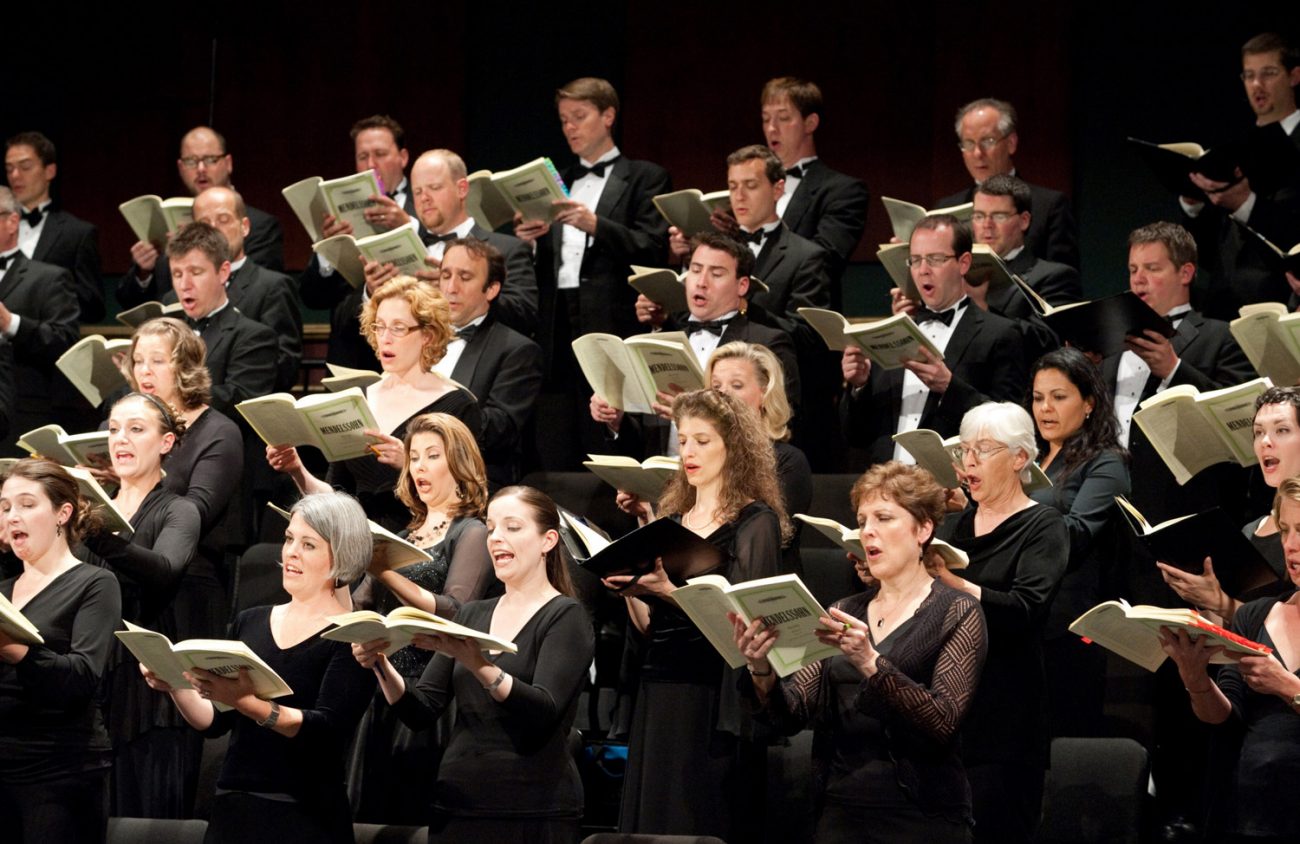
The numbers are in: This year’s leaner and smaller Oregon Bach Festival drew just 12,000 in total attendance, the festival says, a 33 percent drop from last year’s 18,000 and a huge drop from the total attendance in 2011 of more than 44,000.
The lower total attendance — that number sums the crowds at each individual concert and event, meaning a lot of people get counted more than once — was not unexpected, given the festival’s stripped-down schedule this year (13 evening concerts compared to last year’s 30) and the fact it moved most concerts from the Hult Center’s 2,450-seat Silva Concert Hall to the University of Oregon’s 520-seat Beall Concert Hall.
The big issue is that the 47-year-old festival is still getting its feet back on the ground after the retirements of its popular founders, German choral conductor Helmuth Rilling, the artistic director, and UO music professor Royce Saltzman, who was executive director. The leadership transition has been slow and at times rocky, but new artistic director Matthew Halls and even newer executive director Janelle McCoy have wisely chosen to strip programming down to a lean, focused core and rebuild from there.
They’ve also brought the festival into the 21st century by including historically informed performance (HIP), meaning Bach performed the way we think it was performed in Bach’s day.
Moving to Beall and other small venues around town meant this year’s festival had three sold-out concerts — there hasn’t been a sold-out OBF concert at the Silva in years. The sell-outs were Monica Huggett at Beall on July 1, Paul Jacobs at Central Lutheran Church on July 6 and the On Ensemble in the Hult’s small Soreng Theater on July 14.
The opening concert, St. Matthew Passion in Beall on June 29 and repeated June 30, sold 90 percent of available seats, says OBF spokesman Josh Gren. That was in spite of the fact that the charismatic Halls — one of the festival’s biggest crowd-pleasers and most important assets — dropped out at the last moment as opening-night conductor to fly to Toronto to be with his wife for the birth of their first child.
That’s good husbanding and parenting, but what happened to “The show must go on”? It makes me wonder how much longer we can expect have Halls here after his current contract expires in 2020. He’s a hot commodity ready to be snatched away by a bigger musical playground.
The biggest concert of this year’s festival in terms of audience was Beethoven’s Missa Solemnis, which closed the festival on July 15 in front of 1,500 people at the Hult’s Silva Concert Hall.
In a clear sign of Halls’ popularity, the three [re]Discovery Series lectures/concerts he presented at Beall on the St. John Passion collectively became the highest-grossing Discovery Series in the history of the festival.
The series, led for years by Rilling, offers an informal explication of a piece of choral music using the festival chorus and orchestra under the baton of student conductors. This year’s version combined afternoon talks and evening performances into three single evening events.
And finally, Gren says, 20 percent more people bought “gold tickets” this year than last, giving them access to every festival event.
All in all, I’d say OBF is on the right track. As much as I love the Hult Center — it’s really the cultural center of Eugene — moving to Beall was a necessity, both because of its smaller size and its far-superior acoustics for the lighter sound of historical performance. What I’d like to see is more of a combination of HIP concerts and the big, romantic wall-of-sound Bach we all came to love in Rilling’s day.
So did this year’s festival make money, lose money or break even? Gren says the answer is still not clear. OBF operates on a calendar-year budget, which means income through Dec. 31 will count toward this year’s budget.
“We have five months to go before we close the books on OBF 2017,” Gren says. “We still have a fall fundraising campaign to go through, so we won’t know the exact figures until late December or early January.”