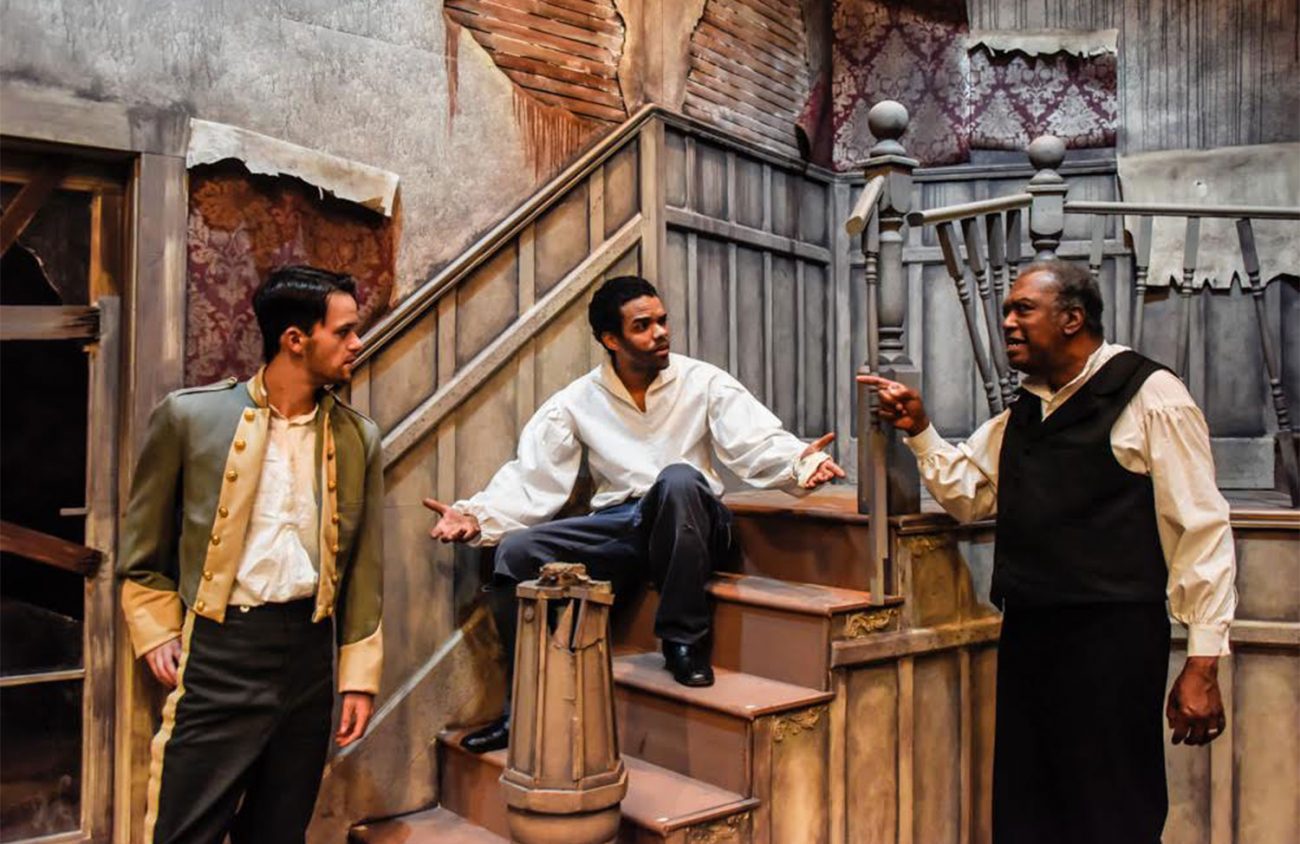
Local theater directors Carol Dennis and Stanley Coleman had been churning around the idea of a diverse project for about six years after noticing a lack of diversity in Eugene and its reflection in the theater communities they were a part of.
“I grew up in Miami,” Dennis says. “I spent my 20s in New York City doing theater, and my 30s in Los Angeles doing theater. When I came up here for life situations, I wanted to do theater up here, and I realized just how white it is here, how small the communities of color are.”
She and Coleman founded Minority Voices Theatre in 2017 to shake up the complexion of theater in Eugene.
Local theaters were not doing their best to reach out to minority groups to try to involve them, Dennis says.
“I also noticed the local theaters in town weren’t doing plays that represented marginalized or minority communities,” she says. “When I asked, I was often told that there weren’t the actors here.”
Coleman says he was excited by the opportunity when Dennis called on him.
“I’d come to a community where I didn’t see very many people like me,” he says. “I thought that this was a great opportunity to reach out to these other people and try to get them involved in theater in this community.”
The two directors knew it would be difficult to get people with little stage time to be a part of the project, but they still wanted to create community-oriented spaces for people to gain acting experience.
“The intention is to produce staged readings of plays that our local theater companies don’t think they can produce because they think they don’t have the actors,” Dennis says. “It’s a small commitment. It’s not a high bar to jump over for folks that might not consider themselves actors.”
After first being based in Dennis’ living room, she says, the group brought their project to the Very Little Theatre, where Dennis and Coleman are both members.
“The VLT is a real community theater where all are welcome,” she says.
VLT is one of the oldest continuously running community theaters in the country. According to Dennis, it is only beaten by a few weeks by a theater in New England. VLT’s excitement about Minority Voices Theatre shows that, going forward, it will be focused on inclusivity for the whole community, she says.
“It’s really hard to see when you’ve had a blind spot. In Eugene, it’s especially hard to see. The board and the membership here just kind of opened their eyes,” Dennis says. “This is where I felt that this idea was welcomed.”
Minority Voices Theatre also partners with local organizations.
“Every play that we’ve done, we find a community partner that serves and advocates for the community that’s represented in the play, and they get part of the door, part of the ticket sales,” Dennis says.
For example, when MVT produced the play Vita and Virginia, about the romance between Virginia Woolf and Vita Sackville-West, about $500 of the box office went to Soromundi: Lesbian Chorus of Eugene.
MVT’s goal is to highlight the diversity that is present in Eugene while creating spaces where people feel safe and welcome. Dennis wants it to affect other local theaters by broadening the sort of productions they can produce, which could go on to help audience members understand issues surrounding marginalized communities. Dennis says she wants to “build the bench of actors in this community that all the theaters can use who don’t all look like me.”
“It’s really easy to say ‘Our auditions are open to everyone, they just don’t come!’ But when you’re part of a marginalized or minority community, you don’t always feel welcome to come unless you’ve been invited,” Dennis says. “I think that’s what Minority Voices Theatre is saying is, you’re invited.”
Upcoming performances from Minority Voices Theatre include We Are Neighbors and Pilgrims Musa and Sheri in the New World, happening later this year and in 2019. More information can be found at minorityvoicestheatre.org.