Seriously, I would like nothing more than to tell you all about the wonderful play set to premiere this Saturday at Lane Community College’s Blue Door Theatre, but I can’t. It doesn’t exist — not yet. It’s been neither cast, nor rehearsed, nor designed, nor named. It hasn’t even been written.
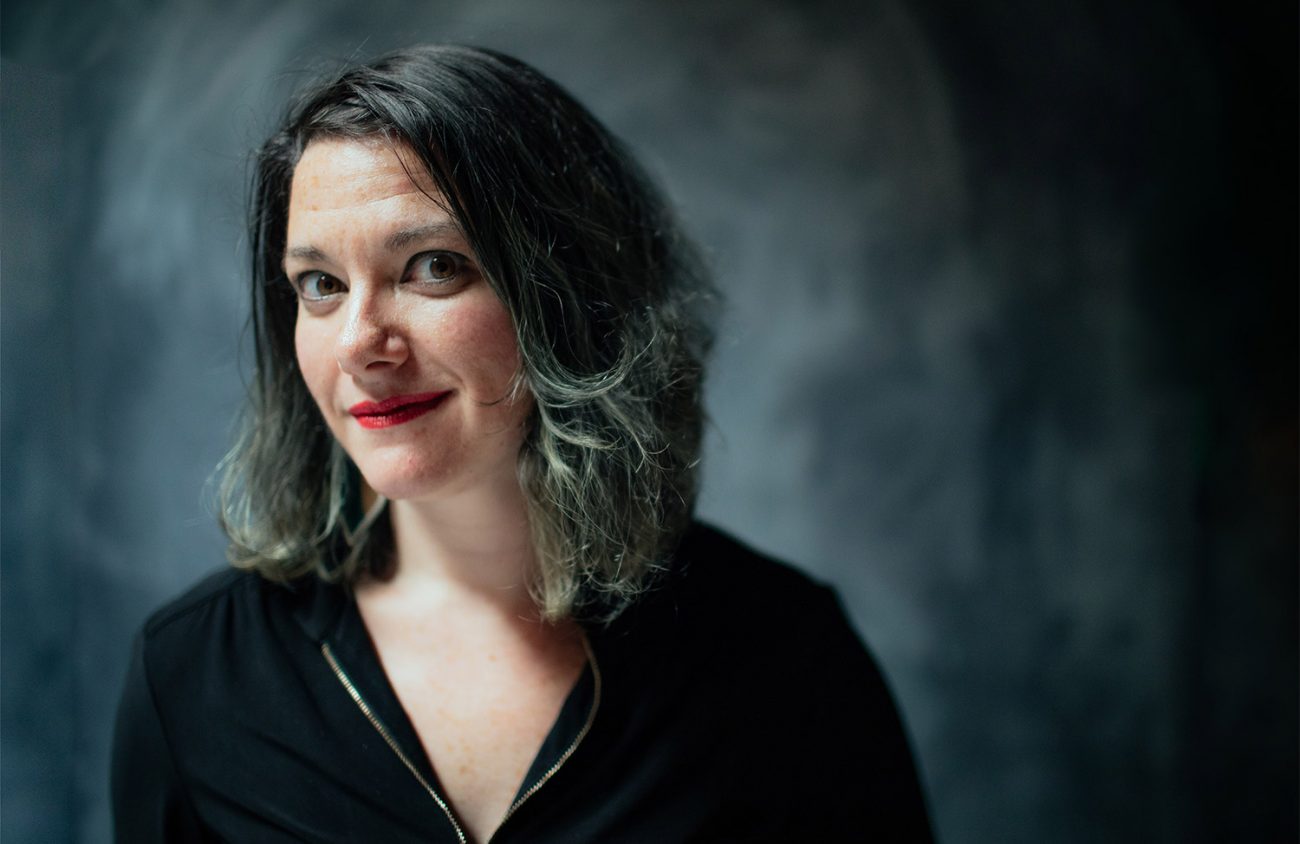
“Tabula rasa,” says local playwright Rachael Carnes, who’s been tapped by Operation Shadowbox founder Tara Wibrew to pen this theatrical work. Carnes, whose plays have been produced as far away as New York and London, swears she has no idea in which direction the writing will go until the 36-hour play project commences at 7:30 in the morning Friday, Aug. 24.
“This is pretty unique, because we have no idea what will happen,” says Carnes, who is also a longtime writer for this paper. “A whole lot of caffeine, I’m assuming, and some pizzas, and we’ll have a play.”
Here’s the deal, then: Under the auspices of Operation Shadowbox and LCC’s Student Production Association, Wibrew, as ringleader, has gathered a team of creative types — writers, actors, students, theater people — that will produce a play from scratch in the space of a day and a half, no breaks.
Instead of the weeks or months it typically takes to mount a production, the 36-Hour Play Project: 90 Minutes, No Intermission is like theater shot out of a cannon: full speed ahead, and no twee hemming and hawing about anything. According to Wibrew, such constraints force an intense atmosphere of collaboration, while also tending to shut down the “inner critic” that can clot the flow of creativity.
“I think what it tends toward is high-stakes aesthetic risk-taking,” says Wibrew, whose Operation Shadowbox is a relatively new artistic collective that aims toward independent ensemble productions such as this one.
“You have to commit and go,” she says of the 36-hour play, which will be staged one time only. “I find it particularly good practice for artists who are perfectionists. It pushes you to create. You have to fire the judge, get out of your own way, shut up and tell the story. The work will always fill the amount of time available to you.”
Like certain sporting events, the ticking of the clock is the prime directive here, compelling a non-stop level of activity that, according to Wibrew, is simultaneously stressful and relieving — or, as she puts it, “high-stakes because of the time constraints, and low-stakes because of the time commitment, in ways that I think are fascinating and humbling and a joy to witness.”
Such an intense production schedule, she says, “relies a lot on networks,” creating an interdependence that breaks through the wall that might exist between typically segregated roles. What this means is that suggestions can cross-pollinate, from designer to writer to actor to usher. Or, as Wibrew puts it: “Somebody’s always got a surfboard; you just have to know who to ask.”
Carnes says that, as a playwright, she’s always enjoyed the collaborative process. “But this is interesting because it will be in real time.” She says she’s excited to “tap into the collective conscious” of the ensemble, and to that end she’s keeping herself open to the dramatic possibilities. “I’m very curious to see where people want to go,” she says.
“My only weakness,” Carnes adds, “is I do require some sleep.”
Thankfully, somebody’s always got a pillow.
Operation Shadowbox and LCC Student Production Association’s inaugural 36-Hour Play Project: 90 Minutes, No Intermission, Vol. 1 will be staged (one time only) at 7:30 pm Saturday, Aug. 25, at LCC’s Blue Door Theatre; $5 suggested donation.