For anybody who still needed one, this past winter and spring have been something of a wake-up call — a confirmation that we can no longer count on our traditional rainfall pattern. April’s near-record rainfall left hardly a trace a week later, so dry was the ground before it fell.
The message is that low-water gardening makes more sense than ever. Even our native plants are looking stressed — some of the camas in my garden shriveled up before they had a chance to bloom, and the flowers on my native irises scarcely lasted a day.
We all know the classic strategies for cutting down on water use: reduce or eliminate lawn areas, group plants according to their water needs (and choose fewer water guzzlers) and switch to more-efficient irrigation, such as drip methods. Other ideas to consider: improve soil quality so plants can root more deeply (compost, compost, compost); plant trees and shrubs in fall, if possible; and develop some areas of the garden for spring and winter interest followed by summer dormancy.
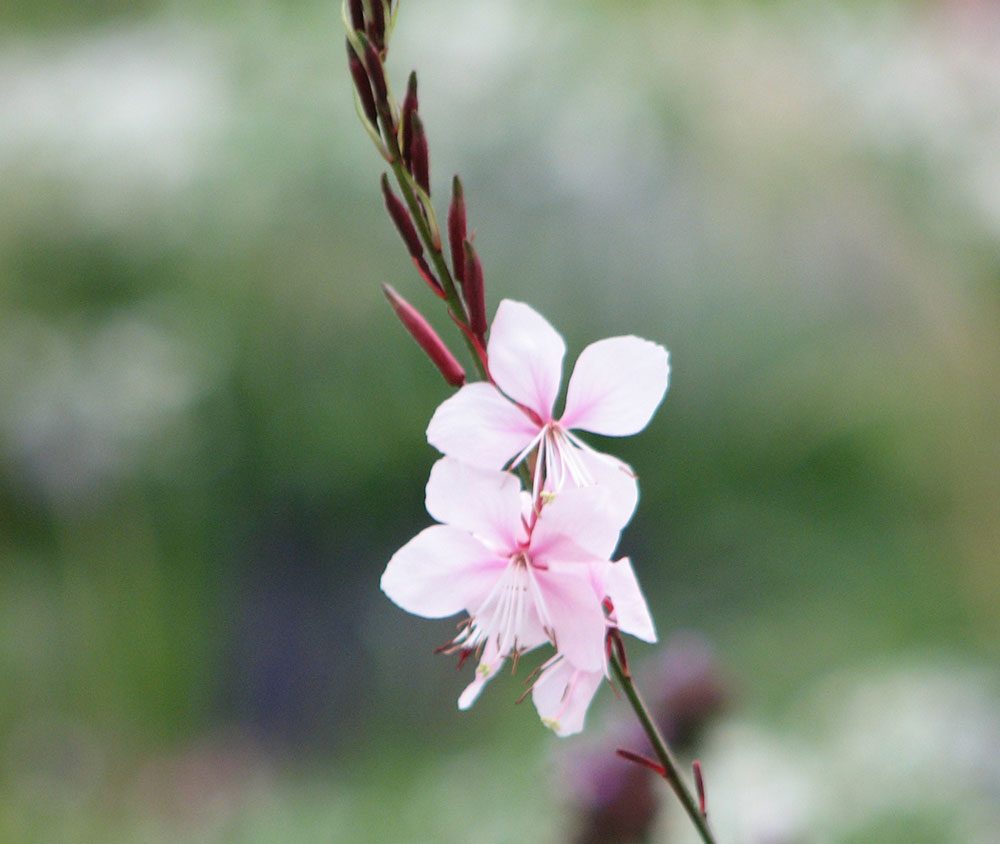
Of course, most gardeners will be reluctant to give up a gorgeous summer garden entirely. Which brings me to gaura (Oenothera lindheimeri, formerly Gaura lindheimeri). This airy-looking Texas native blooms for many weeks in summer, bearing numerous inch-wide, white flowers that move with the breeze on wiry stems, looking a little bit like a flurry of butterflies.
Gaura is sometimes called wandflower, sometimes bee blossom. Pollinators love it. The cultivar most often encountered is “Siskiyou Pink,” with flowers in a very strong color that detracts from the plant’s natural delicacy. There are also white-flowered selections such as “Whirling Butterflies.”
Before I moved to a garden sunny enough to grow it, I admired gaura for years, especially after seeing it used to beautiful effect — in Paris, no less — around neatly trimmed, conical yew trees. The small leaves and slender stems give the plant a filmy texture that makes it a brilliant foil for formal evergreens.
Gaura is perennial, tough and drought-tolerant. As long as the site drains well, it will thrive in fertile garden soil with regular moisture, most varieties quickly growing to a bushy three-by-three feet.
But one of gaura’s virtues is that it will get by with only occasional water, making it a great candidate to mix with perennials such as penstemon, torch lily (kniphofia), sedum “Autumn Joy” and Salvia guaranitica “Black and Blue.”
Or you could simply interplant gaura with boxwood, itself a surprisingly drought and heat-tolerant shrub.
A minor drawback is that gaura sheds a lot of seeds, which sprout readily. Pulling out all those seedlings is tedious, and I’m considering a new variety from PlantHaven International named “Silver Fountain.” This is said to grow two-feet tall and wide “with a neat rounded habit,” blooming profusely “from early summer to fall.”
Best of all, the flowers are reputedly sterile. Much as I dislike buying patented plants, they are hard to avoid in today’s nursery world, and a sterile gaura is certainly tempting.
An especially good source for drought resistant plants is Xera Plants in Portland. Their website offers a long list of perennials with moderate moisture requirements.
Rachel Foster lives and gardens in Eugene. She can be reached at rfoster@efn.org