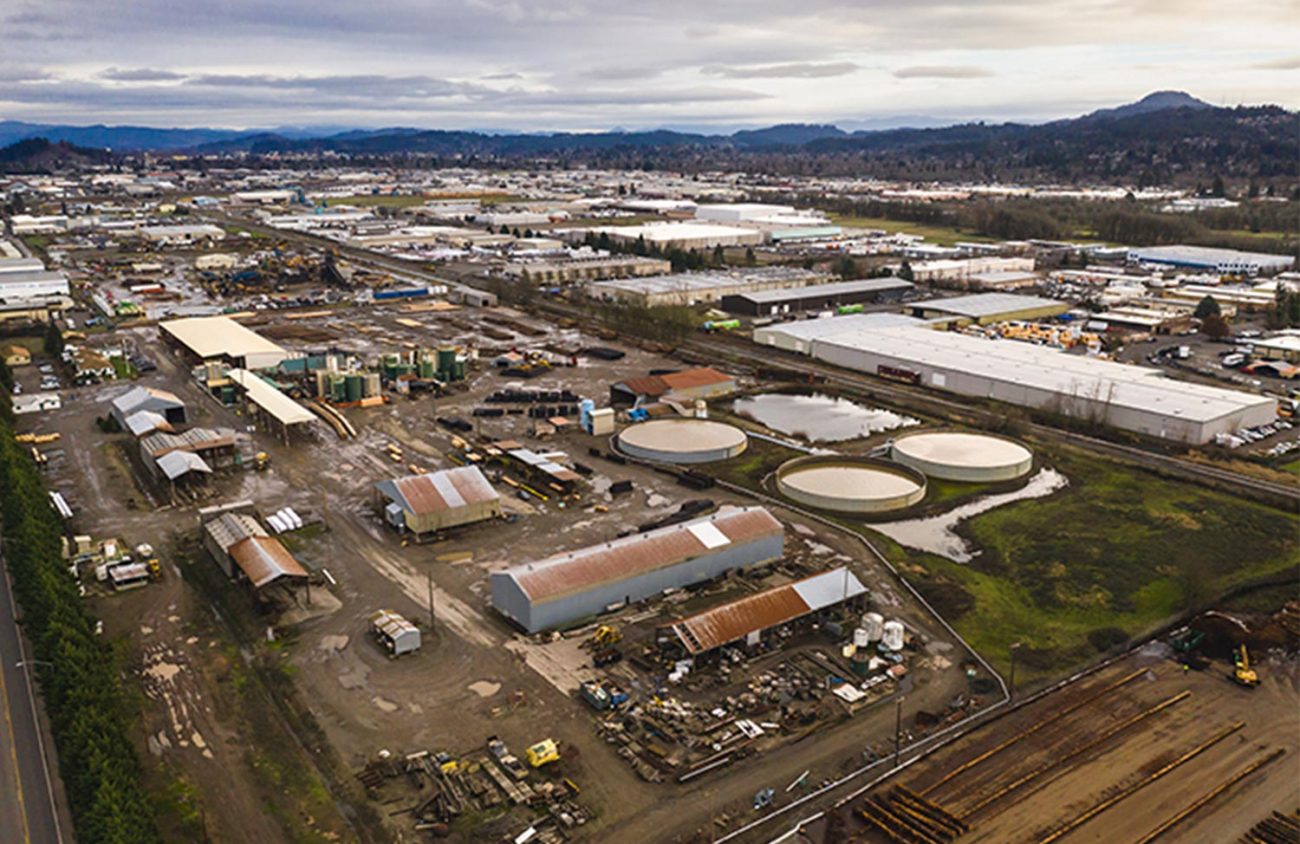
J.H. Baxter, a wood treatment plant in west Eugene with a history of environmental problems, was fined $223,440 by the Oregon Department of Environmental Quality (DEQ) citing environmental and health violations.
In a notice sent to Baxter on March 3, DEQ alleges the company misused its wood treating chambers, called retorts, in treating over 1.7 million gallons of hazardous waste from 2015-2019.
In a separate violation, DEQ claims Baxter allowed untreated stormwater to flow into Amazon Creek.
“Those emissions are uncontrolled and may have contained harmful pollutants that pose a risk to human health and the environment,” DEQ Spokesperson Dylan Darling says in a phone call with Eugene Weekly. He adds the water flowing into Amazon Creek may have caused potential harm to aquatic life and water quality of the creek. Amazon Creek flows into the Long-Tom River, which eventually connects to the Willamette.
In addition to the fines, DEQ is also requiring Baxter to create three plans for further investigation and sampling so DEQ can better understand and mitigate the impacts of the violations as well as prevent future violations.
This is not the first time J.H. Baxter was cited or investigated for environmental violations. In 2011, DEQ labeled the plant as a “significant non-complier,” meaning it either willingly or chronically violates the law. In 2018, the Environmental Protection Agency levied a fine against the plant for mishandling and improperly storing hazardous waste.
Those who live in nearby neighborhoods have complained of bad smells coming from the plant, and have testified to environmental group Beyond Toxics that the pollution has caused stomach issues, brain fog and worsened asthma. Some even allege that living in such close proximity to pollution in the area has caused cancer. In 2006, Oregon Health Authority conducted a cancer investigation for neighborhoods surrounding the plant, but the results were more or less inconclusive.
In December 2020, DEQ announced that it was investigating elevated levels of dioxins, which are a group of chemical compounds, found in the soil near the plant. The investigation is ongoing. Darling says though it’s possible the dioxins could be linked to Baxter, at this time there is insufficient information to determine it.
“There is a possibility that these investigations could help each other,” Darling says. “The more we know about the operation of Baxter at the facility and what’s going on offsite. But we don’t know at this time how they intersect.”
A press release sent by DEQ states that a majority of the fine, $178,905, is for the unpermitted use of the retorts, alleging Baxter illegally used its retorts to evaporate and process waste containing mixtures of water, oil and other wood preserving chemicals. The company is only permitted to use the retorts to treat wood.
Darling says a key part of the violation is that the retorts were not used properly. He adds that the company is no longer using this practice. “I would like to emphasize that this practice is no longer going on. They are not evaporating hazardous waste in the retorts,” Darling says.
Baxter was fined $14,735 for the second violation — allowing untreated stormwater and other water to be removed from the company’s boilers and then overflow into a storm ditch that leads to Amazon Creek.
Company President Georgia Baxter responded to the allegations in an email statement, and says J.H. Baxter has always done their best to comply with regulatory requirements.
“To that end we continue to work with the DEQ site clean up program and the Lane Regional Air Protection agencies Cleaner Air Oregon program. We care about the health and well being of our neighbors and employees and will continue to work diligently to protect human health and the environment,” Baxter writes.
Baxter has several options to proceed. It can pay the fine and agree to the rest of DEQ’s terms listed, or they are allowed to appeal the allegations within 20 calendar days of receiving the notice. After an appeal, the company may have the opportunity to have further negotiations leading to a potential settlement.