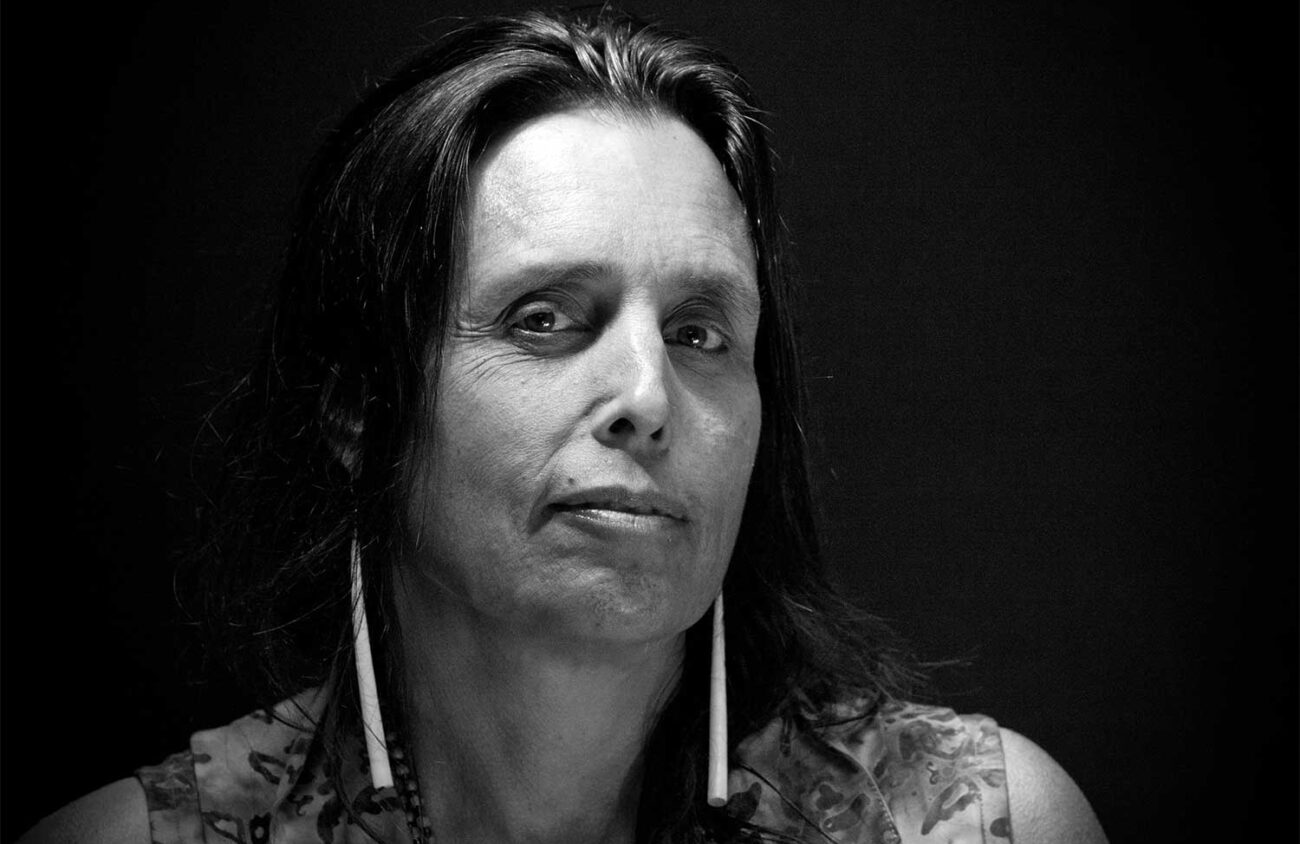
On Feb. 18, Winona LaDuke, a longtime Indigenous land rights and environmental activist as well as author, woke up to a bitter cold in White Earth, Minnesota, home of the White Earth Band of the Minnesota Chippewa Tribe. “It was minus 25 this morning when I woke up. It’s supposed to be like that, it’s Minnesota,” LaDuke says.
Arctic air has been blasting through the state leaving Minnesota with below-average temperatures for the better part of February. But this doesn’t phase LaDuke. This chill is something that she’s used to, something she expects, and it is something she is fighting against climate change to preserve.
Since the 1980s LaDuke has been leading environmental efforts based on Indigenous land knowledge. LaDuke was primarily raised in Oregon, and will speak March 4 at the University of Oregon on “Prophecies, Seeds, and the Rights of Mother Earth.”
Last month, when President Donald Trump was sworn in, he issued an executive order “Unleashing American Energy,” which included terminating the Green New Deal and halting federal funds to federal agencies like the Environmental Protection Agency and the Department of Energy.
LaDuke has survived the Trump administration before, and this time she says she believes that we all need to do our part in aiding Mother Earth. “Wake up America,” LaDuke says, “I would really like to see people get over their own personal agendas and work together for a common good.”
Lately, LaDuke has been rolling up her sleeves and doing her part by bearing witness to the Greenpeace v. Energy Transfer Partners trial. LaDuke will be flying to Oregon after the first day of the trial in North Dakota. “I’m going to be coming from the front lines of the judicial malfunctions of this country,” LaDuke says.
The Greenpeace Energy Transfer Partners trial is what LaDuke and others describe as a “SLAPP” suit — strategic lawsuit against public participation. Energy Transfer Partners is suing Greenpeace for $300 million, alleging defamation, trespassing, vandalism and violence by protesters protesting against the Dakota Access Pipeline. The pipeline crosses the Missouri River upstream from the Standing Rock Sioux Tribe’s reservation, which the tribe fears could affect the Indigenous land’s water supply.
“That whole regulatory capture, and theft of justice that is going down, I’m going to go bear witness, and I’ll be in and out of that trial all spring,” LaDuke says. In the middle of work LaDuke is coming to the University of Oregon for her lecture, but also for her loyalty to Oregon.
“I’m going folk dancing with my mother, and I’m going to have two left feet, she’s really good, and then I’m going to come up to see you guys with my mother,” LaDuke says, “So I have a very deep loyalty to Oregon. It is where most of my development, of my personality and integrity came from.”
LaDuke’s mother, Betty LaDuke, is an artist and activist who has multiple works that have passed through Eugene. Betty LaDuke will also be a part of lectures Winona LaDuke will be giving to various classrooms across UO campus during her time here.
“This is a really important lecture, and I’m honored to give it,” LaDuke says.
Winona LaDuke’s lecture and Q&A is 6:30 pm March 4 in the UO’s Erb Memorial Union Ballroom. The event is put on by UO Native American and Indigenous Studies; Community Rights Lane County; Native Youth Wellness Program; Protect Lane County Watersheds; Oregon Community Rights Network; and the Upper Willamette Stewardship Network, and is a part of her journey across states to spread education and bear witness to climate injustices. The event is free.
A Note From the Publisher

Dear Readers,
The last two years have been some of the hardest in Eugene Weekly’s 43 years. There were moments when keeping the paper alive felt uncertain. And yet, here we are — still publishing, still investigating, still showing up every week.
That’s because of you!
Not just because of financial support (though that matters enormously), but because of the emails, notes, conversations, encouragement and ideas you shared along the way. You reminded us why this paper exists and who it’s for.
Listening to readers has always been at the heart of Eugene Weekly. This year, that meant launching our popular weekly Activist Alert column, after many of you told us there was no single, reliable place to find information about rallies, meetings and ways to get involved. You asked. We responded.
We’ve also continued to deepen the coverage that sets Eugene Weekly apart, including our in-depth reporting on local real estate development through Bricks & Mortar — digging into what’s being built, who’s behind it and how those decisions shape our community.
And, of course, we’ve continued to bring you the stories and features many of you depend on: investigations and local government reporting, arts and culture coverage, sudoku and crossword puzzles, Savage Love, and our extensive community events calendar. We feature award-winning stories by University of Oregon student reporters getting real world journalism experience. All free. In print and online.
None of this happens by accident. It happens because readers step up and say: this matters.
As we head into a new year, please consider supporting Eugene Weekly if you’re able. Every dollar helps keep us digging, questioning, celebrating — and yes, occasionally annoying exactly the right people. We consider that a public service.
Thank you for standing with us!

Publisher
Eugene Weekly
P.S. If you’d like to talk about supporting EW, I’d love to hear from you!
jody@eugeneweekly.com
(541) 484-0519