
“The Gothic community in Eugene is fucking awesome. Excuse my French,” Nikki Brackett, goth frontwoman for local darkwave band Stariana says. “Everyone I’ve met, just from going to other shows or my own shows, are really supportive. They might look scary or whatever, but they’re actually so fucking sweet. Don’t put the F word in the paper.”
Some believe that “goth” is a subculture surrounding politics and philosophy. “It’s about not being discouraged by gloom, acceptance of mortality,” says goth Ariana Blanc, otherwise known as DJ Refugium.
Others believe that goth is about makeup and fashion. “Everyone I know wears eyeliner except for me,” says Jim Johnson, one half of Eugene darkwave synth pop band Rabyd Rabbyt.
Blanc says that a lot of the fashion “is a visual code for seeing people who have similar outlooks.” She says she has built friendships by complimenting people’s dark, Gothic-style clothing out in public. Either way, when it comes right down to it, goth means expression.
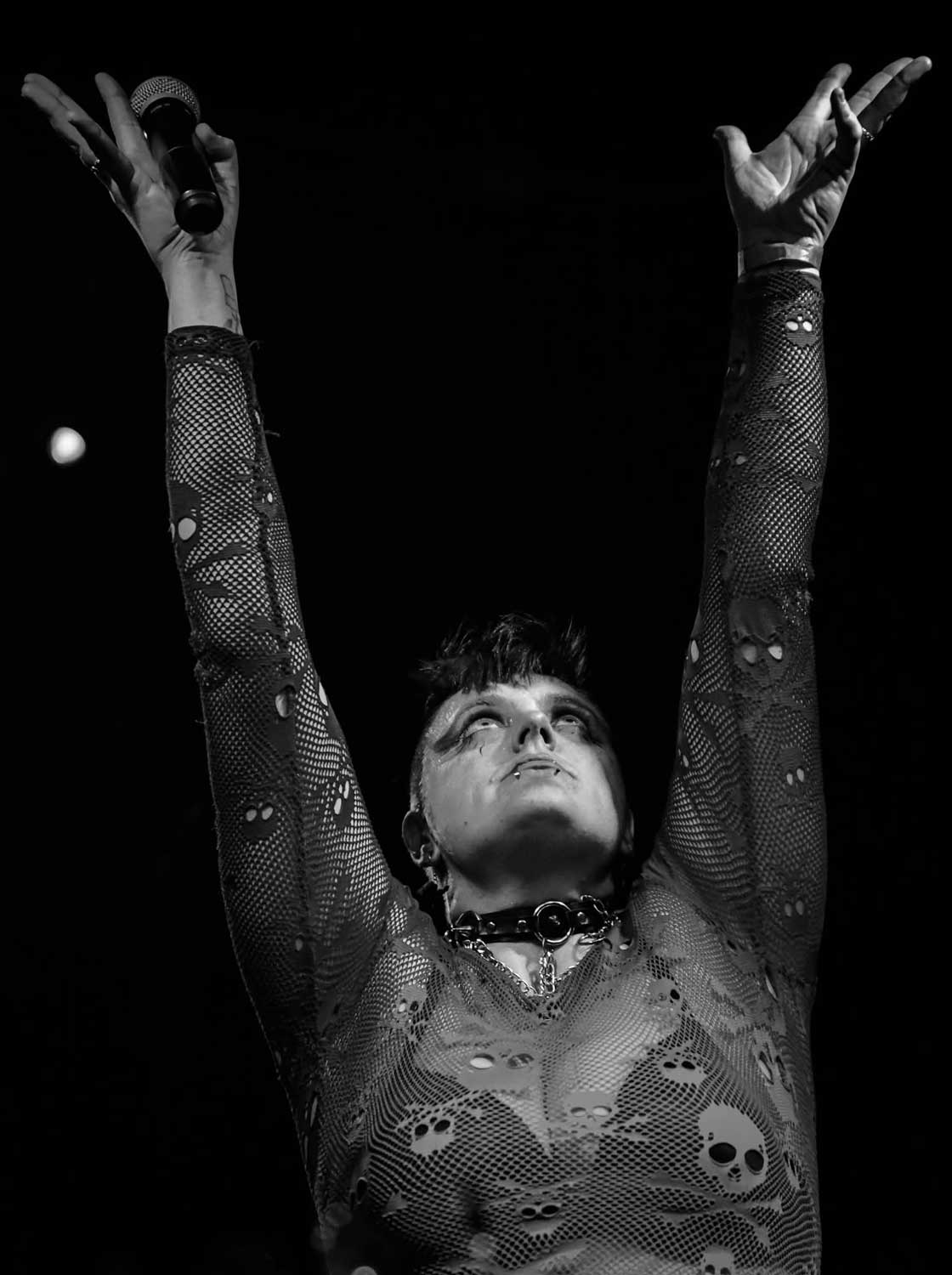
For whatever aspects of the subculture any goth chooses to apply to themselves, there is an element that seems, by many members of the dark society, to be at the center: music.
Johnson says that goth music, like the word “goth” itself, is a large term that is hard to pin down. He says he has been in Eugene’s goth scene for 16 years because “I love the music. I love the darkness, I love the style.”
Darkwave is a key goth genre, characterized by minor chords, low tonality and introspective, bleak, romantic lyricism. Classic darkwave bands are Depeche Mode, Joy Division and The Cure. The genre also has a cousin in industrial music, an experimental genre combining elements of hardcore punk rock, heavy metal, electronic music and club beats. Nine Inch Nails brought industrial into more widespread recognition, and Marilyn Manson’s music was influenced by industrial metal.
When it comes to goth music (and goth community), Eugene has a lot of it.
“Some of the best goth bands have this sense of sparseness and despair,” Johnson says.
Star Wrey Esparza, frontwoman for Eugene band Black Magdalene, says that her music “tends to air closer to the side of dark feminine mystery and esotericism, esoteric nature, occult things.” She says that the band also has a “ceremonial ritual theater aspect of what we do in our performance,” which “sort of creates this visual experience that you’re hearing the live, as well as seeing this dance spectacle and ceremony.” Meanwhile, Nikki Brackett’s band, Stariana, is “poppish” and “shoegaze” (ethereal indie rock emphasizing distortion and volume) with “a big stage presence” and “lots of emotion.”
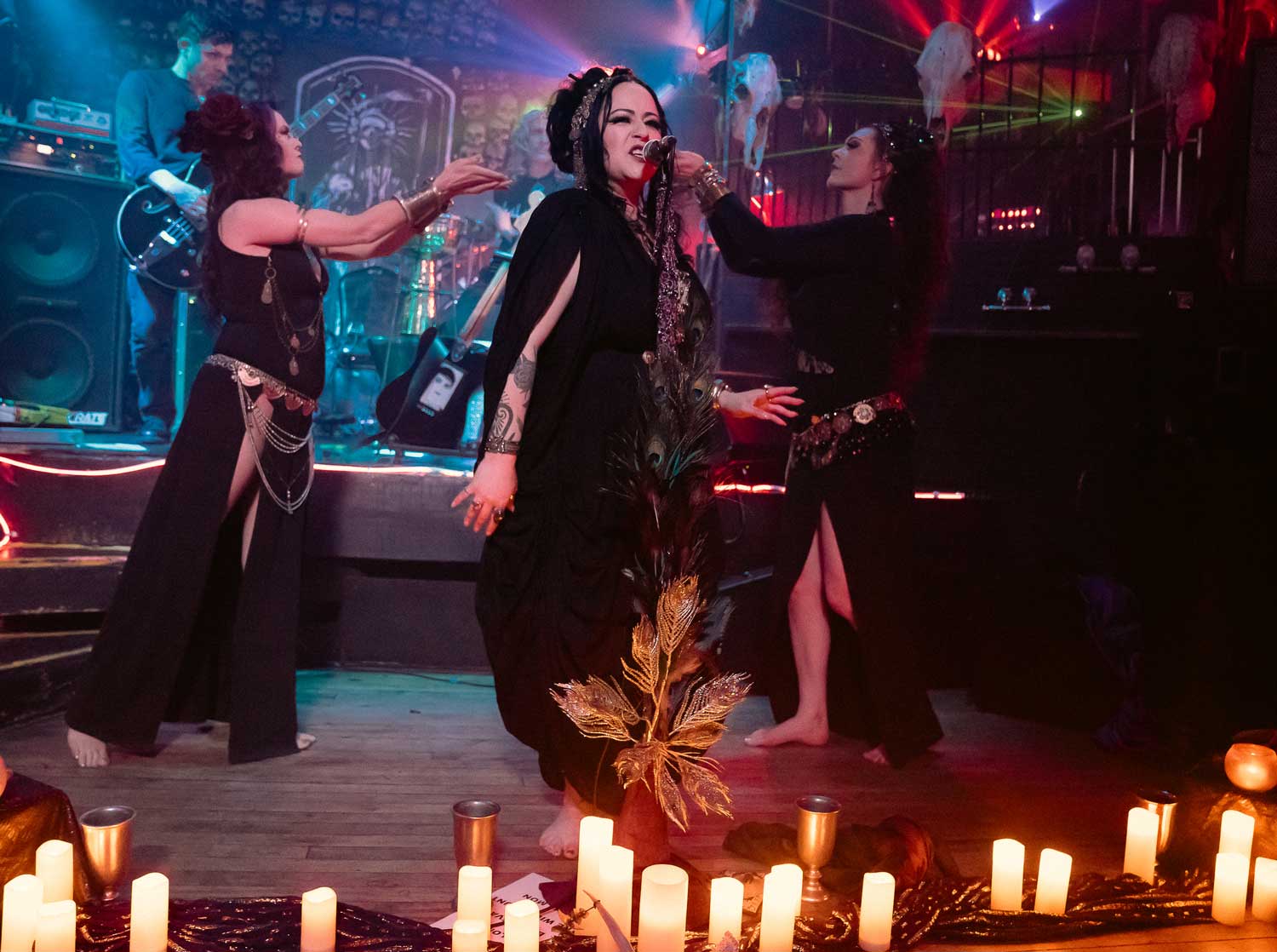
Lyrically, Blanc says goth music, including her own, is very philosophical and political. “Anti-fascism is a theme. Helplessness. Sort of a beauty and decay, but also love and longing, sex and death,” she says. Blanc is a pioneer in the rise of the Eugene goth community’s music scene.
Blanc has been a goth since she was 14. “I got into it through the music, and also through just being an oddball misfit.” She had an appreciation for Gothic literature such as Bram Stoker, “classical music, existentialism, Victorian mourning, Victorian clothing. My favorite place in town was the cemetery, because the cemetery in the town I grew up in was absolutely beautiful.”
Growing up in the Bay Area — which was full of all-ages goth clubs — she and her husband, goth musician Cevin Bila, were disheartened to find that there was not a stable or consistent space for goths to exist with one another in Eugene.
To fill the gap, they started Ghost House in 2010, which is a 21-plus goth night that continues to happen on the first Saturday of every month. It was originally hosted by Old Nick’s Pub, and is currently at punk dive bar John Henry’s. With Blanc as DJ Refugium and other resident DJs providing the music, “goth, industrial, dark dance is how we’ve filled it for a long time,” says Bila, who is the bassist for Eugene goth bands Grave Days and Thieves, and the synthesist for Shivering.
Blanc says that at Ghost House, and any other Eugene goth night or show, attendees should expect “a crowd of people who aren’t afraid to dance.” Usually, they’ll dance by themselves. “It’s almost entirely common to dance by yourself instead of a partner’s dance,” Blanc says. “The music is very melodic, so it lends itself to a lot of expression.”
The goth subculture began in 1970s and 1980s England, when post-punk bands such as Joy Division and Siouxsie and the Banshees were described by critics as “Gothic rock.” At the same time, California experienced a deathrock music scene, where post-punk became entwined with glam rock and horror. Soon, music genres such as darkwave and industrialism grew from those groups, and fans of the bands took to adopting their appearance, philosophical aesthetics and subcultural tastes. Blanc says that listening to the music is usually — whether intentional or not — the first step in becoming a goth. “It’s a gateway drug, especially the early stuff.”
Johnson was around when Ghost House began 15 years ago. He says when Ghost House arrived, Eugene’s bat children flew out of their dusty rafters to attend shows and start their own bands. “When they moved into town, there was suddenly this influx of all sorts of new faces who I had never seen before,” he says.
Today, many goth nights and bands have arisen across Eugene. These serve as spaces for people to dance to dark goth and industrial music, spend time with their community, and go all out with their fashion. “Imagine if you had an excuse once a month to just come be as elaborate as you wanted to be, and as beautiful as you felt inside,” Blanc says.
One of the essential local goth hubs that holds regular gatherings is The Sparrow & Serpent Pub. Its previous incarnation, Old Nick’s, was a longtime Ghost House host.
Lifelong goth Emily Chappell, Sparrow’s owner, describes the pub as a “smoky, sexy Gothic tavern.” While themes and musical selections may change, a goth is almost guaranteed to find at least one event per week there that will resonate. These include vampire variety shows, emo nights, goth raves, dark wave DJ nights and Revenant, which is Sparrow & Serpent’s major traditional goth night on the second Saturday of every month. Chappell also holds a lesbian and trans femme goth night, which “is a really cool night in and of itself, of exploring goth women DJs,” she says.
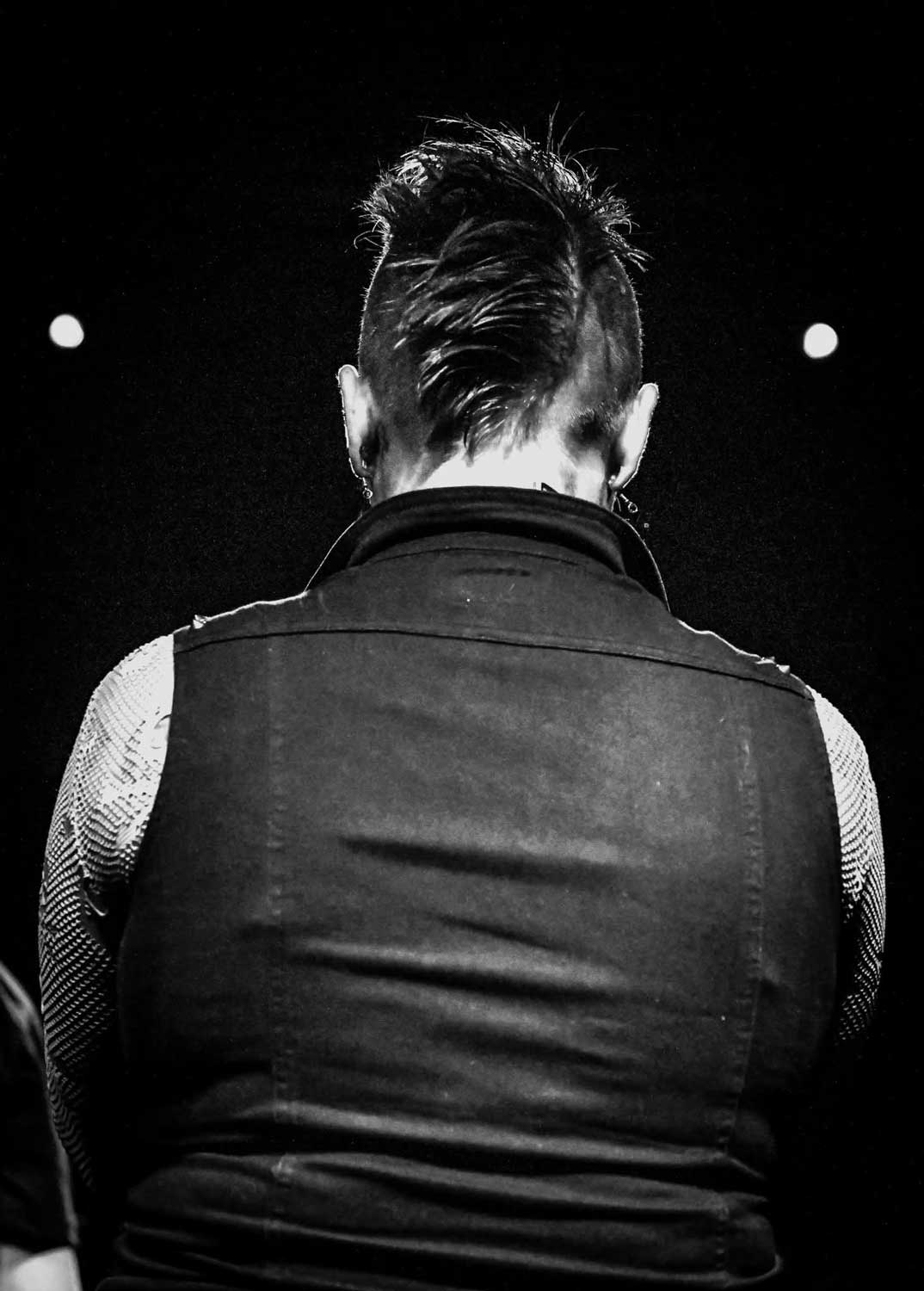
She also says that regardless of how it fits into her budget, “I will book any goth band that emails me, whether they’re well known or not well known,” she says.
Chappell views Sparrow & Serpent as a way of giving back. Shortly after she joined Eugene’s goth scene, she was diagnosed with Hodgkin’s lymphoma. “The community just rushed to my side. I was given so much support and so many people hosted benefits for me,” she says, where local bands and businesses hosted goth and metal nights to help support her medical needs. Since then, she’s made sure to give goths their place with her establishment.
This approach to the scene has brought many goths, musicians or otherwise, to view the pub as a center of Eugene’s goth scene. “They kind of helped birth the fans from the very beginning, and gave us a chance when we kind of sucked,” Brackett says of Stariana’s first shows. She says that as an attendee, “I feel safe there as a queer person. It’s spooky and beautiful. It’s old Victorian vibes in there, and exuberant and pretty and accepting of everybody.” At Sparrow & Serpent, Brackett says “I see most people in the goth community having fun and feeling safe.”
“My main goal,” Chappell says, “is that you can come there by yourself. Not only are you going to be safe, but you’re going to be treated like you belong there already.”
Another goth night that says it prioritizes safety and inclusivity also grew out of Ghost House. It’s every Sunday night at Cowfish Cafe and Lounge, hosted by Justin Holcomb, aka, DJ Virtual Violence. He got his start performing at Ghost House in 2012 when he was 21, and has since created the only weekly goth dance night in Eugene. He says that because it is on Sundays, it is great for introverted goths who are new to the scene and looking to meet people, but are nervous around large crowds.
“The Sunday nights that we do are a little bit more of a smaller scale than some of the other goth-oriented nights usually,” he says. “We have a tight-knit group of fresh faces and new people that don’t really get out to other parts of the scene as much, which I really like.”
His goth night is “geared toward industrial music, kind of harder dance, electronic stuff.” He’s also starting a new goth night, called Spirit, which will be on the fourth Saturday of every month, beginning on the Saturday before Halloween. “We’re hoping to have that one be a lot more broad with DJs and live acts,” he says.
Inclusivity and ensuring people feel a sense of belonging is essential in any goth scene.
“We’re a community of introverts,” Bila says.
Blanc agrees. “You have to be a little odd or insecure or introverted, introspective. Instead, the expression is more of an individual level of the way one dresses, the way one dances, or does makeup. It’s a very androgynous scene, has always been, and has always been on the periphery of LGBTQ scene,” she says.
Despite the darkness throughout the aesthetic and lifestyle, Johnson says that Eugene’s goth scene is “mostly full of happy, upbeat people.”
Johnson says that even though the scene has grown since the arrival of Ghost House, he still says that “I see people around here who look like goths who don’t seem to know of others.”
Johnson, Blanc and Bila all recommend that goths join the scene if they feel inclined, particularly to find community in the mental health challenges that they say goths tend to face.“It’s very easy for us to remember feeling lost or feeling outside, and that feeling is something that we hope people will come and find us and recognize that there’s community,” Blanc says. “If you are a depressed teenager and you find a goth show, then you’re going to find a whole lot of people that understand how you’re feeling, because we feel it, too.”
Ghost House is 8 pm the first Saturday of every month at John Henry’s, 881 Willamette. $5 cover charge. For event updates and other shows go to JohnHenrysBar.com. Cowfish Cafe and Lounge at 62 West Broadway holds Goth Night 9 pm every Sunday and Spirit every fourth Saturday. No cover charge. Events can be found at its Facebook page Cowfish Cafe and Lounge. Revenant is 9 pm on the second Saturday of every month at The Sparrow & Serpent Pub, 211 Washington Street. Find more goth events at SparrowAndSerpent.com.
Help keep truly independent
local news alive!
As the year wraps up, we’re reminded — again — that independent local news doesn’t just magically appear. It exists because this community insists on having a watchdog, a megaphone and occasionally a thorn in someone’s side.
Over the past two years, you helped us regroup and get back to doing what we do best: reporting with heart, backbone, and zero corporate nonsense.
If you want to keep Eugene Weekly free and fearless… this is the moment.