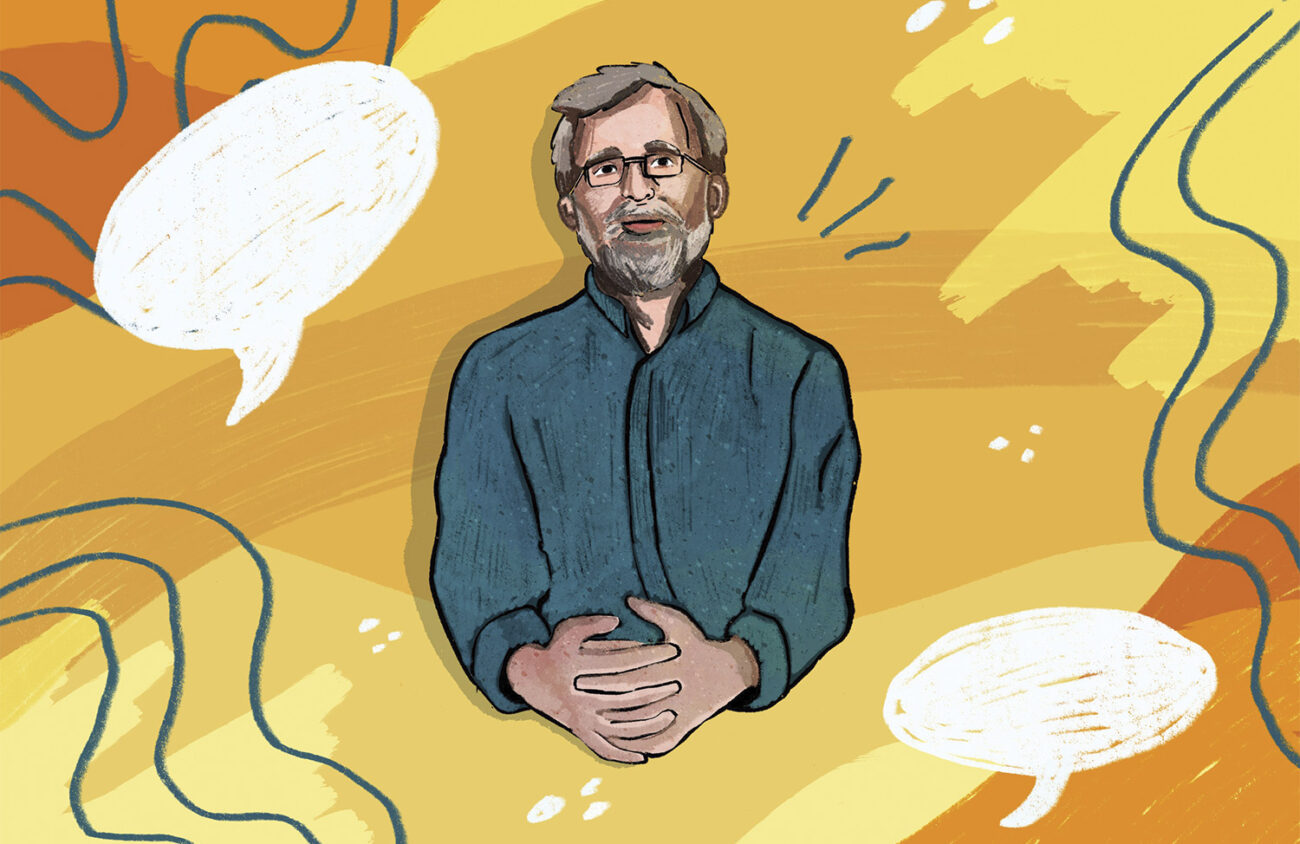
Early in my 40-plus-year career in ministry, I was fortunate to spend three of those years in West Berlin, first doing youth ministry in a local German congregation, and then heading the U.S. and Great Britain departments of Action Reconciliation/Service for Peace. ARSP was formed by leaders of the Confessing Church of Germany, a group of Christians who resisted the takeover of the German church by the Nazi government.
Many who are unfamiliar with the Confessing Church will recognize the name of their theological leader, Dietrich Bonhoeffer, martyred in April 1945 at the personal order of Hitler. Bonhoeffer’s 1937 book, The Cost of Discipleship, is remembered as one of the modern classics of Christian literature.
Even more familiar is the Berlin pastor, Martin Niemöller, who called for the organization of the Confessing Church. Niemöller’s name is not as famous as his quote that begins, “First they came for the Communists and I did not speak out, because I was not a Communist.” Niemöller spent the entire war in a concentration camp, because, as he notes at the end of the quote, “When they came for me, there was no one left to speak out.”
After the war, members of the Confessing Church formed ARSP to atone for the sin of their country through acts of reconciliation in those countries that were their former enemies. (The German name of ARSP, Aktion Sühnezeichen, literally means “Action Signs of Atonement”.)
I never met Niemöller, but I did get to meet many other leaders of the Confessing Church, including Lothar Kreyssig, the main founder of ARSP. Kreyssig was a judge in the 1930s who attempted to stop the euthanasia by the Nazi regime of people deemed “unworthy of living,” chiefly those with severe disabilities or mental illness. Kreyssig ruled that the legal rights of these victims were being denied. Franz Gürtner, the minister of justice (the equivalent of the U.S. attorney general), told Kreyssig, “If you cannot recognize the will of the Führer as a source of law, then you cannot remain a judge.” Kreyssig was forced out of office shortly thereafter.
As part of my training to work for ARSP, I spent a week working with 30 German young adults in Auschwitz, during which we met with two survivors of the concentration camp. From that experience, and getting to know the colleagues of Bonhoeffer and Neimöller, I learned three things essential for today:
First, I came to understand and greatly appreciate the incredible importance and value of our democracy. In the U.S., the primary source of law is the Constitution, not the president. Reversing the two means the end of democracy.
Second, I learned how essential it is to work against the antisemitism, xenophobia and propaganda that vilify marginalized people. When we disenfranchise immigrants, regardless of their legal status, we are saying to them, “You are unworthy of living in this country.”
The lesson of the Holocaust we must never forget is that it is then a very short step to “You are unworthy of living.”
And third, I discovered the importance of using nonviolent resistance whenever the power of government is used to dehumanize and terrorize its own people. As one Holocaust survivor told me when standing watch in front of Eugene’s Temple Beth Israel after it was riddled with gunfire by neo-Nazi skinheads 30 years ago, “If more people did this in my homeland long ago, then the Holocaust might not have happened.”
My experience, along with the teaching of great spiritual leaders from Jesus to Mahatma Gandhi, Martin Luther King, Jr. to Caesar Chavez, Rosa Parks to Sister Theresa, has taught me and so many others that what is true and good in this world is not wrought by violence, but through acts of mercy, love and justice.
Eugene is a community of good people, neighbors who, as in Minnesota, watch out for one another. The immigrants who live here are also our neighbors, the vast majority of whom are hard-working, decent people who deserve our care and support in this time.
My daughter, who studied Bonhoeffer in college, calls this our “Bonhoeffer moment.” It is indeed.
A moment when we must stand together lest we fall apart,
when we must speak out for those who have been silenced,
when we must respond to acts of violence with non-violent resistance,
when we must treat all others the way we want to be treated,
when we must replace injustice with justice, cruelty with kindness, hate with love.
May it be.
Dan Bryant is a retired minister of the Christian Church (Disciples of Christ). This column was expanded by the author from a statement he gave at the Feb. 1 press conference with Gov. Tina Kotek, Mayor Kaarin Knudsen, Rep. Val Hoyle and state Sen. James Manning in response to Jan. 30 events at the Federal Building.