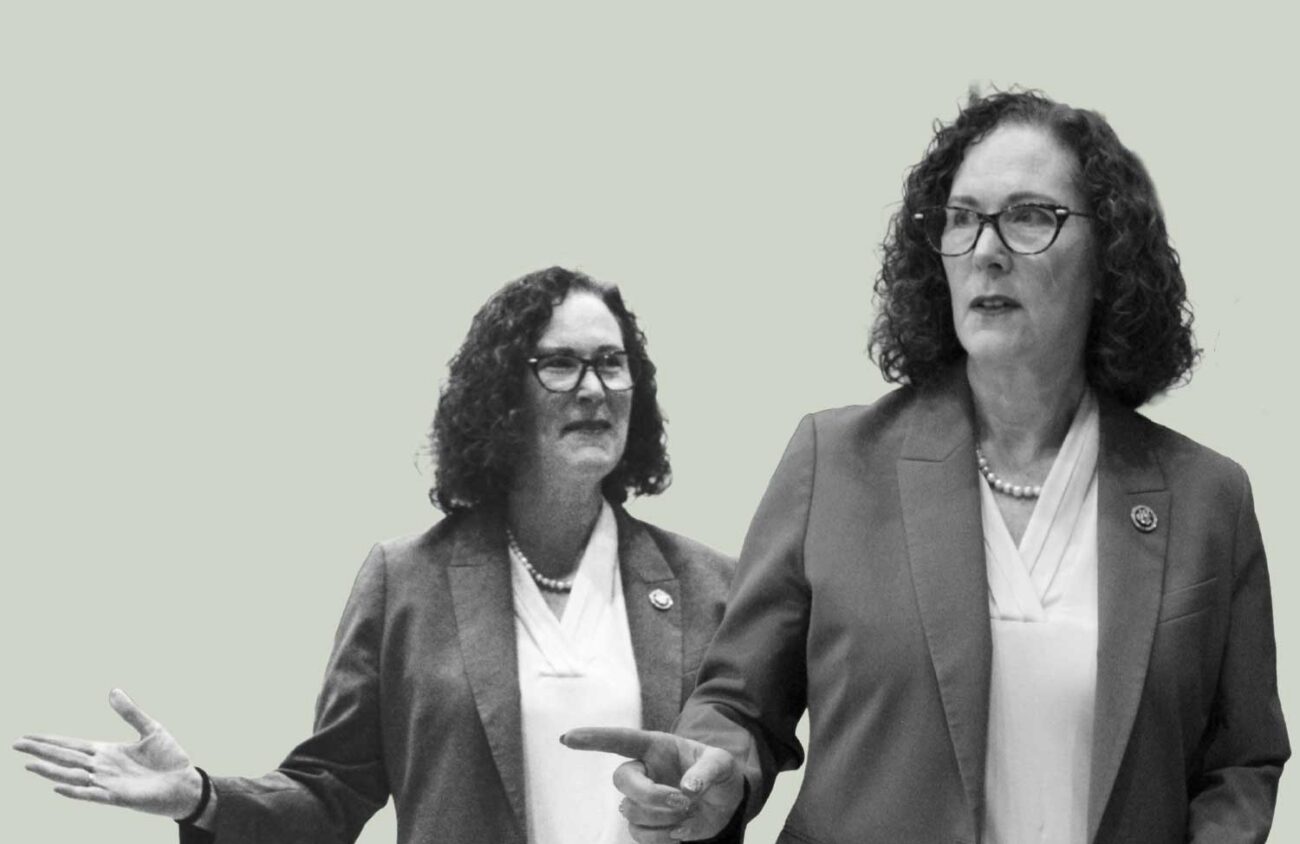
Before she was sworn into the 118th U.S. Congress, before she led the Oregon House as majority leader, before she led Oregon’s Bureau of Labor and Industries, U.S. Rep. Val Hoyle dropped out of school.
“I stopped going to school, I think in the ninth grade. I just stopped going because I didn’t feel like I could ever be successful. I didn’t think I was smart. I even had a teacher say I wasn’t college material. I just gave up.”
Hoyle, born on Travis Air Force Base in Fairfield, California, grew up in a family steeped in labor activism and public service. But inside the classroom, something wasn’t working.
“I have a fairly severe visual processing disorder, it’s very much like dyslexia, that I did not get addressed until I was in my 40s,” she says. “School was very, very difficult. I could read and not spell, and math was hard.”
She could read — but she was scanning, not decoding. Letters blurred. Spelling bees were humiliating. In second grade, she says, a teacher taped a green paper turtle with her name on it to the wall because she wrote so slowly — a moment she never forgot.
“I just knew that things were harder for me than other kids and just assumed it was because I wasn’t smart.”
One resource room teacher changed that trajectory.
“She just said, ‘No, you are smart enough. Children rise to their level of expectation.’”
Hoyle says that changed her perspective forever. That was the moment she knew she was smart and finally had an expectation of herself.
Technology helped, too.
“Once we could use word processors where there was spellcheck, I have to say that was a total game-changer. I was in tears with my first term paper.”
Spellcheck meant she didn’t have to retype entire pages. It meant survival in college.
Hoyle attended Bunker Hill Community College and was assisted through the TRIO program for first-generation and low-income students before graduating from Emmanuel College in Boston. TRIO, she says, taught her how to learn and gave her the fresh start and support she needed to navigate her education.
“She was like, ‘You recognize letters at the level of a second grader,’” Hoyle says of the specialist who evaluated her in her 40s.
In 2015, while serving as Oregon House majority leader, Hoyle publicly shared her story to save Senate Bill 612, which would require first graders to be screened for dyslexia and visual processing disorders. It was looking like the bill wasn’t going to pass.
“I was the majority leader and I hadn’t talked to anyone, but close friends, about my issues ’cause you know, you feel ashamed.”
“I went down and I told my story for the first time.”
“Every single person on the committee, Democrat and Republican, voted for the bill.”
It passed.
“At that point right there, I decided that I could run for reelection because I never saw myself as someone who would run for office before that.”
She says, “I wouldn’t have graduated high school, I would not have gone to college and I surely would not have ended up in Congress,” if that teacher hadn’t made her feel welcome to learn.
For Hoyle, the failure wasn’t struggling. It was believing the system when it told her she wasn’t capable.