
When Eugene Weekly was reaching out to musicians from Eugene to tell their stories of defeat, a lot of people simply did not respond, and one person flat-out rejected us. Springfield-born jazz singer Gina Saputo explains this likely happened because in the music industry there’s a lot of failure — all the time — and as an artist, “you don’t want people to remember you by them.”
That’s understandable, but it’s also the reason we’re doing this — to remind ourselves that even though we all have our eye-twitching moments, as Modest Mouse famously once said, “We’ll all float on OK.” And this has been the case for some of Eugene’s most famous musicians, who have come back from what, at the time, felt like a total disaster.
Robert Wynia is the frontman of beloved alt-rock band Floater. The group has one of the most dedicated fanbases out there, and they’re still touring on the regular. Wynia says that “there are moments beyond counting that I have utterly humiliated myself,” but the one that haunts him, and that he’s learned from the most, happened when he was in middle school band.
His school’s performing arts department required all the band kids to be in the winter play, and he was cast in a singing role. “I was utterly terrified at the idea of being on stage,” Wynia says. “It filled my veins with ice and made my ears ring.” He insisted to his teacher that he absolutely could not do it. His teacher told him that he’d be fine. As the show grew closer, the more his body filled with anxiety. When the moment came for him to sing, “My fear became paralysis, and I couldn’t make a sound.” Little Robert Wynia froze solid.
“The cast waited. The orchestra waited. The audience could smell fear, and my failure became so obvious that you could hear soft, sad gasps coming from the sympathetic grown-ups in the audience, and muted giggles from the kids,” he says.
On the drive home, his mother told him, “Yes, that could have gone better, but now it’s behind you.” He says that at school on Monday, “my friends were still my friends, bullies were still bullies and the world continued to spin much as it always had before.” After that, he says, being on stage was never again a big deal to him.

Some mistakes are forgotten, and others lead to something beautiful. Mat Kearney, either known best for all the times his songs appeared on Grey’s Anatomy or for the University of Oregon’s anthem “Coming Home,” says that when it came time to record the song’s music video, he was an “unbalanced perfectionist” with reservations about having UO’s team shoot and edit it. “The idea of not having control scared me,” he says, so he told them he’d only film for an hour. When he got to Autzen Stadium, he stood in the tunnel where players enter the field, and performed the song several times with his back against the wall — refusing to do anything else.
About a week later, he got a call from the editors telling him that there wasn’t enough material to make any sort of music video. “We had no footage,” Kearney says, “only because I was scared.” The editors then inserted archived footage of old University of Oregon games, Steve Prefontaine and shots of Oregon’s nature, turning the video into an homage to the state and the Ducks. “It became this beautiful thing,” he says. When he looks back on that moment and his behavior, Kearney says it’s funny to him now. “The perfectionism, and me being scared to give them time and relinquish creative control, produced one of the more beautiful things of my career, and something I never would have predicted.”
Some mistakes push you to be a better version of yourself than you ever could have imagined. Tracy Bonham is a two-time Grammy-nominated artist for her 1996 number one alt-rock track “Mother Mother” on her Gold record The Burdens of Being Upright.
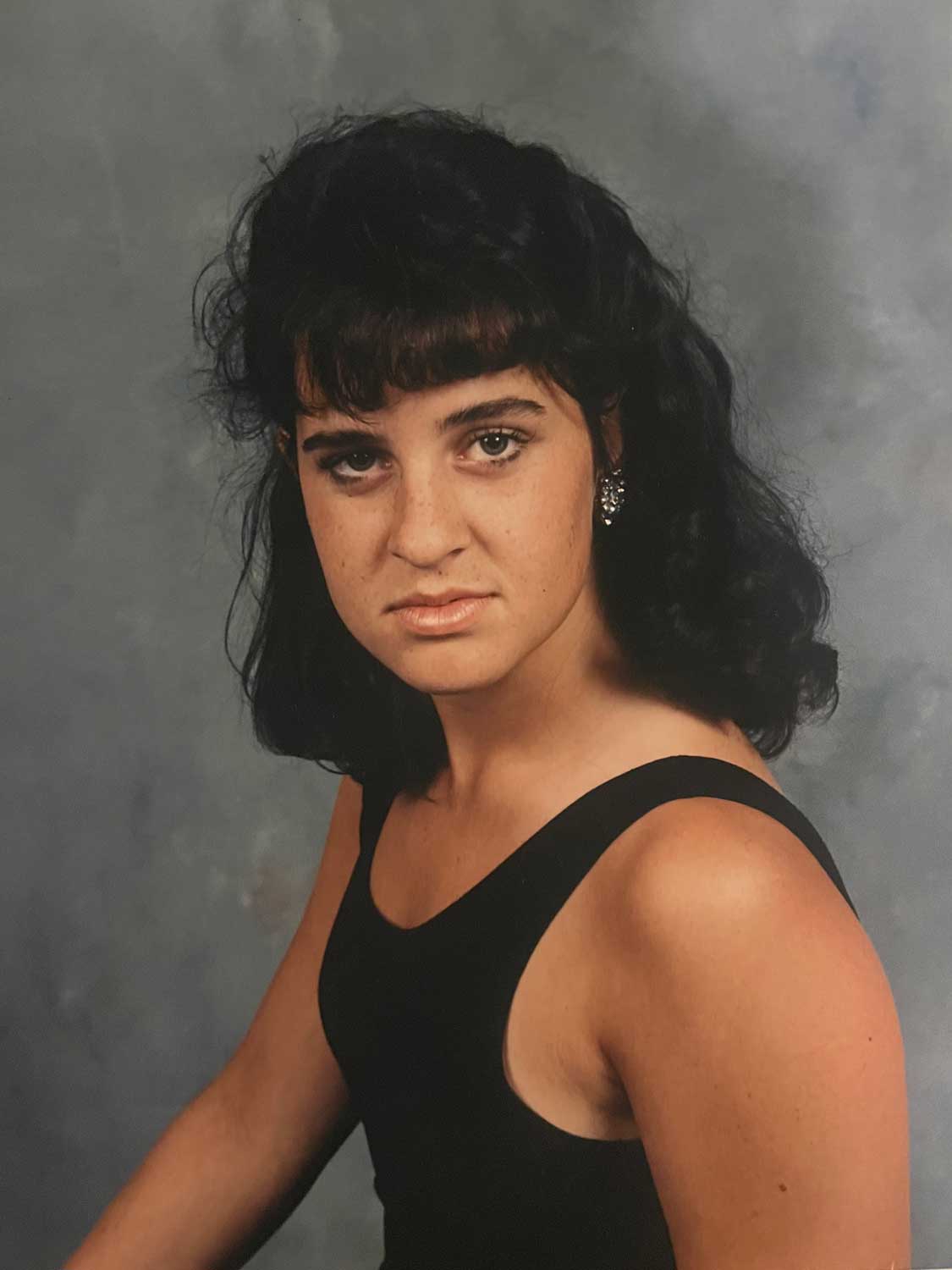
When she was 17, her parents sent her to Interlochen Arts Camp, a prestigious and expensive music program in Michigan. “It was very strict,” Bonham says, “and I have a really hard time with rules.” Three weeks into the eight-week program, Bonham and a group of girls were smoking cigarettes in a dorm room when the RA walked in. Everyone rushed to put their smokes out, but Bonham wasn’t quick enough. “I was the last one holding a cigarette,” Bonham says. “I immediately came up with this story that it wasn’t mine. I was putting it out for someone else.”
The dean didn’t buy her lie and she was kicked out of the program with no refund. “They didn’t give me a second chance,” Bonham says. She was forced to stay grounded in her cabin for two days before being flown home.
“My parents picked me up from the airport with my tail between my legs,” she says. Her Eugene violin teacher told her that she needed to take the opportunity to prove Interlochen wrong and “show them.” She dove into her music head first. “I was practicing [violin] four hours a day,” she says. In the time that followed her expulsion, she won second place in her state solo competition for violin, first chair in Youth Symphony and a full scholarship to play violin at University of Southern California. The weekend before publication, Bonham performed and taught a masterclass at Interlochen, before getting stuck on campus due to a historic snowstorm. “My take is, now they can’t let me go!” Bonham says in a post-interview email to Eugene Weekly.

Other mistakes are simply bizarre and it’s best not to think too hard about them. Such is the case with Saputo, who has charted on Billboard Japan and regularly performs with Jeff Goldblum’s Band, Jeff Goldblum and the Mildred Snitzer Orchestra. About 12 years ago, she was living in Los Angeles and gigging frequently — though she still had barely a dime to her name. “I was just scraping by, if that,” she says. “I couldn’t afford a new record, and I couldn’t afford to get this dental work I needed done. I had a broken molar.” What she did have was “a ton of fans,” many of whom were old men.
One of these gentlemen callers was a high-powered lawyer who told her that he wanted to fund her next record. He told Saputo that he needed her to draw him a business plan, and he would pay whatever she wanted. “It was just business because he had a fiancée and I had a boyfriend,” she says, but she was hopeful about her career. “I’m gonna get my dream record.”
She also had another fan, a 93-year-old-man named Apples, who wanted to fund her next record as well. “He didn’t have any kids, so I would go visit him,” she says. She told him that she already had an investor for her album, but “I do have this broken tooth.”
Saputo recalls Apples saying “Gina, I want you to go to the dentist and find out how much it’s going to cost to fix that tooth, but I also want you to ask him how much it would cost to get ‘Hollywood teeth.’” Saputo did, and reported back that it cost $375 to get her tooth fixed, but she very much did not need $10,000 Hollywood teeth. Apples disagreed, and wrote her the five figure check then and there. Saputo made the first appointment and developed a plan to get her dream teeth.
Meanwhile, she wrote up her business proposal for her record, and had a meeting with the lawyer at a celebrity restaurant. “He had some artisans bring soy candles that were handmade for me. And brought flowers and a private room in the back,” she says. At that point, “I’m still a very, very poor musician.”
The lawyer tells her that if he was going to fund her record, she would have to play for him whenever he wanted and Saputo had to fund every performance. He told her “I’m gonna own you. You’re going to have to sign your name in blood.”
She told him she’d have to reconsider the plan and get back to him. Later that week, she fainted after a workout and broke her two front teeth, just days before she had to perform on live television. Because of the plan she had worked out with her dentist, her Hollywood teeth came in just at the right time.
She never heard from the lawyer again — he ghosted her completely. Her biggest takeaway from the whole experience is “thank goodness I got the teeth and not the record deal.”
Eugene Weekly reached out to Modest Mouse’s Isaac Brock but had not heard back at press time.