
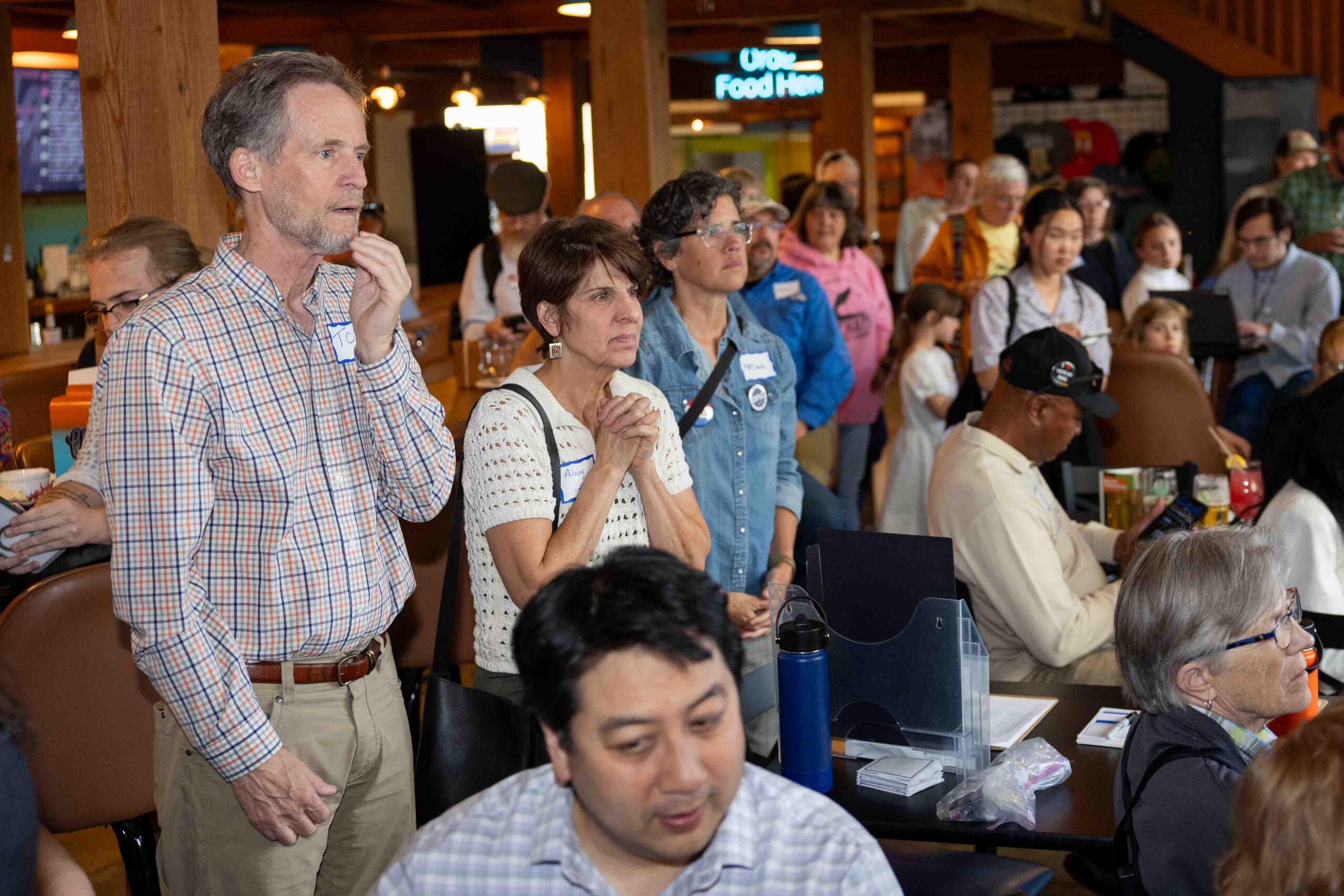
This year’s May primary election saw record-breaking campaign donations, not-so-nonpartisan nonpartisan races and the usual low voter turnout.
Local offices, like city council and county commission, are nonpartisan — so everyone runs in the same May primary regardless of political party. A candidate may be a Republican or Democrat but the seat and the primary is not. If a candidate in one of these races receives more than 50 plus percent of the vote, then they are the only candidate to appear on the November ballot. If neither candidate receives over 50 percent, then the two with the most votes will appear.
In partisan races, like the Legislature and many state and federal offices, the Democrats, Republicans and other parties hold primaries and the winners then face off in November.
As of press time, Springfield Mayor Sean VanGordon was holding onto a victory over incumbent David Loveall by over 1,000 votes for the District 2 Springfield Lane County Commission seat. Loveall’s term has been rife with controversy — he was censured following an investigation that revealed he intimidated county employees and he started several commission meetings with Christian invocations.
Loveall did not respond to Eugene Weekly’s request for comment, but VanGordon tells EW, “I believe in service and how we serve people in our community is so important to me because it is the way that you give back. It is the way that you really try to move the community forward in a reasonable and tangible way.” He adds, “I’m grateful that Commissioner Loveall and William Monsoor were in the race. It gave people choices, and when people vote, that’s a great thing.”
Political consultant and former GOP legislative staffer Jacob Pelroy was holding on to a narrow 760 vote majority for Lane County Commission District 5, East Lane, over incumbent Heather Buch.
As with the Springfield race, if neither candidate receives over 50 percent of the vote, both appear on the November ballot. Pelroy stands at 49.90 percent, with 7,904 votes and Buch 45.10 percent, with 7,144 votes at press time.
Pelroy received massive infusions of cash from large donors just days before Election Day, raising $77,000 from wood-products companies, big businesses and the Community Action Network, a PAC known for its contributions to right-leaning candidates.
Pelroy, president of the Lane County Garbage and Recycling Association, campaigned heavily against the CleanLane Resource Recovery Facility, which Buch supports. In total, Pelroy raised $295,971, a record-setting number for a Lane County commissioner’s race.
Incumbent Lane County Commissioner Ryan Ceniga, West Lane District 1, bested Thomas Hiura, a small business owner and Lane Education Service District board member by 22.52 percentage points.
Hiura says he feels good and “I’m honored that so many people turned out in my race.” He continues, “I’m glad I was part of the fight, and there’s so much work to do still on the Lane ESD board that I’m really excited to be able to focus on that fully right now.”
Measure 20-373, the “Watersheds Bill of Rights,” which would’ve given legal rights to Lane County watersheds similar to those of a person, was losing by 27.32 percent.
Just five days before Election Day, May 14, opposition committee Protect Our County received $96,000 in contributions mainly from conservative interests like the Oregon Business and Industry Issues PAC and the Oregon Forest Industries Council. A day before the contributions were reported, Protect Our County reported a $131,829 expenditure on advertising.
Michelle Holman, 20-373’s chief petitioner, writes in an email to the Weekly, “The opposition’s big money, $434,000, from a very few vested-interested corporations, including a large donation from the Kansas-based Koch Bros., influenced Lane County’s voters through a massive disinformation campaign.”
Holman adds that the measure raised $34,000 through small donations, and was unable to counter what she describes as deceptions. “With the help and support of countless volunteer supporters, we ran a tireless, robust, honest campaign that we can all be proud of,” she says.
Mike Clark, longtime conservative incumbent in Eugene City Council Ward 5, north Eugene, received just 247 more votes out of 4,886 ballots cast, than progressive newcomer Athena Aguiar. Fellow progressive Jasmine Hatmaker, a mortgage specialist, received 20.71 percent of the vote.
Clark, with less than 50 percent of the vote, will appear on the November ballot with Aguiar for a rematch. “I think that I have had a level of success so far by speaking well for the people in north Eugene that I’ve had the privilege to represent,” Clark says.
Ward 4 incumbent Jennifer Yeh handily held on to her northeast Eugene seat, as did Greg Evans over Tai Pruce-Zimmerman in northwestern Eugene. John Barofsky of Beppe and Gianni’s was behind UO SEIU 503 Local 085 union president Jennifer Smith in the Ward 3 university-area race to replace Alan Zelenka, who is retiring. This race was cast by many as a conservative versus progressive race, a slant Barofsky who had conservative endorsements and contributions, challenged.
Attorney Katina Saint Marie, leads incumbent Amit Kapoor in the one contested judge’s race for Lane County’s Second District Circuit Court.
In the gubernatorial race, Gov. Tina Kotek won the Democratic primary and Christine Drazan won the Republican primary, heading for a hot race in November as Kotek has had low approval ratings.
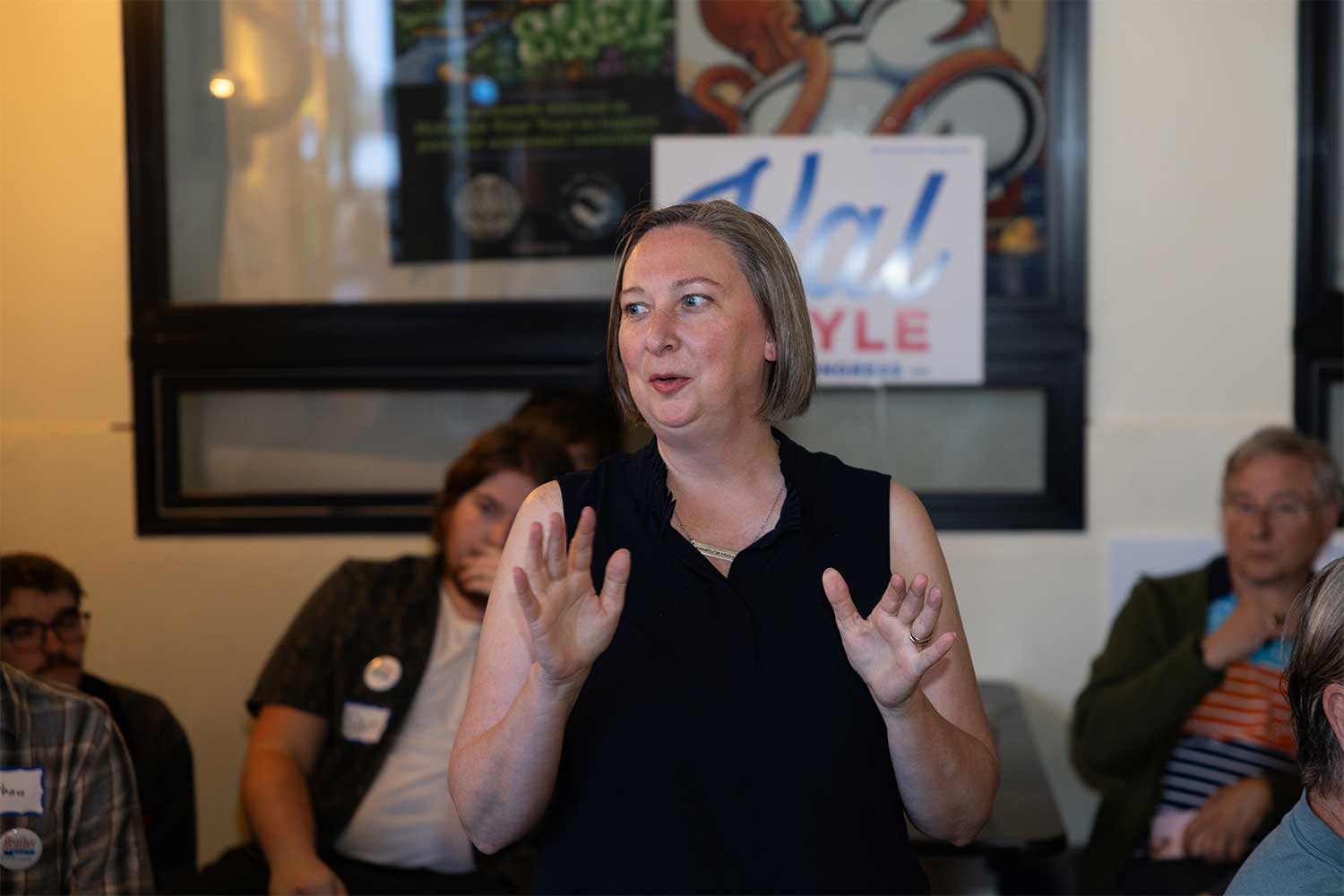
U.S. Rep. Val Hoyle, incumbent in Oregon’s 4th Congressional District, scored a victory in the Democratic primary against Melissa Bird and Dan Bahlen. In a press release, Hoyle writes, “We have to hold this seat and take back the majority to put a check on this administration and the damage it’s doing to working families.”
She faces Monique DeSpain, Republican primary winner and her previous opponent, in November.
This year, about 27.3 percent of the 285,064 active registered Lane County voters cast their ballots as of 11 pm, May 19. That’s 5 percentage points more than last year’s special election and approximately nine percentage points lower than the May 2024 primary.
Election results are based on unofficial numbers released 11 pm, May 19. Final election results are certified by the Oregon Secretary of State, June 25.