A rainbow of scales sits out on an ice-covered table. The rich pink of freshly caught salmon is hard to replicate, and a true fish fan can spot the difference. Handwritten chalk displays the range of smoked to fresh to canned fish available for purchase from the Brandywine Fisheries booth at the Eugene Saturday Market. Kristi Frazee packages up orders and shares easy recipes to make with cod, halibut and shrimp.
Since the early 2000s, Brandywine has grown with its customers while maintaining the integrity of a family fishery. Regulars will remember when owner Bill Whitlock found a gluten-free teriyaki sauce and changed the flour in the clam chowder to corn starch to accommodate gluten-free consumers. He shares with his customers how best to cook cod or de-shell crab. Brandywine also doesn’t pay for advertisements, relying on word of mouth and the products to speak for themselves.
“What I like most about our customers is no one has a bad attitude,” Whitlock says.
Brandywine Fisheries sells at farmers’ markets from Eugene to Roseburg, and Bend to Portland. Any fresh fish not sold goes directly into the smoker and fills the Brandywine storefront in Springfield with more than 10 iterations of smoked fish.
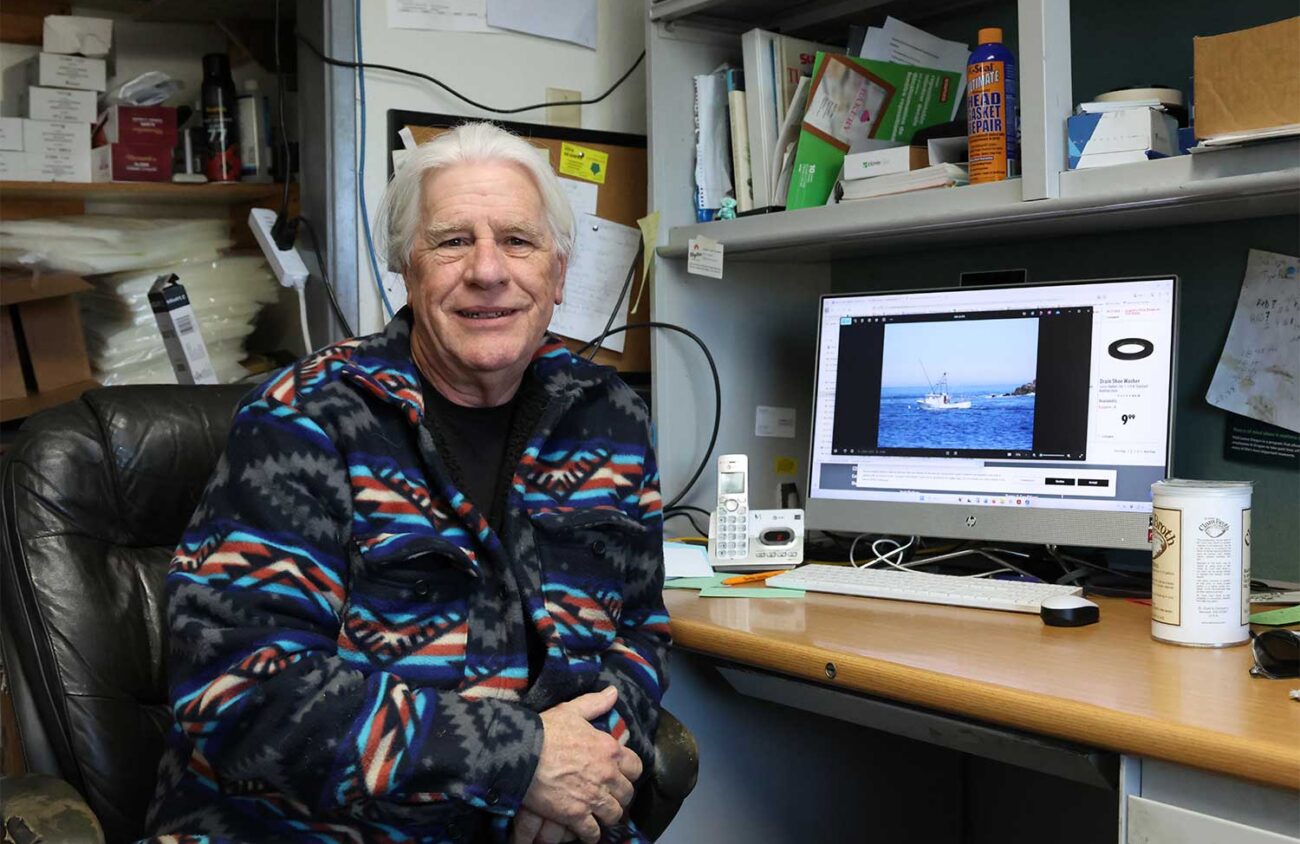
At 74 years old, Whitlock is still running his “little bitty fish store” with the help of his brothers, sons and in-laws. His boat, “The Brandywine,” is a hand-built vessel operating out of Charleston Marina, near Coos Bay. The boat docks often because it does not immediately freeze the catch, making it the freshest possible product.
“You have to be self reliant to be a fisherman,” Whitlock says. “You have to do whatever it takes.”
Whitlock was born on a timber farm in Cottage Grove. His father taught him how to sport fish. After graduating high school at 18, he was faced with an impending draft to the Vietnam War.
“People forget about the draft,” Whitlock says. “My number was three, so I went ahead and joined the Air Force.”
Shortly after he enlisted, the war ended. Whitlock got a job as a courier for the military, transporting classified documents from place to place. As a kid, he saw this as an opportunity to travel the world.
“Been to every country except the communist ones,” he says. “And even those for a day or two.”
He spent time in the Middle East and met people “just like us but with a dictator,” and credits his opportunity to travel for opening up his worldview. In his free time, he fished.
Upon returning to Oregon in the early ’90s, Whitlock worked in automobile sales and financing. His siblings and family never left home and welcomed Whitlock back with open arms.
In early 2005, Whitlock bought what is now the Brandywine boat off of local fisherman David Revis, shortly after he died. Revis was an old friend of Whitlock’s wife, Gloria Tinker. The two met late in life, and she worked as an artist, doing mostly oil paintings. Their sons, Billy and David, work in the family business.
“Either grow together or grow apart,” Whitlock says. “And we grew together pretty well.”
Whitlock says the importance of small family businesses has grown as well.
“I stay progressive, I don’t understand why you elect all these old shits to run your companies,” he says.
He prefers the slow but rewarding lifestyle of hand-caught fish. He’s left-handed and learned to shuck crab with his right hand so he could demonstrate to his protégées. Most of the sales come from salmon, but there is also a huge market for black cod.
His method of selling follows an honest reflection of what could be taken from the ocean at a given point in time, setting his own standards of regulation beyond what the Oregon Department of Fish and Wildlife sets. Farmed fish is replicated from the conditions in the wild, and some people prefer the farmed over the wild.
“Food stocks is not just ours; it’s the rest of the ocean’s,” Whitlock says.
The misconceptions around fish follow it to the post-fishing process. For example, “sushi-grade” fish refers to fish that’s gone through the freezing and thawing process to make it safe to eat, not because it was farmed or caught in a higher-quality environment.
The cost of fish, all steps of the way, are increasing. Commercial fishers will see a 12 percent increase in licensing fees for affected fisheries in 2026, followed by additional 4 percent licensing fee increases in 2028 and 2030. The increase is to sustain and support conservation of wildlife, according to the ODFW, which has reduced staff and programs to help limit further fee increases.
For Whitlock, concerns around fee increases are for those who rely on fishing and hunting to support themselves and other small businesses, like Brandywine.
To own and sustain a commercial fishing boat in Oregon costs between $100,000 and $5 million. In addition to food processors’ licenses, warehouse licenses and other miscellaneous costs, fishing in Oregon is a multimillion-dollar industry. It’s no longer a young man’s game, Whitlock says. It’s becoming more expensive to go fishing than it is to buy fish.
Whitlock’s motivation, however, is in providing high-quality fish to the people of Oregon and maintaining relationships with Brandywine’s regulars. He’s not yet planning on retiring, but the family ties make him confident in his company’s legacy.
“It’s very fun when done right,” he says with a wink.
Brandywine Fisheries is at 4731 Main Street #1, Springfield, and open daily 10 am to 6 pm. Call 541-505-9686 or check farmers market availability at BrandywineFisheries.com.