
Programming Counts
Eugene Symphony takes a step backward
By Tom Manoff
 |
I reviewed the Eugene Symphony performance of Mahler’s Titan symphony three seasons ago. I heard them play it again last month — too soon when many important works heard elsewhere remain unperformed in Eugene. Despite lively moments, the Titan is imbued with slow-paced, 19th century angst. It’s usually paired with contrasting music, but ESO’s new conductor Danail Rachev chose Delius’ “Walk to the Paradise Garden” and Wagner’s “Siegfried Idyll” — too akin to Mahler’s style for contrast. Heard in a soup of aesthetic sameness, the Titan became the Titanic.
I just heard the Titan with Gustavo Dudamel and the L.A. Philharmonc, but paired with John Adams’ recently commissioned City Noir — a jazzy, energetic and wonderfully American work. Brilliant programming!
Two days before, as part of Dudamel’s “America & Americans” series, the 29-year-old conductor led a bold evening of Carlos Chávez, Leonard Bernstein (both 20th century) and Peter Lieberson (21st century). Also on the series that weekend was Osvaldo Golijov’s La Pasión según San Marcos, conducted by Maria Guinand (recently a visiting artist at the U0). Golijov’s Passion, now world famous, was commissioned by Helmuth Rilling.
Three days of concerts with only one work composed before 1900! And audience response throughout was thunderous delight. Demographics: Half at each concert ranged from children to 50-somethings; many spoke Spanish. Gustavo Dudamel is showing what classical music must bring to the 21st century. Orchestras throughout the world are taking notice.
Rachev’s programming seems a step backward. Compare it to ESO conductor laureate Marin Alsop at Baltimore (www.americanorchestras.org). Alsop programs twice the contemporary music, much of it American. With the Titan, she chose Bernstein’s Jeremiah Symphony. Upcoming, she conducts Music of Zappa and Glass. How much is that plane ride to Baltimore? There’s no excuse not to program accessible contemporary music in our time (my list is at www.tommanoff.com).
When Brett Campbell protested ESO’s concert of video game music instead of “real” contemporary works (4/22), the overwrought, thin-skinned response suggested perhaps that ESO had trepidations from the start. ESO’s Paul Winberg wrote that Brett had “insulted patrons.” Another described his piece as “ignorant;” Another criticized EW for allowing a writer to go “into the gutter.” Hey! It wasn’t Campbell who took a swipe at classical music’s legitimacy with a video game concert. Perhaps the insult to patrons lies elsewhere.
Among Campbell’s many pieces for The Wall Street Journal, he’s brought Eugene to national attention with reviews of the Oregon Bach Festival (twice) and OFAM. At All Things Considered, I’ve reviewed the Bach Festival, Eugene Opera and UO composer Jeff Stolet. In each case we’ve had compelling programming to pitch our editors.
It’s all about programming, folks. And a sustainable, relevant future for classical music in the 21st century.
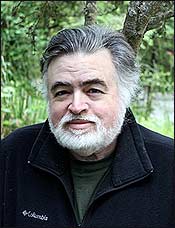
Tom Manoff, author of two college music texts, taught theory and composition at Manhattan School of Music from 1967-78. He’s been the classical music critic of NPR’s All Things Considered since 1985. He’s lived on and off in Eugene since 1978.