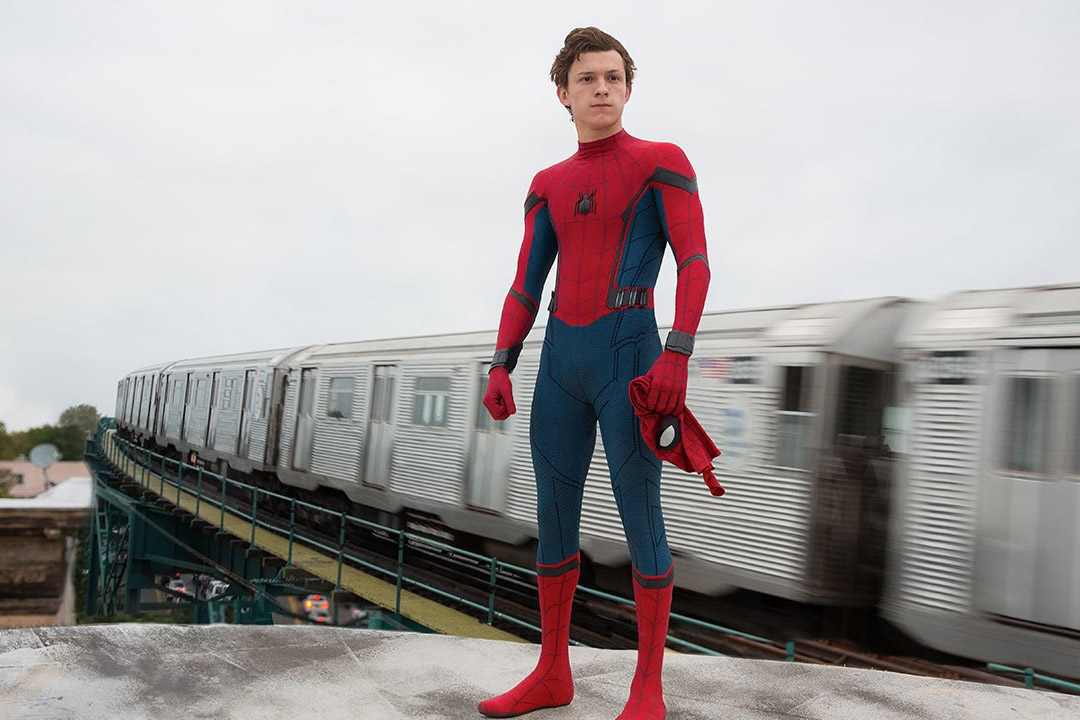
It’s oddly easy to forget how important Spider-Man is to the current superhero movie bonanza. 2002’s Spider-Man was the first movie with a $100-million opening weekend — a green light for the continuing superhero invasion. There’s a reason Spider-Man is now in his third incarnation: People really like their friendly neighborhood superhero.
Spider-Man: Homecoming takes that hero back to his New York City roots. Peter Parker (Tom Holland) swept into the Marvel Cinematic Universe (MCU) with an endearing appearance in Captain America: Civil War as newbie Spider-Man, a schoolkid figuring out how to use an amazing power — but also as Tony Stark’s secret weapon, brought in to make a splash and then go home again.
But what’s home look like when you just fought alongside the Avengers? And what’s the world look like after the Avengers have been fighting in it for a few years?
Homecoming very much belongs to this third-time’s-the-charm Spider-Man, but around the edges, it offers a new look at how ordinary people live in the wake of the Avengers. I don’t just mean the men picking through the rubble left by the Chitauri invasion; I mean the kids growing up with Captain America speaking to them from TV screens in school.
Superheroes have stepped out of the pages of comic books and into classrooms, television, governmental contracts. What does that do to the next generation? We already wanted to grow up to be X-Men or Supergirl or Wonder Woman. But what if they were real?
This Spider-Man can’t quite shake the quote that hung over the Tobey Maguire movies: “With great power comes great responsibility.” But Homecoming turns its awareness of this Marvel mantra into an opportunity to tell a story about growth, the mistakes you have to make to learn, and one of the other most important lessons a young person in tights has to learn: that there are many ways to be heroic.
Spidey’s still a kid, with a voice that cracks sometimes. Holland gives him boundless energy, inventiveness, a good heart — and the script, importantly, gives him room to mess up. Which he does, a lot, and if it’s easy to imagine Spider-Man zipping through the backyards he crashed into, mending fences and straightening gutters, some of his mistakes are not so simple to clean up.
Holland is perfect, as is Michael Keaton, playing a delightfully overt nod to Batman and Birdman; an underused Zendaya as Peter Parker’s classmate Michelle, who gets some of the best lines; Jacob Batalon as Peter’s bestie Ned; and Marisa Tomei as an Aunt May, who feels like a person with her own life.
This New York City actually looks like NYC, with corner bodegas and subways and genuine diversity from sidewalks to classrooms. It pays intriguing lip service to some common questions about the after-effects of Avengers battles: Who cleans up their messes? What havoc does all that alien rubble wreak on the world?
Homecoming can’t get too deep into the darker side of heroic activity — it’s Spider-Man’s movie, after all, his coming-of-age, his acceptance of the hero he is right now and the place that needs him. But it sets the stage for some promising stories to come, both about this young hero and the strange world he calls home. (Broadway Metro, Regal Valley River, Cinemark 17)
A Note From the Publisher

Dear Readers,
The last two years have been some of the hardest in Eugene Weekly’s 43 years. There were moments when keeping the paper alive felt uncertain. And yet, here we are — still publishing, still investigating, still showing up every week.
That’s because of you!
Not just because of financial support (though that matters enormously), but because of the emails, notes, conversations, encouragement and ideas you shared along the way. You reminded us why this paper exists and who it’s for.
Listening to readers has always been at the heart of Eugene Weekly. This year, that meant launching our popular weekly Activist Alert column, after many of you told us there was no single, reliable place to find information about rallies, meetings and ways to get involved. You asked. We responded.
We’ve also continued to deepen the coverage that sets Eugene Weekly apart, including our in-depth reporting on local real estate development through Bricks & Mortar — digging into what’s being built, who’s behind it and how those decisions shape our community.
And, of course, we’ve continued to bring you the stories and features many of you depend on: investigations and local government reporting, arts and culture coverage, sudoku and crossword puzzles, Savage Love, and our extensive community events calendar. We feature award-winning stories by University of Oregon student reporters getting real world journalism experience. All free. In print and online.
None of this happens by accident. It happens because readers step up and say: this matters.
As we head into a new year, please consider supporting Eugene Weekly if you’re able. Every dollar helps keep us digging, questioning, celebrating — and yes, occasionally annoying exactly the right people. We consider that a public service.
Thank you for standing with us!
Publisher
Eugene Weekly
P.S. If you’d like to talk about supporting EW, I’d love to hear from you!
jody@eugeneweekly.com
(541) 484-0519