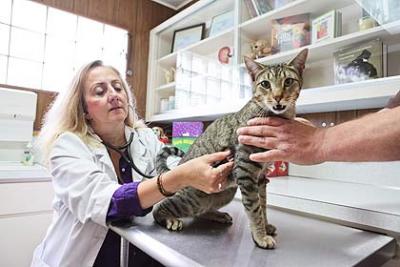
Cats love to put their butts in your face. It’s a feline way of saying “Hello.” What’s truly disturbing is when there is a host of little worms all wiggling out of kitty’s bottom, saying “Hello,” too. For such fastidious animals, cats can carry a whole lot of worms and parasites.
We’ve all heard the “crazy cat lady” stereotype, but parasites might be the problem, not cats. A new study from Denmark suggests that women with a Toxoplasma gondii infection have an increased risk of self-directed violence. The study explores how the bug has been linked to behavioral, affective and cognitive disorders in people. The study screened newly born children for T. gondii infection while associating the mother’s self-directed violence as a neurological imbalance caused by the bug.
Studies find that the parasite known as T. gondii should not be underestimated. It lies dormant in a feline’s intestinal tract and rarely does a cat show physical symptoms. But this widespread neurotropic protozoan parasite affects approximately one-third of the human population worldwide with symptoms ranging from little to none in most common cases to severe behavioral disorders in rare cases, according to scientists. People can be infected by ingestion of the eggs spread from feces of an infected cat, eating uncooked meat or contaminated water.
Maybe this is how the “crazy cat lady” came to be. The parasite’s effects on the brain — not a kitty obsession — are responsible for erratic behavior.
Self-directed violence in mothers and crazy cat ladies is only a small part of what to be concerned about when it comes to T. gondii.
According to Eugene veterinarian Sheila Johnson, “T. gondii is very serious and can cause birth defects in children, so pregnant women should be careful when cleaning the litter box.”
Although with all this talk of T. gondii in cats and the threat it poses, changing the litter box may sound alarming, but “You are more likely to contract it from ingesting infected, undercooked meat,” Johnson says.
So before the thought of giving your beloved cat away sinks in, remember that there are other health concerns much more likely to enter your home.
The most common parasitic worms found in most animals, including your cat, are roundworm and tapeworm. Outdoor cats are more likely to expose themselves to worms through the environment. Fecal droppings, ingesting infected prey and dirt are among the many ways roundworms get picked up. The tapeworm, on the other hand, is most commonly given to your cat by fleas.
“We see a lot of roundworms, primarily in kittens, and those worms can be about a half a foot,” Johnson says. “That’s why it’s very important to deworm your animals regularly.”
The dewormer used on most animals is a neurotoxin that paralyzes the worm, which exits the cat from the anus and dies, according to Johnson.
“We’ll get frantic phone calls from people finding worms on their carpets and we have to assure them that the worm coming out is what we want,” Johnson says.
Cats have a reputation for being assiduous groomers, but they, too, can miss a spot. All it can take is that one fleabite or ingesting the wrong critter before your cat’s insides are crawling with hungry worms. If you see symptoms, it’s better to be safe in the vet’s office then sorry with worms crawling out of your cat’s butt.