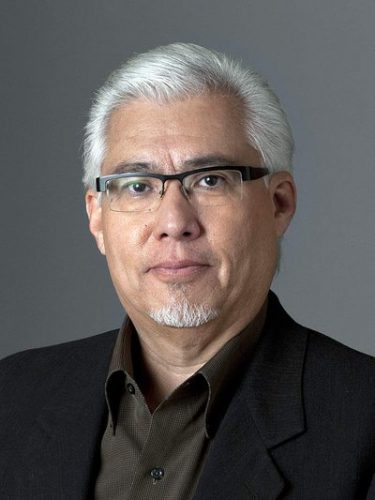
When NPR education correspondent Claudio Sanchez visits a town to give a lecture or public talk, he likes to take something back home with him — a story.
“I try to report on something local every time I’m invited to one of these things, because I think it’s a great opportunity to get to understand the community better,” he says.
On March 2, Sanchez will speak at the University of Oregon about his experience as an education reporter. His visit is sponsored by KLCC and supported by the Wayne Morse Center for Law and Politics.
Sanchez has covered education for NPR for 25 years and reports on a range of topics, from his yearly predictions of big education stories to watch — this year’s list included charter schools and student debt — to snapshots of education on the local level.
Sanchez says he most recently wrapped up a story about Arizona, which has a model program for teaching gifted Spanish speakers. Kids learning English as a second language are often given little opportunity to show how intelligent they are, Sanchez says, but a small school district in Arizona has crafted a program to identify this subsection of gifted learners.
“I’ve always maintained that the best, most powerful stories are the simple stories,” Sanchez says. “Often, education coverage is not simple. It’s complicated to explain a school bond or how a school board works. At every corner you find all kinds of complexities. But I love hearing young people or teachers, people in the trenches who don’t have a political ax to grind.”
When asked why K-12 education hasn’t been high on the list of topics addressed by presidential candidates this election cycle, Sanchez responds that education can lack the immediacy of other popular debate topics like ISIS and immigration.
“There’s an extraordinary amount of education reporting going on highlighting some of the problems, but they’re second-tier or third-tier stories in most newspapers,” Sanchez says. “You’ll see Donald Trump or Hillary Clinton on the front page instead.”
At his public lecture, Sanchez says he’ll address education and the election, as well as touch on his 2016 education predictions. During his visit, he’ll also meet with students and local school superintendents.
This will be Sanchez’s first trip to Oregon, and he says he hasn’t decided yet which story to pursue while he’s here. Although, he adds, “stories that don’t get a lot of coverage are the ones that intrigue me the most.”
Sanchez will speak at 7 pm Wednesday, March 2, at the Knight Law Center, Room 175, on campus. The event is free and open to the public.