When the Oregon Bach Festival commissioned what turned out to be his European Requiem back in 2012, James MacMillan couldn’t have known how prophetic that title might have turned out to be. The 57-year-old Scottish composer’s big choral orchestral work premieres July 2 at the Hult Center — just more than a week after his compatriots voted to withdraw the United Kingdom from the European Union, a move that might in turn provoke MacMillan’s homeland to seek independence from the U.K. Given speculation that other countries might follow the U.K.’s secessionist lead, MacMillan’s new composition may indeed turn out to be a requiem for the ideal of a united Europe.
MacMillan’s powerful past work (his masterpieces The Confession of Isabel Gowdie and Veni Veni Emmanuel) offers clues to his new composition: intensely emotional, sometimes violently energetic and spiritual music informed deeply by his Catholic faith.
Featuring four vocal soloists including the great countertenor Nicholas Phan, the OBF orchestra and Berwick Chorus, MacMillan’s piece is complemented by a masterpiece of Lutheran musical devotion: J.S. Bach’s ever-popular Magnificat. It fits squarely in the line of great sacred works that pillar this year’s festival: Bach’s opening B Minor Mass and Brahms’s festival-finale German Requiem July 10 at the Hult.
MacMillan’s Requiem does mark a rebirth of sorts for the Bach Festival’s commitment to new music, which had seriously flagged in recent years until late former OBF director John Evans — to whom the piece is dedicated — commissioned this one. The Bach Festival does, commendably, offer the biennial Oregon Composers Symposium to nurture emerging composers. This year’s edition includes five free New Pathways concerts (June 29-July 4) at the UO’s Beall and Aasen-Hull concert halls that feature top performers like Roomful of Teeth soprano Estelí Gomez, former Kronos Quartet cellist Jeffrey Zeigler and Duo Damiana (guitarist Dieter Hennings and flutist Molly Barth).
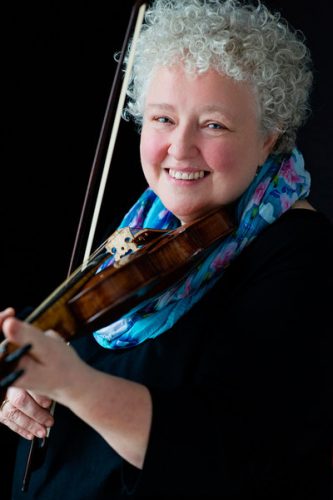
The festival’s belated but most welcome embrace of historically informed period instrument performances will make everything old sound new again to listeners accustomed to anachronistic modern instrument performances. The energetic Portland Baroque Orchestra violinist and director Monica Huggett returns to Beall June 30 to lead experienced new music specialists, including the great Dutch flutist Wilbert Hazelnut, in Baroque masterpieces by J.S. Bach, Telemann and more. Mark Brombaugh plays music by Bach and a new piece by David Dahl on June 24 at Central Lutheran Church, while Julia Brown plays more Bach organ music there on July 1.
Anton Armstrong leads Strangeland Family Youth Choral Academy’s performance of Haydn’s St. Nicholas Mass plus music by Bach and Handel July 3 at the Hult. And speaking of Haydn, the festival this year places the spotlight on that Classical-era composer and his colleagues in two Beall concerts led by scholar and fortepiano master Robert Levin. The July 1 Berwick Academy concert includes Haydn’s stirring Symphony No. 103, Mozart’s darkly beautiful Piano Concerto No. 24 and a Beethoven overture. On July 3, Levin leads renowned German clarinetist Eric Hoeprich and other period instrument specialists in one of Mozart’s own favorites, his breezy piano and winds quintet, and Beethoven’s later quintet it inspired and more.
The Berwick goes back to Bach July 6 when the superb Baroque violinist Rachel Podger leads a magnificent Bach violin concerto along with Baroque classics by Handel, Lully and Telemann. And on July 7, Halls leads the Berwick Chorus in one Bach’s great cantatas and a too seldom heard 20th-century choral classic, Swiss composer Frank Martin’s Mass for Double Choir. The festival closes July 10 with Brahms’s third symphony and German Requiem, reminding us again that nations and unions may pass, but great music lives on.
For the full lineup of events, visit oregonbachfestival.com.