What you know about Middle Eastern food is probably wrong — at least according to Alaa Albaadani. That’s why she started the Mediterranean Network Restaurant, to share the traditional tastes from her home in Yemen, along with other staples from across the region.
“I love American food, but every restaurant that is not American is Americanized,” Albaadani says. “I go to a Middle Eastern restaurant and it tastes totally different than what I’m used to. I get frustrated because people say, ‘This tastes good,’ and I say: ‘That’s not my food; that’s not the real thing.’”
The difference, she says, is in the spices. The opening of her restaurant was delayed, in fact, by an extended search for the right spices. Some are more familiar, like cumin and cardamom. Others are more exotic, like saffron, the stigma of the saffron crocus, which gives food a cheerful yellow-red color. Za’atar features heavily in the menu as well, a traditional blend of spices used throughout the Middle East. Even the rice comes well seasoned, carrying a distinctive kick because of the addition of dried lemon.
One of her most popular dishes, Albaadani says, is the fattah lamb, a stew served in a bowl lined with chunks of saj, a flat bread flavored with habbah sauda seeds — sometimes called black caraway or nigella in English. The mendi chicken and mendi lamb are also popular. For vegetarians, one option is molokia, a green stew made from the leaf of the jute plant and a national dish in Egypt. Served over rice, molokia has a rich, garlicky taste and a distinctive slippery texture.
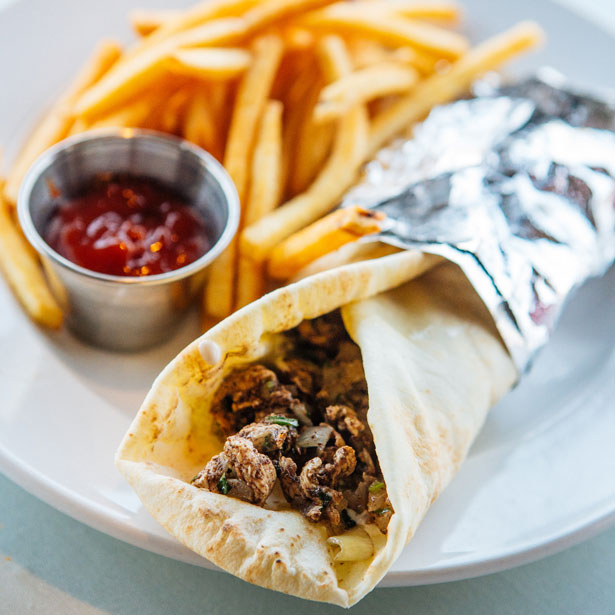 |
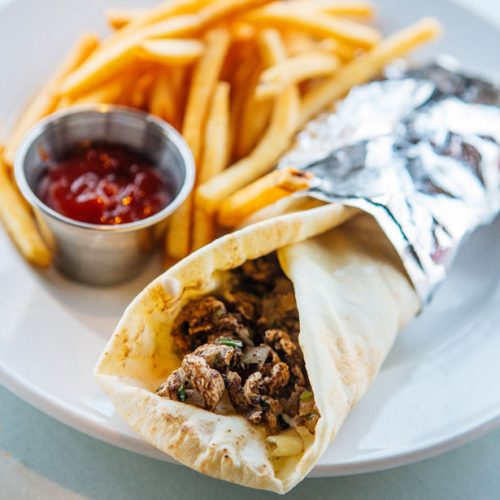
| Lamb Shawarma |
Her interest in cooking started out as a hobby, Albaadani says, something to do when she was bored. “I used to open up the fridge and get whatever ingredients I had and just start making food,” she says. “Then I started learning more and more and I started getting recipes from my family and trying to add things to it, changing things and giving more flavor to it. That’s how it started.” She adds, “And people started loving it.”
Albaadani lived in Eugene for six years before opening the restaurant, initially coming to study at Lane Community College and later the University of Oregon. She quickly earned a reputation as an adept preparer of comfort food for homesick Middle Eastern international students. When an American friend told her he would happily pay $20 for a plate of her food, an idea took root, although her lunch and dinner prices currently range from $10 to $16.
Albaadani says many of the recipes come from her mother, who is known to stop by now and then to see how things are going. But the details of those recipes are closely guarded. Sometimes a customer inquires about a recipe, but Albaadani’s mother conveniently dodges the question with the classic line: “I can’t tell you that; that’s a family secret.”
Aside from top-secret recipes, Albaadani says her vision for the restaurant is about sharing Middle Eastern food with people who may not have had the real thing. That’s the rationale behind the name, particularly the “network” part. “It’s connecting,” Albaadani says, “connecting the American culture with my culture and the Middle Eastern culture, through the food.”
Albaadani and her mother redecorated the 18th and Willamette location with blue and gold accents, complete with antique lamps from Turkey. Middle Eastern-style music plays quietly in the background. They currently serve breakfast, as well as lunch and dinner, offering an opportunity to try Middle Eastern breakfast standards like labneh, a yogurt cheese, or motabq, bread filled with eggs, tomatoes and green onions.
Albaadani acknowledges that appreciation for un-Americanized Middle Eastern food may come as a challenge for some. “But others come here and say, ‘Thank you for doing this. It really does taste like home cooking.”
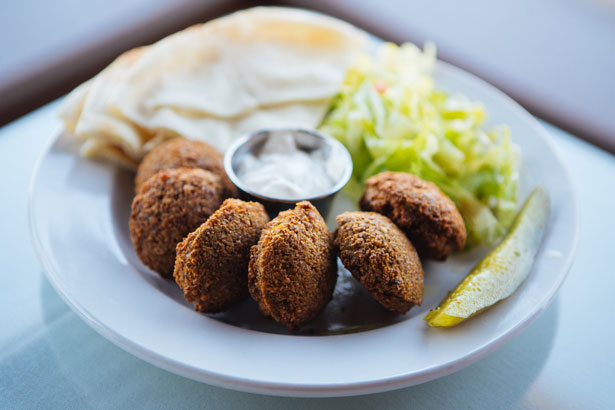 |
| Falafel |
Mediterranean Network Restaurant is at 1810 Willamette Street and is open every day from 10 am to 3 pm and 5 to 10 pm except for Tuesdays, when the restaurant is only open 5 to 10 pm. Find the restaurant on Facebook for more.