The natural world has its regular rhythms disrupted by natural disasters like ice storms, much the way human environments change.
Incense cedar trees have proven much more susceptible to damage from an ice load than Douglas fir. The recent ice storm brought down incense cedar branches in much greater numbers than Douglas fir. The incense cedar’s ecological adaptation to the warmer end of the forest zone allowed them to evolve into a species with weak branches. They are not resistant to snow or ice. Key elements to surviving a disaster seem to be adaptability and resilience.
Heron nests were lost in a big cottonwood stand close to the Willamette River. Only two are left in a tree that hosted a rookery of seven or eight nests in the past ten years or so. Three of the big branches that supported nests are gone. There are still good nest sites in this stand of cottonwoods — it will be interesting to watch how the rookery responds to the damage.
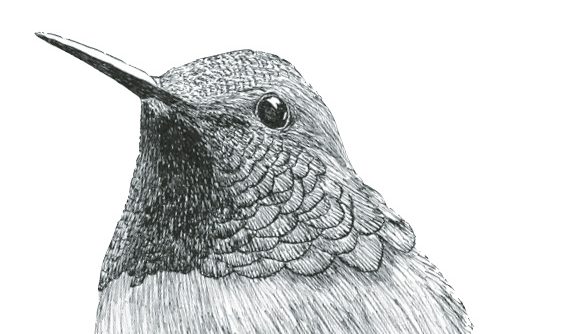
The harshest part of winter in the southern Willamette Valley normally comes after the New Year. Those of us who feed birds in the summer need to pay attention to our feathered friends now, when the living can be tough. Feed in the wild is scarce; many birds now rely on the kindness of bird feeders. Keep seed feeders full and hummingbird feeders available by bringing them inside on freezing nights. They need energy to maintain life functions in temperatures below 0˚ C.
David Wagner is a botanist in Eugene teaching moss classes and leading nature walks. His 2017 Oregon Nature Calendar is now available at Down to Earth stores in Eugene or online from his web site: fernzenmosses.com.
A Note From the Publisher

Dear Readers,
The last two years have been some of the hardest in Eugene Weekly’s 43 years. There were moments when keeping the paper alive felt uncertain. And yet, here we are — still publishing, still investigating, still showing up every week.
That’s because of you!
Not just because of financial support (though that matters enormously), but because of the emails, notes, conversations, encouragement and ideas you shared along the way. You reminded us why this paper exists and who it’s for.
Listening to readers has always been at the heart of Eugene Weekly. This year, that meant launching our popular weekly Activist Alert column, after many of you told us there was no single, reliable place to find information about rallies, meetings and ways to get involved. You asked. We responded.
We’ve also continued to deepen the coverage that sets Eugene Weekly apart, including our in-depth reporting on local real estate development through Bricks & Mortar — digging into what’s being built, who’s behind it and how those decisions shape our community.
And, of course, we’ve continued to bring you the stories and features many of you depend on: investigations and local government reporting, arts and culture coverage, sudoku and crossword puzzles, Savage Love, and our extensive community events calendar. We feature award-winning stories by University of Oregon student reporters getting real world journalism experience. All free. In print and online.
None of this happens by accident. It happens because readers step up and say: this matters.
As we head into a new year, please consider supporting Eugene Weekly if you’re able. Every dollar helps keep us digging, questioning, celebrating — and yes, occasionally annoying exactly the right people. We consider that a public service.
Thank you for standing with us!

Publisher
Eugene Weekly
P.S. If you’d like to talk about supporting EW, I’d love to hear from you!
jody@eugeneweekly.com
(541) 484-0519
