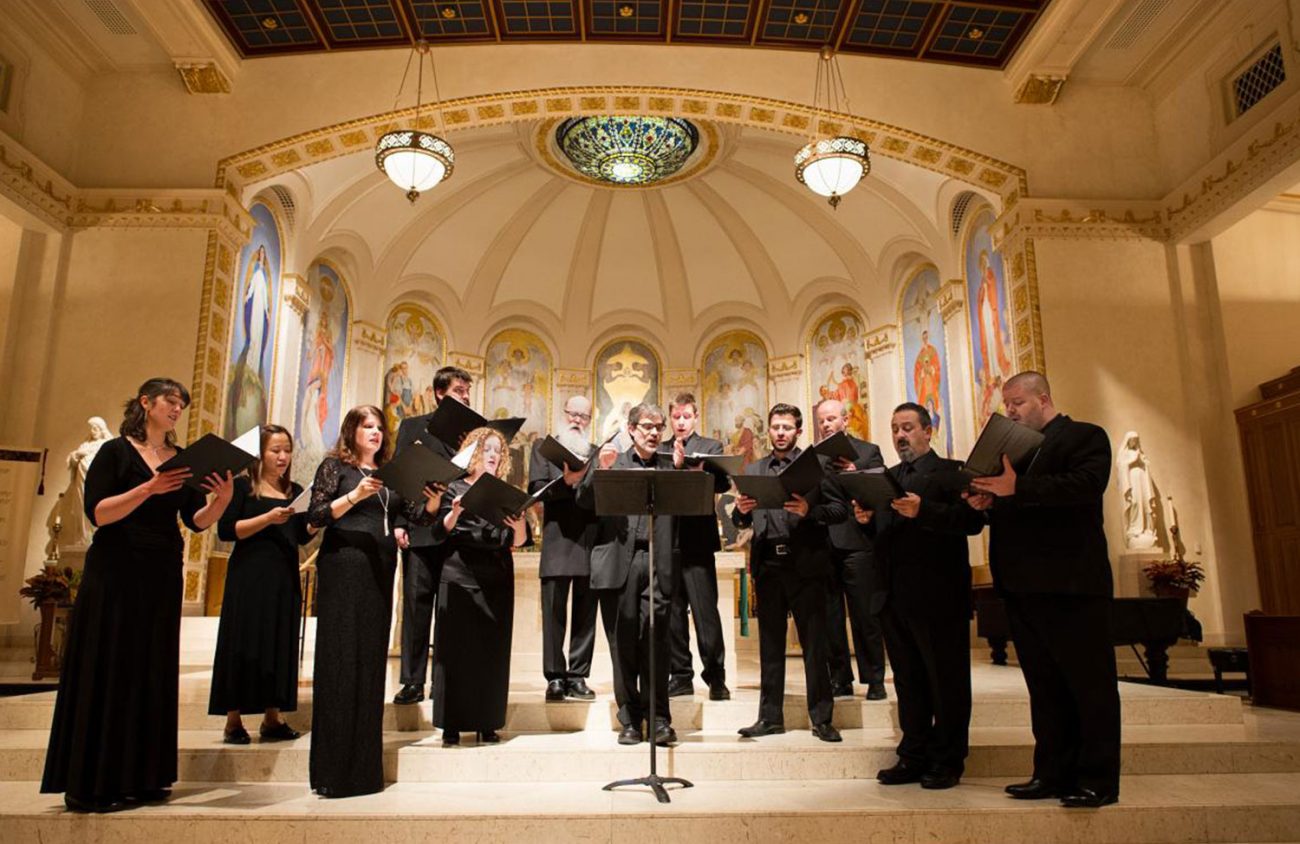
Cappella Romana is one of Oregon’s most famous classical music institutions. Founded in 1991, the Portland-based professional vocal ensemble has gone on to become the premier exponent and explorer of the musical traditions of Byzantium and other early Christian music.
Artistic director Alexander Lingas is one of the field’s leading scholars. He and other researchers have found and revived a long-dormant repertoire, which the group sings in its original Byzantine and Slavic languages. And Cappella has performed music of contemporary European and North American composers who draw on those traditions.
Although it’s based in Portland and performs several concerts each year there and in Seattle, the group draws singers from around the country, including the Bay Area, and has performed in Europe, Los Angeles, New York City, Canada and elsewhere, appearing on National Public Radio, various early music festivals and even at New York’s Metropolitan Museum of Art.
Cappella earns glowing reviews wherever it sings, securing its reputations as one of the Northwest’s most accomplished musical institutions.
Recently, the group has branched out into other Orthodox Christian music descended from Byzantine origins, including Russian, Finnish, Ukrainian and more. You’re unlikely to hear any of this music performed anywhere else.
Now the Oregon Humanities Center is bringing Cappella Romana to Eugene to share its latest discovery: long-lost Armenian Orthodox liturgical music.
On Thursday, Jan. 17, in a free concert directed by Lingas and Haig Utidjian, a British conductor of Armenian descent, Cappella will sing traditional Armenian chants and later arrangements of them by 19th-century Armenian choirmaster Makar Ekmalian and his student, Komitas Vardapet, known as the savior of Armenian music.
Vardapat collected and transcribed thousands of works that would have otherwise been lost to history, including about the Armenian genocide perpetrated by Turks in the early 20th century.
The 8 pm concert is at Central Lutheran Church. It’s a chance to experience a lost world through music.