President Donald Trump spent his birthday doing what he loves: Getting applause. However, his speech wasn’t met with complete enjoyment — it put First Lady Melania’s guest Joshua Trump (no relation) to sleep.
Donald Trump covered a lot of ground in the 82-minute speech. One thing he mentioned was that the U.S. needs an infrastructure investment. But he didn’t offer any ideas. On the other hand, Oregon Rep. Peter DeFazio has been saying for a while that he has a laundry list of items the U.S. needs to accomplish.
Trump said during his speech that both parties should unite to rebuild the crumbling infrastructure of the U.S.
“I know that the Congress is eager to pass an infrastructure bill — and I am eager to work with you on legislation to deliver new and important infrastructure investment, including investments in the cutting edge industries of the future. This is not an option. This is a necessity,” he said in last night’s speech.
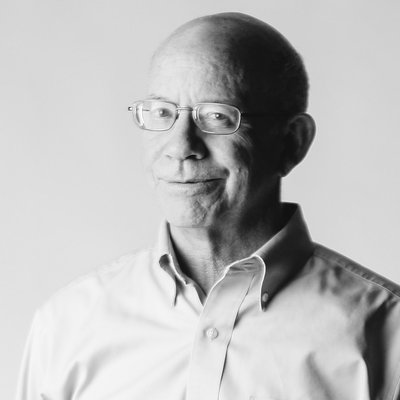
With Democrats in charge of the House, DeFazio landed the chairman position of the Transportation and Infrastructure committee — though the shutdown and Russia investigation has probably dominated his workflow lately.
When DeFazio came to Eugene at the tail end of the longest government shutdown in history, he held a town hall on Jan. 26 dedicated to hearing furloughed federal workers. Of course, it didn’t take long for the conversation to lead to infrastructure.
DeFazio said a “beef” he’s had forever is being stuck at a traffic light and no one is coming from the other way.
“Is there such thing as a smart traffic light?” he asked.
DeFazio naturally had the answer to his own question.
“I just had a company come in two weeks ago saying we have invented smart traffic lights. They’re already deployed and they work off algorithms that use artificial intelligence and they use cameras so we can change the lights according to the actual traffic flow,” he said. “Well, then we’re going to stop wasting 3.1 billion gallons of gas in congestion.”
DeFazio said the best way forward with transportation for the U.S. is electrification and to undertake that task like President Dwight Eisenhower did with the national highway system.
In addition to an overhaul of transportation, DeFazio said the U.S. needs to improve its transit backlog up to a state of good repair, which is currently behind by $106 billion.
“We’ve got to make the existing transit 100 percent reliable and predictable,” he said. “So more people want more people would use it and then we have to begin to build out the new options for people so that more people have access to transit to get them out of single occupancy vehicles.”
He added that not too long ago he learned about electrofuels, a form of biofuel that could cut down on the acres needed to grow corn for biofuel. Although it won’t be used for cars and trucks, it could be used to help with aviation.
“A couple of scientists at MIT flew a plane across the laboratory with no propulsion,” he said. “They did it and someone said, ‘Oh, well, big deal, little model plane laboratory.’ And the guy says, ‘Yeah, well how far did the Wright Brothers go?’”
DeFazio admitted during the town hall that he doesn’t know all of the solutions to make transportation more “green.”
But he is going to use his chairman position to hear new ideas.
“There may be other things out there, so I can be holding hearings on this and inviting in the best minds in the country,” he said. “Hopefully we will then have some good ideas.”
Take note, Trump. Someone has ideas.