Everybody knows Rhapsody in Blue, which likely ranks in the top three most recognizable works of American classical music. From that famous bluesy opening clarinet solo to the brassy, danceable first section to the gorgeous, expansive finale, George Gershwin’s 1924 masterpiece pulses with immortal melodies and Jazz Age urban pep — what the composer called “a sort of musical kaleidoscope of America.”
Its only real problem is overfamiliarity. In concert, on film soundtracks and recordings, we’ve heard it so much that it’s probably best suited as an introduction to classical concerts, like the Eugene Symphony’s Valentine’s Day show Feb. 14 at the Hult Center.
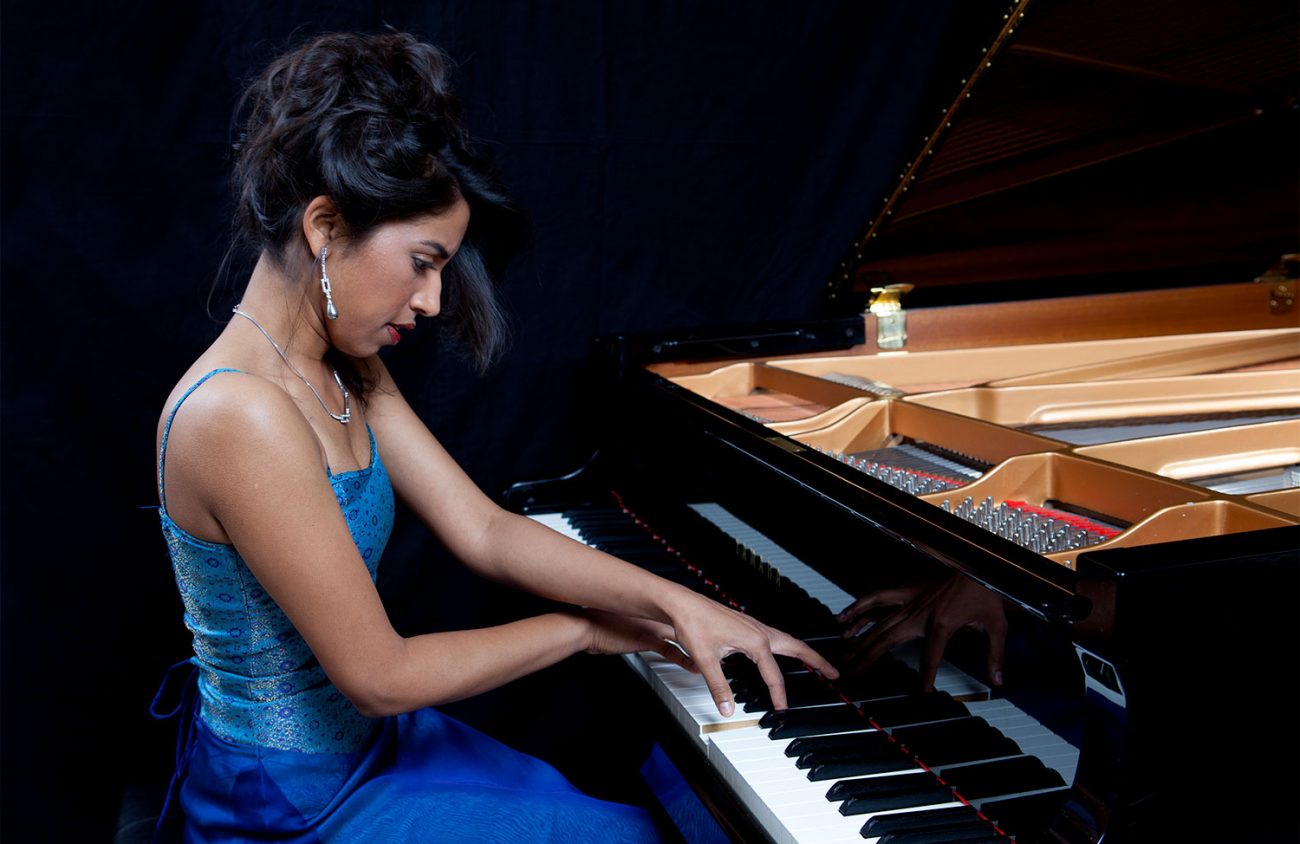
Not everybody knows that seven years after that composition, Gershwin also wrote a second Rhapsody (originally titled Rhapsody in Rivets) that some regard as superior to, if not quite as tuneful as, the first. It definitely merits hearing live, so it’s a treat that the Eugene Symphony is bringing pianist Pallavi Mahidhara to join the orchestra in both.
The concert also offers two other stirring American works from the 1930s. Samuel Barber wrote his gritty, dramatic first symphony in 1936 — the same year he composed that other best-known American classic, his Adagio for strings, originally part of a string quartet.
The recommended concert boasts still another rarely heard North American gem from that same year: Musica para Charlar (Music for Chattering), by the most fascinating of all Mexican composers and one of the 20th century’s finest, Silvestre Revueltas.
Revueltas composed it for a film about the railroad arriving in Baja California, the year after composing what the eminent classical music authority Joseph Horowitz called one of the greatest of all film scores, Redes. Like Gershwin’s rhapsodies, it’s a fun, colorful piece that chugs along on train-like rhythms.
Why so much wonderful American music? Guest conductor Teddy Abrams, a rising young star destined some day to lead one of the world’s top orchestras, already conducts the Louisville Orchestra, which made its reputation in the 1950s and ’60s by commissioning new works by American composers, including Duke Ellington and Lou Harrison.
Abrams, a protege of San Francisco Symphony music director Michael Tilson Thomas, is extending that wonderful legacy, and with splendid concerts like this, so is the Eugene Symphony.
The Oregon Mozart Players’ Saturday concert at the UO’s Beall Hall features another classical music prodigy, multiple prize-winning 21-year-old pianist Eric Lu, who’ll play Beethoven’s powerful Piano Concerto No. 4 with the band.
The show also includes some of Mozart’s zesty German Dances and a too-rarely heard 1942 score by Igor Stravinsky, Danse Concertantes, which shows the composer in a jolly, wryly lighthearted mood. Speaking of prodigies, the Mozart Players also offer free admission to Sunday afternoon’s Young Soloist Competition at the UO’s Aasen-Hull Hall, featuring a dozen young Oregon musicians.
Speaking of dances, early 20th-century Brazilian composer/pianist Ernesto Júlio de Nazareth loved to incorporate them in his original music — not just traditional Latin American dances like maxixe, choro, tango and samba, but also European waltzes, polkas, quadrilles, Schottisches, African lundu and even U.S. imports like ragtime and fox trots. Israeli-American jazz pianist Ehud Asherie, who’s played with everyone from Ken Peplowski to Clark Terry, has revived Nazareth’s tunes, and he’ll play them in a solo recital at The Shedd next Wednesday, Feb. 13.
This Thursday and Sunday, The Shedd also hosts the Emerald City Jazz Kings playing pre-World War II American tunes from two of America’s top female vocalists of the period, Pacific Northwest natives Mildred Bailey and Lee Morse, who fronted the famous band of Paul Whiteman, who commissioned Gershwin’s Rhapsody in Blue for his band in the first place.
And speaking of Northwest jazz, this Thursday, Feb. 7, the Jazz Station hosts one of the region’s most accomplished and diverse jazz composer/keyboardists, Seattle’s Wayne Horvitz. While he rose to fame on New York’s avant-garde downtown music scene, Horvitz’s many musical meanderings since have been widely appealing and sometimes inspired by Northwest landscapes.
Seems like every time he comes to town, which is often, Horvitz brings a different band playing very different music from the last one. This time he’s joined by Brooklyn bassoonist Sara Shoenbeck, a member of his stellar Sweeter than the Day ensemble. She’s turning her unlikely instrument into a vehicle for improvisation, bringing it a new prominence and versatility not seen since its baroque era heyday.