The 2019 legislative session finished Sunday, June 30, but the wounds are still fresh from the death of the House Bill 2020, also known as Clean Energy Jobs, a cap and trade bill.
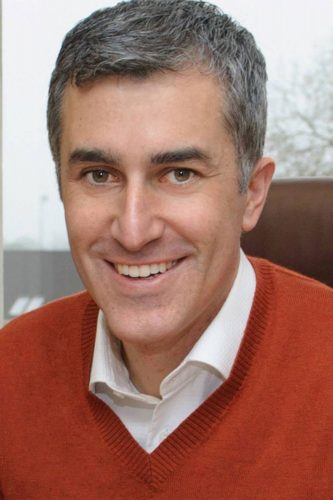
Chris Edwards was a state senator representing Eugene from 2009 to 2016 and previously a state representative from 2006 to 2009. He left office midterm when offered a job at the University of Oregon to assist in development of the Phil and Penny Knight Campus for Accelerating Scientific Impact as an assistant vice president for strategic initiatives. During the 2019 legislative session he worked as a lobbyist with clients such as Eugene Area Chamber of Commerce and Oregon Forest Industries Council.
With Edwards’ history of pushing for climate policies, his lobbyist relationship with a timber group concerns some environmental groups. He says it doesn’t compromise his values and actually aligns with his principles.
Camila Thorndike is a campaign co-director at Our Climate, an organization that empowers young people to educate the public and elected officials about climate policy solutions. Back when Edwards was in the Oregon Senate, Thorndike worked with him in a video called “How to Talk to Your Elected Officials about Carbon Pricing.”
“He was selected for that feature because he had already declared himself a champion and done so much work to advance the bill,” Thorndike tells Eugene Weekly. “He was very explicit about wanting that to be his legacy and was very frustrated the bill didn’t pass before he left the Legislature.”
With Edwards’ switch into lobbying, Thorndike calls Edwards a traitor to the cause of fighting climate change, as well as a traitor to the Eugene community and Oregonians.
“Nothing is business as usual,” Thorndike says. “If individual leaders don’t take a principled stand, nothing is going to get better and the direction we’re headed is suicidal.”
Thorndike doesn’t say Edwards was the most progressive legislator, but he was passionate for climate policy.
“This example is why people lose their faith in the political process,” she says. “They put their trust in someone they elect to champion the solutions to the existential crises we face.”
When Edwards was a legislator, he had a relationship with Oregon Forest Industries Council. The group contributed a total of $25,000 when he had a political campaign account, according to the Oregon Office of Secretary of State.
Edwards tells EW that he talked over his lobbyist role with Oregon Forest Industries Council. If the organization couldn’t be neutral on HB 2020, he wouldn’t represent them.
In HB 2020’s early phases of the 2019 legislative session, Edwards says the language didn’t take into consideration rural Oregonians. As the bill was amended during the session, it improved, he adds.
“Oregon ought to do its part, but it doesn’t need to lead with its chin on this and it in a way that potentially decimates our economic base,” Edwards says. “If you live in Eugene or Portland, you don’t feel how significant some of those rural sectors are.”
The problem was that proponents of the bill wouldn’t compromise, despite getting “nine-tenths” of what they wanted, Edwards says. He doesn’t think that timber industry received many exemptions, although he says there have been talking points floating around the state saying otherwise.
State Sen. Lee Beyer, D-Springfield, says he and Edwards were co-sponsors on previous cap and trade bills introduced in the Legislature.
“My observation about Edwards was that he felt a little awkward,” Beyer tells EW about seeing Edwards in the Legislature as a lobbyist.
Beyer says he doesn’t think Edwards was strongly opposing cap and trade during meetings or trying to discredit the legislation. Edwards’ energy was focused more on ensuring the timber industry to protect their interests: advocating the feedstock for mills. Edwards was generally supportive of the climate bill approach if mills could get timber.
And that’s the only exemption timber got, Edwards says.