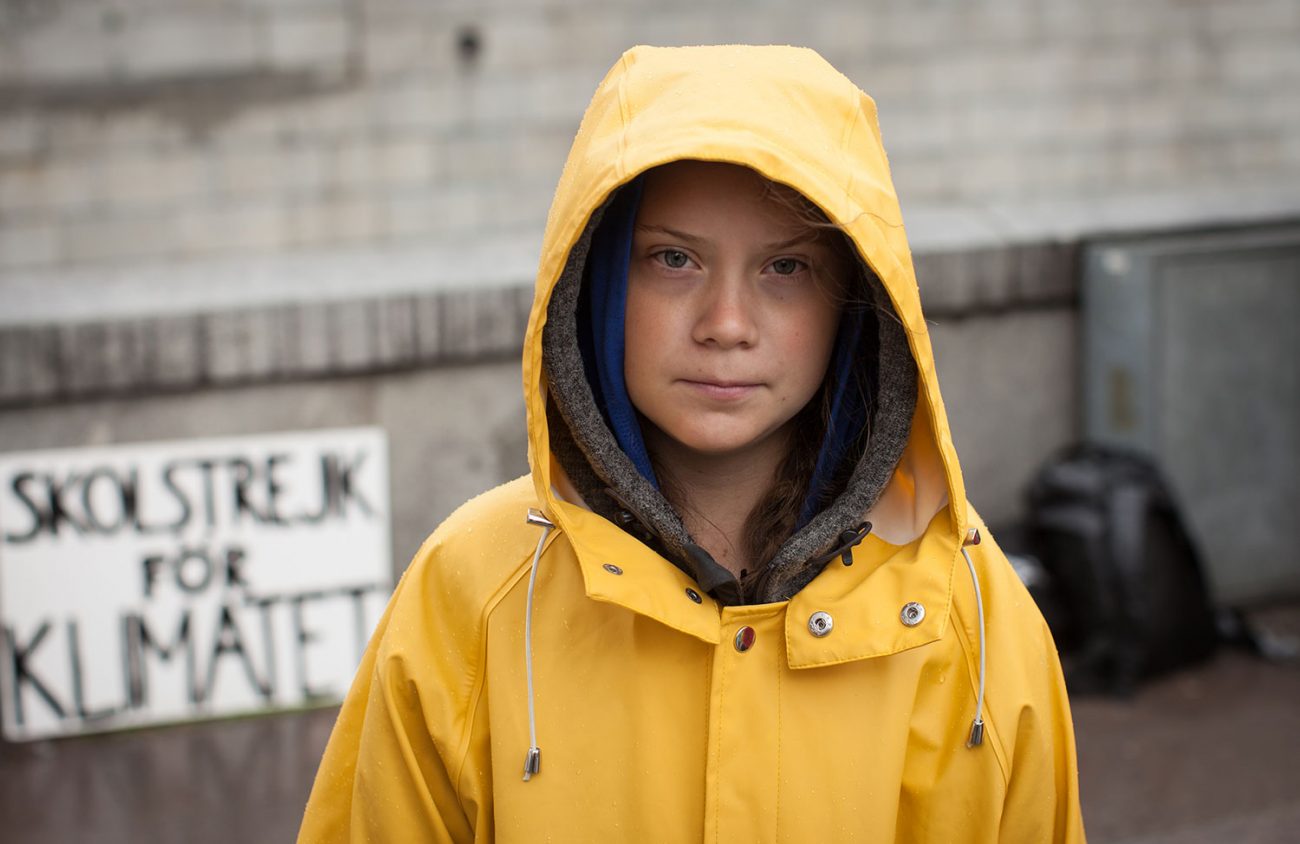
The train to downtown Manhattan is filled with people holding signs. Many of these people are children, permitted to skip school for the day to attend the New York City Climate Strike, where 16-year-old Greta Thunberg, maybe the best-known climate activist today, will be speaking.
By happenstance, I am in New York during the strike, and I am elated that the timing matches up. As a tourist, my art supplies are limited, so I’m not carrying a sign. But my hands are free to take photos of the creative signs others are holding.
A self-aware child has one that says, “The Arctic is having more meltdowns than me!” Another child’s poster reflects on the unfairness of what kids right now have to be scared of: “I’m not scared of monsters, but I am scared of global warming.”
Quite a few say, “There is no planet B,” but many teenagers and young adults have turned to meme culture for inspiration, rewriting viral tweets oriented toward climate change.
The energy is tangible as a large group starts to gather in Manhattan’s Financial District, beginning a march to Battery Park at the southern tip of the island. We’re lost in the crowd, and I have a terrible sense of how many people are in any given place, so I just try not to get too claustrophobic.
In the past few weeks, I have felt an especially keen sense of climate grief, and I don’t think I’m alone.
After news of intense fires in the Amazon spread at the end of August, there was a sense of hopelessness online, people realizing that there is little their recycling and reusable water bottles can do in the face of a burning planet.
This worldwide Climate Strike comes at a time where it feels like more people are feeling how unfair it all is. Organizers say more than 4 million people came out globally — on all seven continents — to march for the climate, including well-attended events throughout Oregon. Organizers say the New York City strike drew about 250,000 people.
I notice that the NYC Climate Strike seems to be doing a good job of featuring the voices of indigenous people and people of color. Many protesters highlight the injustices of environmental racism on a warming planet, where certain people are much more likely to be facing the repercussions of climate change than others. Participants at the NYC strike seem to be aware of this. One woman carries a sign saying, “Act 4 indigenous sovereignty, fossil-free energy, decarbon the USA.” I see many more similar to this.
When Thunberg closes out the rally, the crowd goes absolutely wild. As she comes out on stage, almost everyone takes out their phones to start recording what she’s saying, even though it is very difficult for most people to actually see her, given how massive the crowd is.
“We are not alone,” Thunberg says, highlighting one very important aspect of the climate strikes: building community and morale around this extremely important issue.
When the president of the United States seems to be ignoring all facts surrounding what may very well bring doomsday to many people across the planet, it is easy to think that nobody is listening. Thunberg tells us that we have a friend in her. We are not alone.
Taylor Griggs is a freelance writer who contributes to EW.