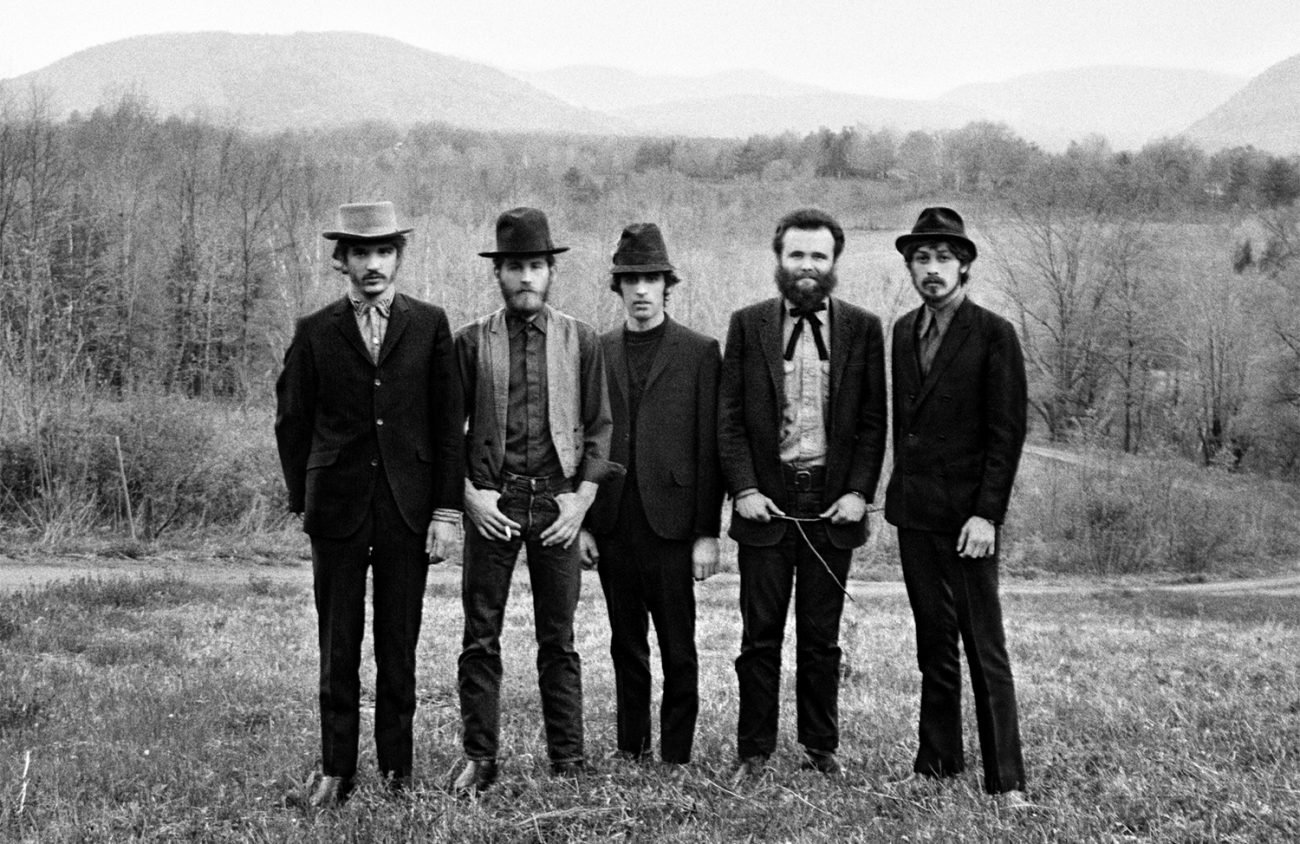
My vote for greatest American rock band of all time tends to hop back and forth. Most of the time, I cast the ballot for R.E.M., for a vast array of reasons too numerous to mention here, not least of which is that I grew up with them and, in a deeply personal way, they made me who I am, artistically, spiritually and politically. They were my Beatles.
Other times, however, and especially when I spin that second album, I’m convinced the title should go to a group of genius hillbilly ragamuffins whose unlikely cohesion produced, for a glorious flash of time, an ancient melody unparalleled in modern music — something deep, dark and beautiful as the soil we trod, harkening to a quality at once sacred and cursed in the American character, like a sepia-tinted ghost forever straddling the Mason-Dixon line.
I’m talking, of course, about The Band. Just the name seems to capture something essential about them, a cosmic universality that also speaks to a faceless humility — an everyman Americana that brooks no separation, like a hymn for spiritual suffrage. By turns humid and arctic, ramshackle and yet tight as a drum, their music carries the sense of having always existed. No wonder Dylan lost his shit when he first heard them and immediately signed them on as his backing band.
“I don’t know of any other group of musicians with a story equivalent to the story of The Band, and it was a beautiful thing,” says founding member Robbie Robertson in a new documentary, Once Were Brothers, directed by Daniel Roher. “It was so beautiful it went up in flames.”
Obviously, a great documentary on The Band already exists, Martin Scorsese’s impeccable 1976 concert film The Last Waltz, and if you haven’t seen it, start there — in fact, drop whatever you’re doing and watch it now. This newest chapter, however, based on Robertson’s memoir of the same name, is no poor substitute, and it adds to and enhances The Band’s mythology, which — in its splendor and squalor, creative soar and self-destructive flameout — is as triumphant and tragic as the story of America itself.
What we have with Once Were Brothers, then, is Robertson’s version of The Band’s complicated and contentious story, for better and worse. Worse, only because it’s bound to be revisionist, considering the fact that the brotherly bond between Robertson and drummer Levon Helm was forever sundered by the group’s demise, and part of the drive of Robertson’s memoir, right or wrong, is to explain why. Helm’s heroin addiction, it turns out, played a major factor, though this can hardly be the full explanation.
I’ve always found Robertson to be the least interesting member of The Band; there’s something slightly academic and calculated about him, as though he’s a bit too ambitious and desperate to fit in with the natural Southern swing of the rest of the guys (all of whom are now dead, save keyboardist Garth Hudson). That said, this documentary redeemed Robertson for me, mostly because those things I thought were perhaps lacking — heart and soul — come through in his touching reminiscences on the band and the brotherhood that defined it.
Minor reservations aside, Once Were Brothers is an important document and a moving ode to the pure joy of making music. The rare early footage of jamming with Hawkins and Dylan is incredible, and interviews with heavies like Eric Clapton (who tried to join and was refused) and Bruce Springsteen (he calls them “loaded for bear”) reinforce the sense that, in some fateful way, lightning was captured in a bottle. Archival footage from their pad in Big Pink, their rehearsal and recording space in Woodstock, New York, evokes an atmosphere of innocence found and lost, and Robertson’s present-day narrative gives the whole thing historic weight, at once inspired and tragic.
Mostly, the documentary conveys the way The Band, a product of the ’60s, stood both inside and outside the culture of the time. They weren’t rock stars — several times, interviewees mention what normal, decent dudes they were — and yet their trajectory was defined by the stuff of legend. The rapid rise and fall of superstardom struck them despite themselves. What remains is the music, which is timeless, and Once Were Brothers, to its significant credit, certainly honors that legacy. (Broadway Metro)
A Note From the Publisher

Dear Readers,
The last two years have been some of the hardest in Eugene Weekly’s 43 years. There were moments when keeping the paper alive felt uncertain. And yet, here we are — still publishing, still investigating, still showing up every week.
That’s because of you!
Not just because of financial support (though that matters enormously), but because of the emails, notes, conversations, encouragement and ideas you shared along the way. You reminded us why this paper exists and who it’s for.
Listening to readers has always been at the heart of Eugene Weekly. This year, that meant launching our popular weekly Activist Alert column, after many of you told us there was no single, reliable place to find information about rallies, meetings and ways to get involved. You asked. We responded.
We’ve also continued to deepen the coverage that sets Eugene Weekly apart, including our in-depth reporting on local real estate development through Bricks & Mortar — digging into what’s being built, who’s behind it and how those decisions shape our community.
And, of course, we’ve continued to bring you the stories and features many of you depend on: investigations and local government reporting, arts and culture coverage, sudoku and crossword puzzles, Savage Love, and our extensive community events calendar. We feature award-winning stories by University of Oregon student reporters getting real world journalism experience. All free. In print and online.
None of this happens by accident. It happens because readers step up and say: this matters.
As we head into a new year, please consider supporting Eugene Weekly if you’re able. Every dollar helps keep us digging, questioning, celebrating — and yes, occasionally annoying exactly the right people. We consider that a public service.
Thank you for standing with us!
Publisher
Eugene Weekly
P.S. If you’d like to talk about supporting EW, I’d love to hear from you!
jody@eugeneweekly.com
(541) 484-0519