Traumatized communities and a cratered economy: That’s what many teens of today face mid-pandemic. It’s also what many young people faced in England, post-World War II.
British teenagers at the time who were interested in playing music had few resources, and even fewer places to play.
Their solution was to find guitars and pianos where they could, make tea-chest basses — something like the washtub bass of American bluegrass bands — and swipe their mother’s washboards.
Listening to rare American 78-rpm records that did make it into the country after the war — mostly folk, country, blues and American jug bands — those same teens began making music of their own, a sound that came to be known as “skiffle.” The origin of the term is unclear, though a number of early 20th century rural bands in the U.S. used “skiffle” in their name.
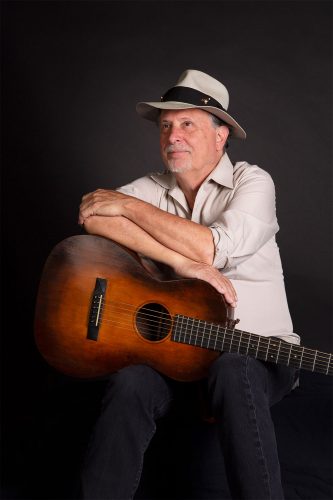
On Wednesday, Nov. 18, Eugene musician Chico Schwall presents an evening of skiffle hits at The Shedd, the latest installment in Schwall’s American Roots concert series.
The show is called “Rock Island Line” after Lonnie Donegan’s rumbling 1955 rendition of the classic American folk tune; it’s the song commonly considered to have launched the skiffle craze in the U.K.
As a teen Schwall was introduced to skiffle through British invasion luminaries like Jimmy Page and Pete Townshend, among others, all of whom he says got their start playing skiffle.
The skiffle group The Quarrymen, for example, featured a few musicians better known for their work in a little band called The Beatles, and even legendary Irish singer-songwriter, and current virulent anti-masker, Van Morrison got his start in the scene.
Referring to the early sound, Schwall says, “It was kind of like the punk rock scene. They weren’t emulating anything. They were creating their own thing. It was very expressive. It was very rebellious. Skiffle music was a participatory, youth music movement.”
Some of the sound was modeled after Leadbelly, early American country music like the Carter Family and as much blues as they could get in the U.K. at the time.
More than anything, though, early skiffle came from the traditional jazz scene popular in England immediately after the war. “Not contemporary jazz like bebop,” Schwall adds, “but early New Orleans-style jazz, without any charts, trying to recreate that in their scene.”
Eventually, banjo and guitar players added a few older folk, blues and country tunes to the repertoire. Over time, the sound developed a white-hot teen mania and the ever-so-slight inflection of traditional music of the British Isles.
“It became something that people could dance to, and it became very popular,” Schwall says. But by 1960, skiffle had been pretty much absorbed into the sound of British rock.
Schwall agrees that young musicians of today could relate to the young people in England playing skiffle.
“I think we’re poised toward finding new ways of doing things,” he says. “The whole touring band industry, and the whole tour support industry and label support of a touring band — that’s all gone. What we’re going to end up with as we start to emerge from this is we’re going to see more regional music” — like skiffle.
“While everything else about COVID sucks, the need to reinvent ourselves could turn out to be good,” Schwall says.
The show was originally scheduled for the spring, but was bumped to the summer, and again to this month.
To comply with COVID-19 guidelines, Schwall’s show will feature cabaret-style seating at tables arranged at an appropriate distance. “You won’t be seated at the same table with anyone that didn’t come with you,” Schwall says, and there will be no walk-up ticketing.
“I think The Shedd is being really conscientious, figuring this out,” Schwall says. “They’re taking a lot of precautions and pushing the envelope, trying to get live music back.”
Chico Schwall’s “American Roots Rock Island Line: Skiffle and the rise of British Rock, 1955-60” is 7:30 pm, Wednesday, Nov. 18. at The Shedd; $11.25-$19, advance tickets only, all-ages.
Update from The Shedd: Due to Governor Brown’s “two week freeze” from Nov 18-Dec 2, we must reschedule this concert to a date after Lane County returns to Phase II. Tickets remain on sale. We will announce the new date soon. (The Shedd’s ticketing policy provides for a refund on rescheduled shows for any who cannot make a reschedule date).