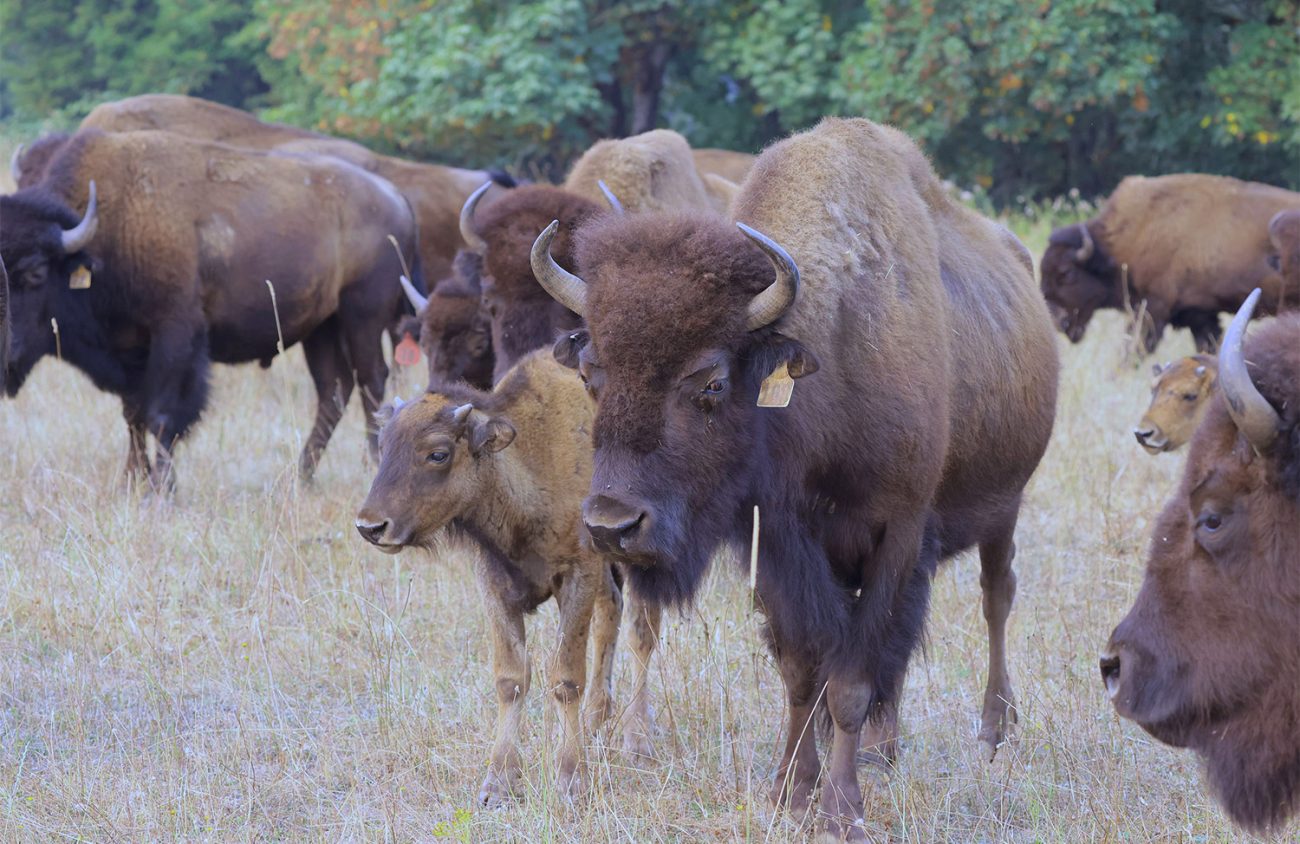
Austin Larson, one of the three eponymous brothers of My Brothers’ Farm, lives and works on a 320-acre plot near Creswell and Pleasant Hill. Although drier after the summer’s heat wave, the farm is home to an array of flora — including hazelnut and apple orchards — a green riparian zone and, among other animals, herds of pigs and bison. The animals play a huge role in restoring the farm’s soil quality and managing the property.
In 2013, Larson and his brothers decided to farm the land along the Coast Fork Willamette River, where they had grown up. They soon learned that 50 years of ryegrass farming left the soil acidic. “Conventional agriculture puts an emphasis on this year’s crop,” Larson says. “They don’t really value soil health.”
But Larson and his brothers saw soil health as a priority. After some research, they decided the best way to restore the farmland was through organic farming and animal grazing. The farm also uses its animals for meat. “We looked in the U.S.,” Larson says, “and saw the number of cows in this country and decided that there’s too many cows here.” Cattle farmers largely try to emulate the grazing patterns that bison follow naturally, he says — and bison are healthier as meat.
While cows tend to spread out across their pasture, Larson says the bison will stick together and graze as a group. This allows the farm to more easily target specific areas as it focuses on soil restoration. “They move in the field the way that you would want to manipulate them to,” says Becca Bauermeister, who is Larson’s partner and works on My Brothers’ Farm. “They’ll just do it automatically as a group.”
Larson says part of the goal of bison farming is to maintain their autonomy and to breed “for an animal that doesn’t need us.”
“Bison know best,” he says. “They’ve been around longer than us.”
Larson began with 12 bison in 2014 and now watches a herd of just under 50. Members of the farm swing by the Western Bison Association’s annual show and sale every other year to add a couple new calves and prevent inbreeding in the herd.
Bauermeister says the connection with the WBA — and the NW Bison Association — helps the farm find mentorship and build community with other bison farmers.
Aside from the show and sale — and the times when Larson brings the bison into a more enclosed space for vitamins, pregnancy tests and ear tagging — the herd is largely left to its own devices.
“Our first year, we built them a shelter, and they did not go in it,” Bauermeister says. “They don’t want it.” She says she’s realized how independent and intelligent the bison are over the years. “They tell you if they’re pissed,” she says, “and they tell you when they’re happy, too. And they are pretty respectful. We try to maintain that bubble, six feet. We don’t get in your bubble, you don’t get in ours for safety.”
Rather than herding the bison between pastures, Larson says he opens the gate, and the bison are ready to go. “Like the saying goes, it’s easy to get a buffalo to do what a buffalo wants to do,” he says. The animals on Larson’s farm are technically bison — buffalo are entirely different animals that are native to parts of Africa and Asia — but the terms are used interchangeably across the U.S.
Larson says the bison are only part of My Brothers’ Farm’s work to foster healthy soil. It’s a process that will take many years, he says, but the brothers are also trying to plant crops and grasses that can thrive in acidic soils. Outside of the fields, the farm is working to plant native trees and shrubs along the river as part of a restoration project.
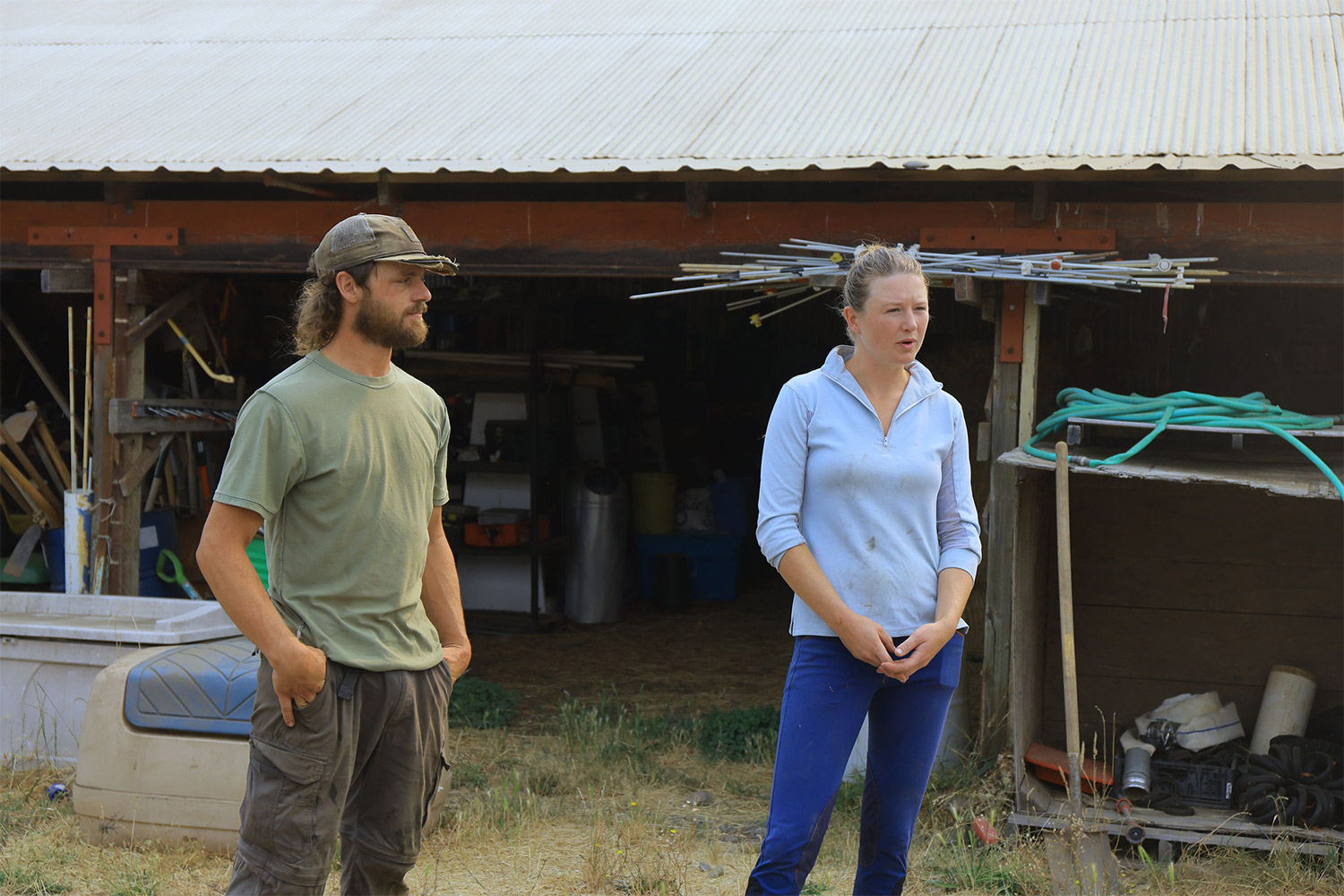
“It’s easy for us to make decisions sometimes because that’s what we’re trying to do, build healthy soil,” he says. “The way to do that is with healthy plants, and we realized we’re not going to get anything to grow here that doesn’t want to grow here.”
These practices are largely based on Indigenous land management strategies, Larson says. Bauermeister says she’s interested in figuring out how the farm can use its resources to best support Kalapuya people living in the Willamette Valley today, but she’s still working out the best way to do outreach.
“These buzzwords that we’re having around no-till and all this stuff, we’re just rebranding Indigenous farming,” Larson says, “We could learn a lot just looking at how cultures used to farm in this modern age of information and technology. We could use that information and technology to do a lot of things, but it’s not being utilized on the scale that it needs to be utilized.” No-till farming is an agricultural technique that avoids mechanically turning over the soil to increase nutrients and prevent erosion.
Larson says it’s harder to implement these soil-first practices on a 10,000-acre farm. “I think farms are getting too big,” he says, “and so the connection that people have with the land is dissipating. I think we need more farmers, and we need to emphasize soil health more than anything else.”
Bauermeister says she’s grateful for the support My Brothers’ Farm has gotten from Eugene and surrounding communities in the southern Willamette Valley. “It’s important with the farm and other farms of our size to support that small, local agricultural system,” she says, “because I think that brings power back to the community.”
My Brothers’ Farm has a stand at the Eugene Farmers Market on Saturdays. For more information, visit MyBrothersFarm.com.