Since the turn of the 21st century, the role of the death doula has been on the rise. Death doulas are non-medical workers who provide companionship, comfort, care and guidance for those nearing the end of their life and to their loved ones. They offer support for the one thing all humans do: die.
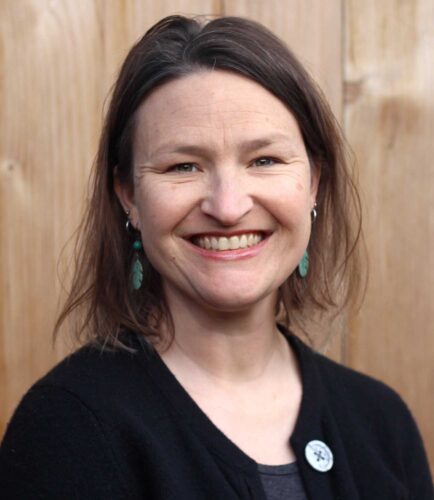
Amy May has been a death doula in the Eugene area and Willamette Valley for six years. Her journey to becoming a death doula started after her mom suddenly unexpectedly passed, leaving her feeling lost about how to make sense of what happened. “I’m from the South, and my family is all very Christian and had their faith to rely on, that they would see mom again, that she was in a better place. But I didn’t have that, because I don’t share that faith,” she says.
As a result of this uncertainty May went back to school in 2013 to finish her bachelor’s in social work. “I took a class on death and dying with my now-mentor Joyce Davidson, and in the class I realized this is what I have to do — I want to be the person that I didn’t have,” she says.
Once May finished her undergrad she went on to a master’s in social work program, where she got her first job dealing with death and dying as an end-of-life counselor for White Bird Clinic. “I pretty quickly recognized that there was this whole population of unhoused and disenfranchised struggling individuals that didn’t have access to end of life care,” she says.
After five years at White Bird, May opened her own private practice in 2021. She has clients throughout all different stages of life and provides resources, advocacy and comfort to those where death is imminent.
“From folks who are dying I hear this a lot, that they often have an urge to protect their loved ones and so it’s sometimes difficult to talk about or express what they’re thinking or feeling because they don’t want to upset their loved ones,” she says. “And I think that’s where having an outside person can be really helpful, because you don’t have to protect them.”
Through her practice May has tried to make the transition to death more comfortable for her clients by creating a death ritual or comforting space for the dying person. “People often want their pets around,” she says.
May is also a founding member and guidance counselor of the Oregon Death Care Collective, a new program that supports death care professionals and connects them with those nearing the end of their life. Not every member is a death doula — some are massage therapists, hospice nurses, counselors. “We are building this group to support both the providers and our community with accessing a broad spectrum of death care in a fully equitable way,” she says.
May believes that her practice destigmatizes death and instead allows people to feel at ease or empowered. She points to options like advance directives — a document regarding medical treatment if you can’t make decisions for yourself. “When you’ve had conversations and explored death, and especially if you have an advance directive, then it shifts from having to make choices for your loved one to advocating for their choice. It’s really empowering,” she says.