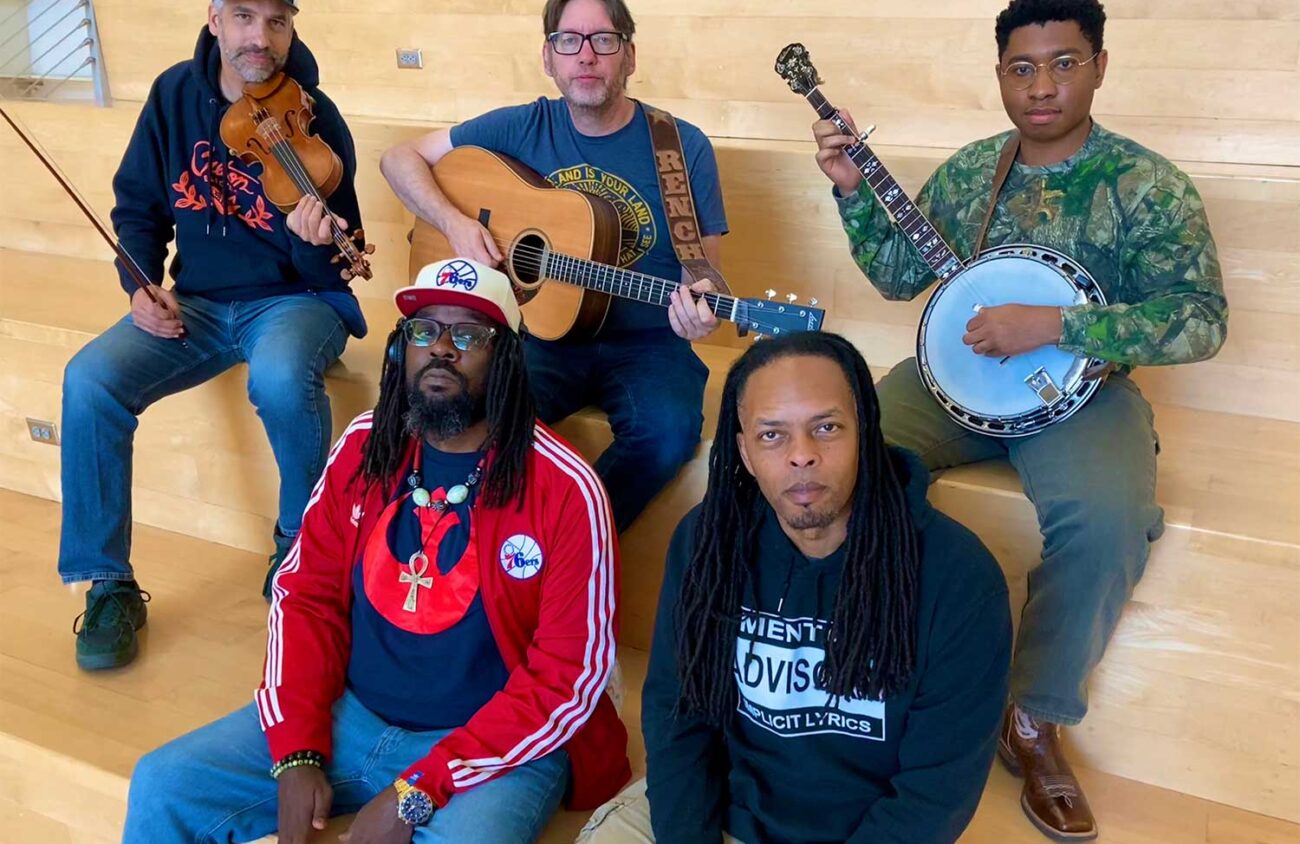
Gangstagrass, known for its genre-defying blend of bluegrass and hip hop, first gained widespread attention with its Emmy-nominated theme song for FX’s Justified, “Long Hard Times to Come.” The innovative group continues to shatter musical and cultural boundaries, offering audiences a fresh take on American music traditions and comes to the Hult Center Jan. 23.
The band’s 2020 album, No Time for Enemies, topped the Billboard bluegrass chart, solidifying its unique sound. Its latest release, The Blackest Thing on the Menu, continues this innovative tradition, celebrating the contributions of Black musicians to bluegrass’ Appalachian roots while combining acoustic instrumentation with hip-hop elements.
Emily “Sleevs” Messner, the group’s manager, says she is frustrated over the Grammy Awards’ classification of Gangstagrass as a rap act rather than bluegrass, despite the band’s significant contributions to the bluegrass genre and appearances at numerous bluegrass festivals.
The band’s lineup includes founder Rench, vocalists Dolio the Sleuth and R-SON the Voice of Reason, instrumentalist Joshua Jimmerson and Sleevs. Their sound fuses traditional bluegrass elements like banjo, fiddle and guitar with hip-hop beats and rap verses.
“Growing up, I’d come home from school in the ’80s listening to hip hop and then hear my dad play bluegrass,” Rench says. “In college, I began producing music and eventually launched Gangstagrass. Once it was out there, the energy from the crowd brought it to life.”
Despite the acclaim, Gangstagrass often faces skepticism. “People don’t know what to expect,” R-SON says. “But once they see us perform, they’re blown away by how seamlessly these two styles come together.”
Sleevs highlighted the group’s broad appeal and the challenges artists face in the music industry. “Even with successful albums, making money in this industry is tough,” she says. “The system isn’t friendly to artists. But we’re not here to become billionaires — we’re activists at heart. It’s amazing to see people of all ages and multiple generations rocking out together at our shows.”
Sleevs emphasizes the inclusive nature of Gangstagrass’s music. “This is a show for everyone. If you’re a single parent juggling school and kids, bring them along — you don’t need a babysitter. Our music bridges generations and speaks to diverse audiences.” And she says, Gangstagrass’s music delves into the complexities of life in America today. “Our songs reflect what it’s like to navigate this country.”
Dolio adds, “It’s absolutely the responsibility of artists to be a mirror to society — showing what it is and imagining what it could be. Every movement needs a soundtrack, and we’re here to provide it.”
Rench says the band bridges cultural and racial divides through music. “American music, from country to soul to hip hop, has always been about collaboration among all kinds of people. As a multiracial band, we’re reclaiming that history and showing how we can come together.”
Dolio says music has the power to inspire hope. “In times like these, the loudest voices often belong to bad actors. But music can send a rallying cry, letting people know they’re not alone. Sometimes, joy is rebellion — and you can feel that in our music and lyrics.”
Gangstagrass performs 8 pm Jan. 23 in the Hult Center for the Performing Arts Soreng Theater. Tickets start at $25.50 and are available at HultCenter.org.