By G. B. Lawrence
Clearly, full support from the University of Oregon’s Athletic Department for its athletes of color is no longer in question. However, that has not always been the case.
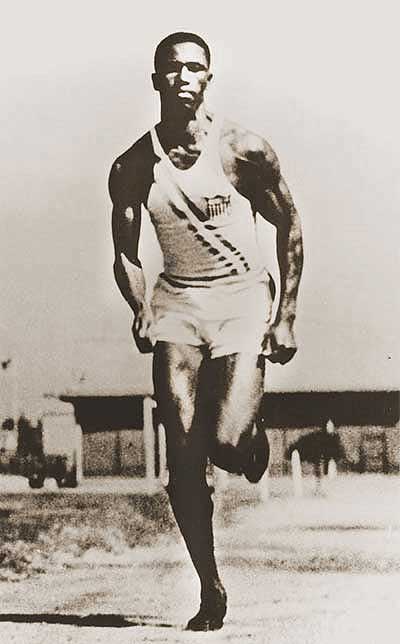
Take for instance Mack Robinson, older brother of sports legend and activist Jackie Robinson, and silver medal-winner, finishing a close second behind Jesse Owens in the 200 meters in the 1936 Berlin Olympics. Mack was a track standout at the UO in the late 1930s. In spite of his performances on the track, however, he was prevented from living on campus due solely to the color of his skin. As a result, off-campus housing became an unfortunate necessity for many other nonwhite students.
Fortunately within a decade, a local family had established a sanctuary to accommodate not only nonwhite athletes, but a host of traveling entertainers, artists and speakers.
CB Mims was a skilled millwright who had relocated his family from Texas to Vancouver, Washington, during the early days of the Second World War. Even as a Black man, he had no trouble finding work in the Kaiser Shipyards supporting the war effort. However, when the war ended, Mims and scores of other people of color were dismissed, leaving them to find work elsewhere.
Unable to find a position in Vancouver or Portland, the promise of the timber industry and Mims’ skills as a millwright brought the family to Eugene. However, Mims was only able to find employment as a busboy at the Osburn Hotel.
At the time, the city’s strict exclusionary laws prevented nonwhites from owning or renting property within the city limits. With the backing from the hotel’s owner, Joe Earley Sr., Mims was able to buy two old and neglected houses on a piece of property on High Street near Skinner Butte. This misguided culture of prejudice persisted well into the 1960s.
When legendary coach Len Casanova arrived at UO to take the reins as the university’s head football coach in 1951, he sought help from the Mims family to provide accommodations for his Black athletes. While sitting at the Mims’ kitchen table, the initial arrangement involved at least two players, Leroy Campbell and Emmett Williams, according to Willie Mims, son of CB and Annie Mims.
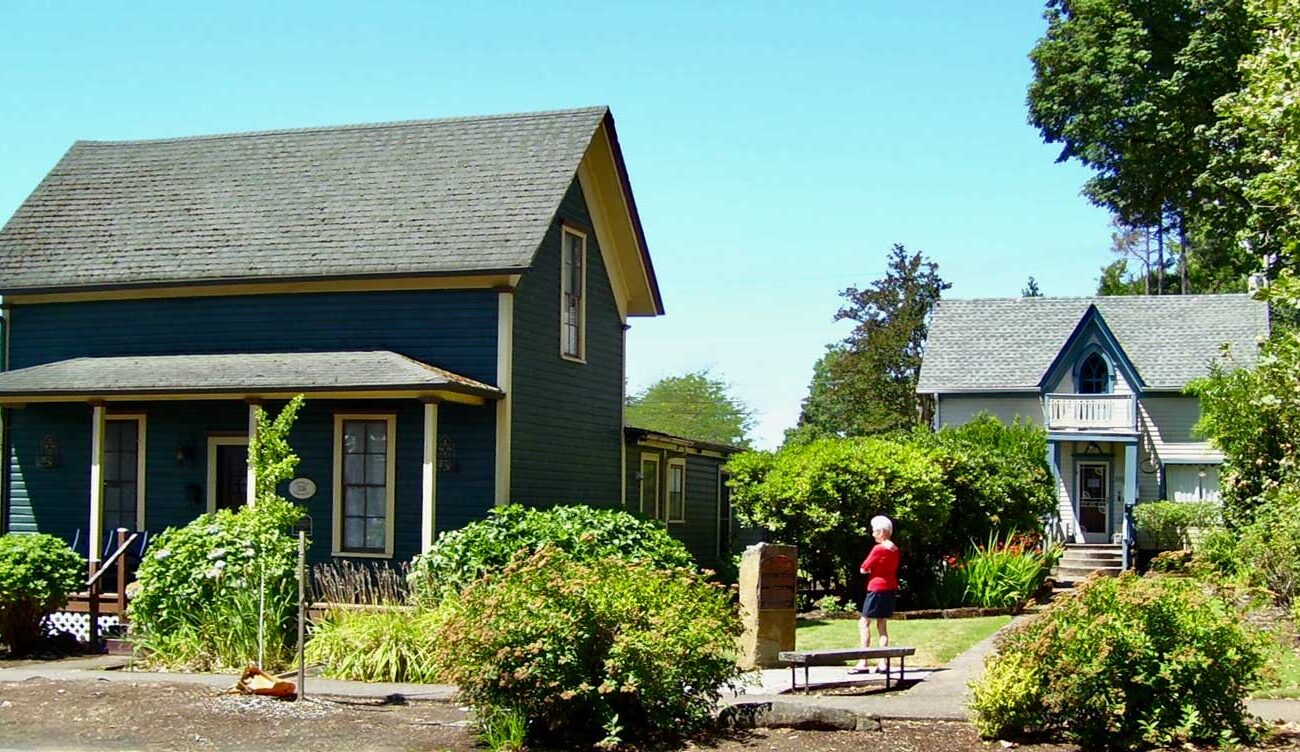
Regrettably, CB Mims died in 1960, not knowing that 20 years later his family’s architecturally historical homes would qualify for Historical Preservation funds to begin restoration of the two houses sitting on his property. In 1980, the country was swept up in the movement to preserve architecturally and historically important structures. Previously, he had been denied by lenders funds to even make repairs. This time his widow, Annie Mims, was able to secure a loan, and today both houses are restored and listed on the National Register of Historical Places and referred to as The Historical Mims Houses.
The cultural importance of the Historical Mims Houses cannot be overlooked. They represent the longest Black-owned property in Eugene. Their history as a sanctuary for people of color and a tribute honoring the first Black families of Eugene is memorialized by a stone monument erected on site at 330 High Street for all to view. The local chapter of the NAACP occupies one of the homes, and they serve as a hub for many activities benefitting the whole community.
Keeping the spirit alive, Eugene’s Gordon Hotel continues to pay tribute by establishing the CB Mims Sanctuary Room in recognition of the shelter the Mims homes offered to people of color traveling through Eugene.
Today, the Mims’ homes remain an important landmark signaling a stand taken against racial inequity. In an effort to build on the legacy these homes helped establish, a collaboration of community nonprofits and private businesses, along with the Mims Family, have created the Mims Houses Project.