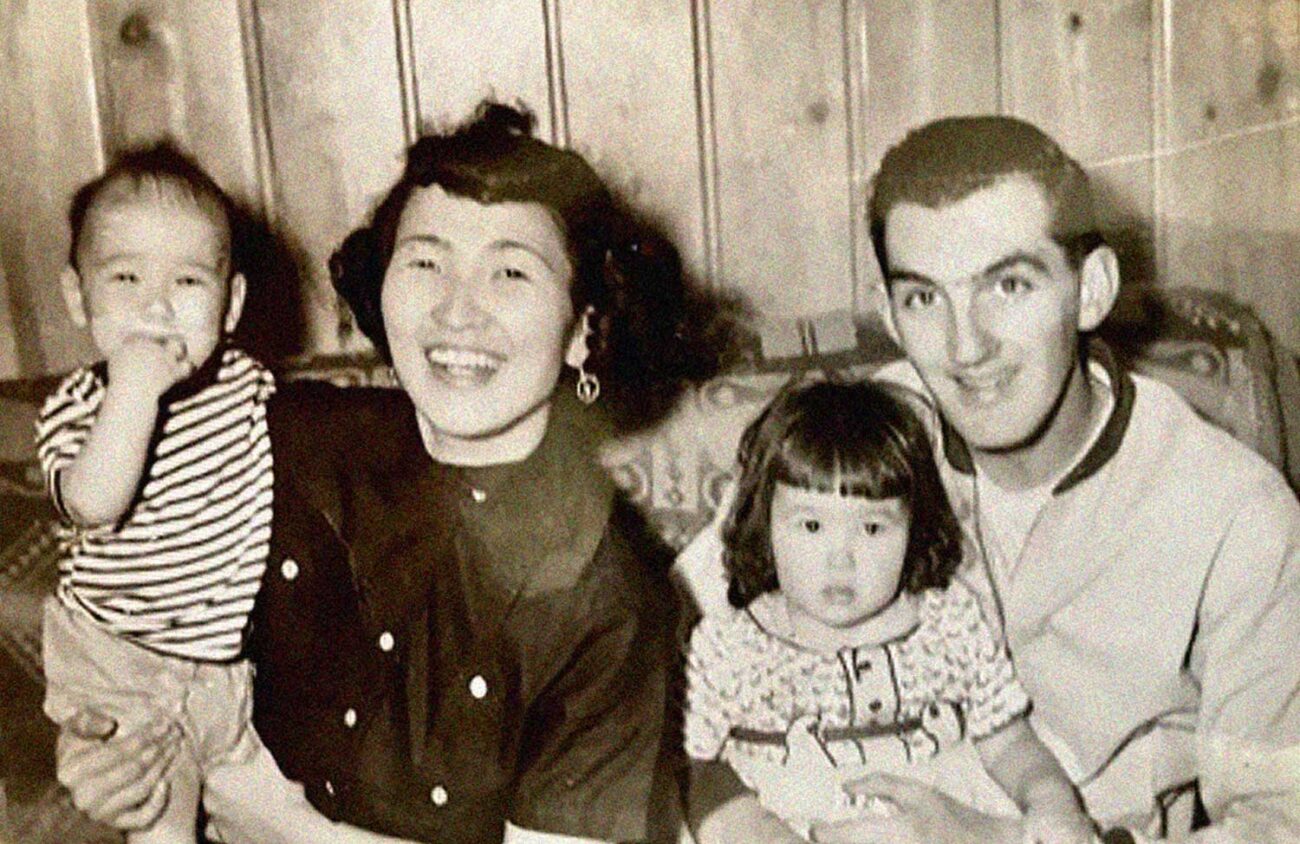
Her name itself tells the story — a Japanese first name, and an American first and last name in the post-World War II era.
Ikuko June Moore was in high school on August 6, 1945, in Hiroshima. During wartime, schools and many houses would have a space in the basement, which Japanese people call bou-ku-go, where people would hide during a bombing.
Moore went down to the basement as she had drilled, not knowing that day’s bomb resulted in approximately 66,000 deaths instantly, with the heat and many more deaths from consequences of the radiation, including her parents.
After the war ended, Moore moved to Tokyo with her younger sister. She worked as a telephone operator, helping American soldiers call their families back home. She would hear American soldiers on the phone line, often thinking many of them were not always nice — but not this one soldier, Earnest Dean Moore.
June thought Dean was “very polite and nice,” not like other American soldiers who she thought were “rude and have big feet because they walk so loudly.” She was curious and wanted to meet him, so she asked Dean to meet with her. It was rare for women during that time to ask men to meet, but she did.
Their first date was at Pio Theatre in Tokyo, which still exists today, and June and Dean Moore got married in Tokyo and soon had their first child, Linda Allen. The Moore family moved to Seattle right after the war, and later to Corvallis, where they settled to raise their family.
Nearly 45,000 Japanese women, including June Moore, immigrated to America as wives of U.S. military service members after World War II, marking the largest women-only immigration. In Corvallis, Moore was the only survivor of the Hiroshima bomb, but Allen says her mother had a group of Japanese women she hung around with.
Allen was 10 years old when she first visited Japan with Moore, which also means Moore visited Japan for the first time in 10 years after the war ended. Allen recalls meeting Moore’s sister in Tokyo, especially the way she was looking at Allen. “It was not good,” she says, “I knew there was something.” She later realized the potential hate her aunt felt at the time toward Allen for being half-American, right after the war ended.
Allen and Moore traveled around Japan all summer, including a trip to Hiroshima. They went to the Hiroshima Peace Museum. For Allen at the time, it was hard to see some pictures that showed the devastating effects of the bomb, “but people need to know that,” Allen says.
Before the visit to Japan, Allen says she sometimes struggled with her identity — being half-Japanese — growing up. The Moores built a Japanese-style house with a Japanese-style interior, and Allen remembers her friends visiting and making fun of her home. “I could not understand why they don’t understand the beauty of it,” she says. But after the visit to Japan and learning about her roots and what had happened in Japan, she felt empowered and became proud to say that she is half-Japanese.
Moore herself was rejected by many Americans, but also by the Japanese, as well, and she had to give up her Japanese name when she married Dean. The Japanese government at the time made a law that if you married an American, you were no longer Japanese. In the midst of that, Dean stood up for June and encouraged June to stay strong, and Moore gained confidence in herself and being Japanese.
Moore slowly became open to sharing about her experience in Hiroshima and her hope for peace, Allen says. “You don’t want war, you don’t know what it is like,” Moore would tell Allen about her experience living under war for months. “If you want a fun story,” Allen says, “she told me that some bombs looked like fireworks when they hit the ground,” but most of the time, fear was there.
A persimmon tree was planted by the Oregon State University’s Asian and Pacific Islander Cultural Center to honor Hiroshima survivor Hideko Tamura Snider of Medford in 2019. It was rededicated to include Moore in June 2022. Ikuko June Moore died on December 26, 2022, but her legacy and story live on.
The persimmon tree is planted by OSU’s Asian and Pacific Islander Cultural Center, 2696 SW Jefferson Way, Corvallis.