
By Grace Mangali
At 6’4, all in the legs, Sen. Ron Wyden’s dream seat is not in the cushy chairs of a congressional meeting or in the Senate chamber, but in seat 17C flying Alaska Airlines.
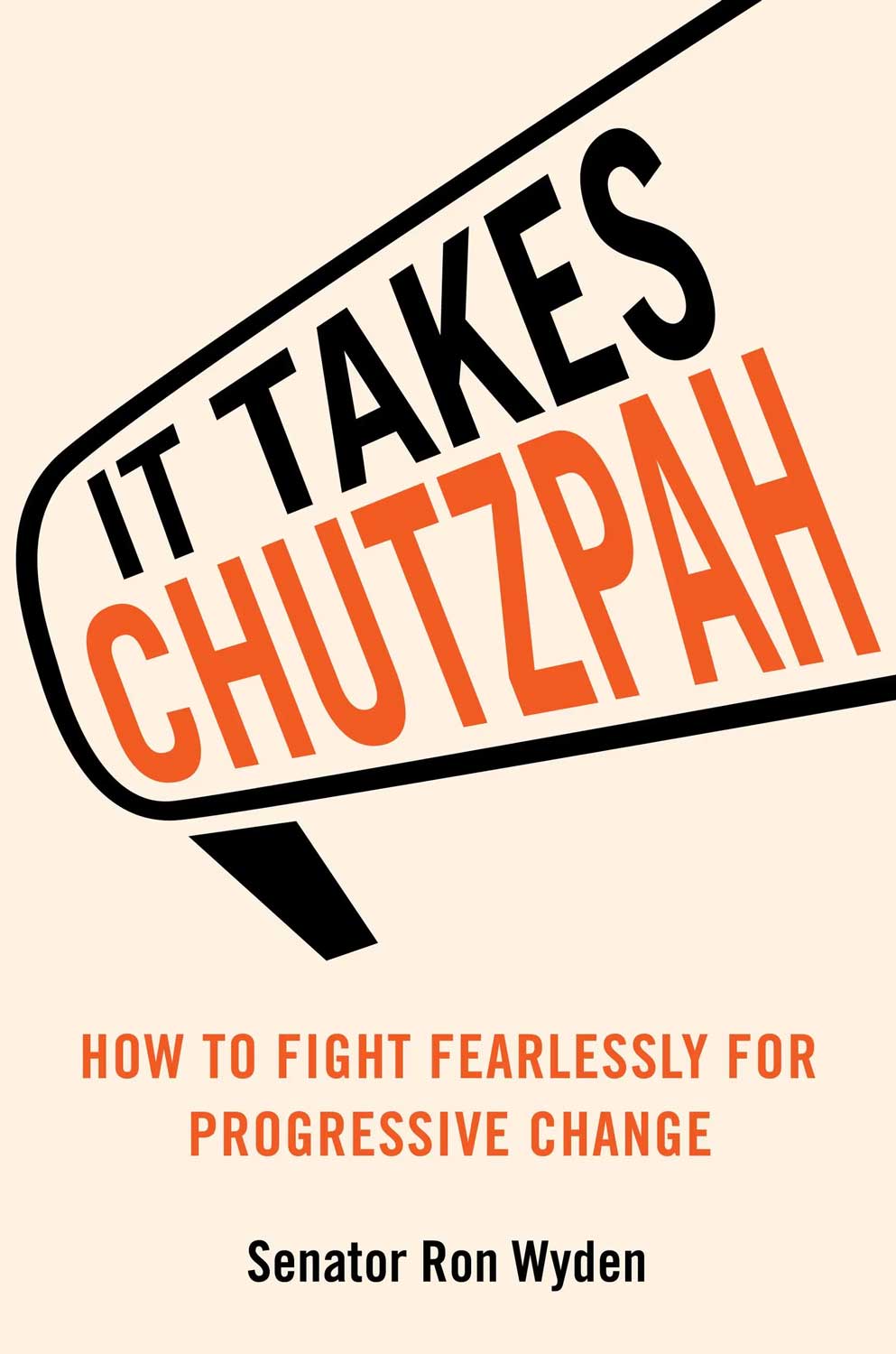
In 17C, Wyden wrote a majority of his book, It Takes Chutzpah: How to Fight Fearlessly for Progressive Change, published earlier this year. The book is a blend of memoir and guide of how to accomplish goals through — get this — chutzpah.
Wyden wanted this book to be anything but the formulaic senator book, saying, “Look what I’ve done, everyone wants me to run for president and visit my website.” But, at 76, he did want to write about where he’s been and where he’s going.
Excluding ego, it all came down to chutzpah.
“I think this is a unique time and there’s a chance if you pick your passion and drill down and act, you can make a big difference, no matter what field you are and where you’re doing it,” Wyden says.
Chutzpah, a Yiddish word loosely translating to self-confidence, really refers to using one’s skills for social justice, public service and eradicating idolatry, he says.
Some hits from “Ron’s 12 Rules of Chutzpah” include “1. If you want to make change, you’ve got to make noise” and “7. Ideas are the seeds of change; find them and plant them wherever and whenever you can.”
Wyden’s book is dedicated to his mother, Edith Wyden, and all the unrecognized Jewish women who helped people flee the Holocaust. Women like his mother and aunt were integral in convincing the men in Berlin to flee, he says. During the war, Wyden’s father made propaganda pamphlets and later worked as a journalist.
Edith Wyden’s life and role as a hero to her son points out a distinction in politics crucial to Wyden’s process: playing the long game.
Initially looking into mifepristone, also known as the abortion pill, in the 1990s, Wyden says he didn’t understand what access to the drug meant to freedom. “I had a chance to work with women who were taking a long view, and I really admire that,” he says. He continued to fight for the acceptance and access of mifepristone since its approval from the FDA in 2000.
This past October, Wyden proposed and passed a resolution to end Trump’s tariffs, as the bulk of effects are on working-class families and organizations trying to feed them. “Hunger never takes a day off,” he says. “For Trump to use hunger as a weapon the way he has, to be cruel and magnify his voice is one of the worst things I’ve seen in politics.”
On Nov. 13, Wyden visited Food for Lane County’s warehouse and met with Executive Director Carolyn Stein to discuss how to take the long view, particularly for seniors and people with disabilities and the problematic nature of people working full-time jobs who are unable to afford food.
And after the Nov. 23 Oregon vs. USC game where Wyden watched and mingled with fans from the sideline, he headed to Newport for his 1,138th town hall meeting to express his disinterest in a possible ICE facility opening in the coastal town.
Over 40 years in Congress taught Wyden to freely and smartly distribute his political capital, which, according to rule 11, “doesn’t earn interest and is worth nothing if you don’t spend it.”
Wyden says, “A lot of times people have resources that they can use, and they say, well, not right now. Sometimes it doesn’t always remain, speak out and use it.”
The senator says he wants to focus his next book more on Big Tech as national security, personal liberty, and women’s rights issues.
Find It Takes Chutzpah, Grand Central Publishing, $30, at your local bookstore.