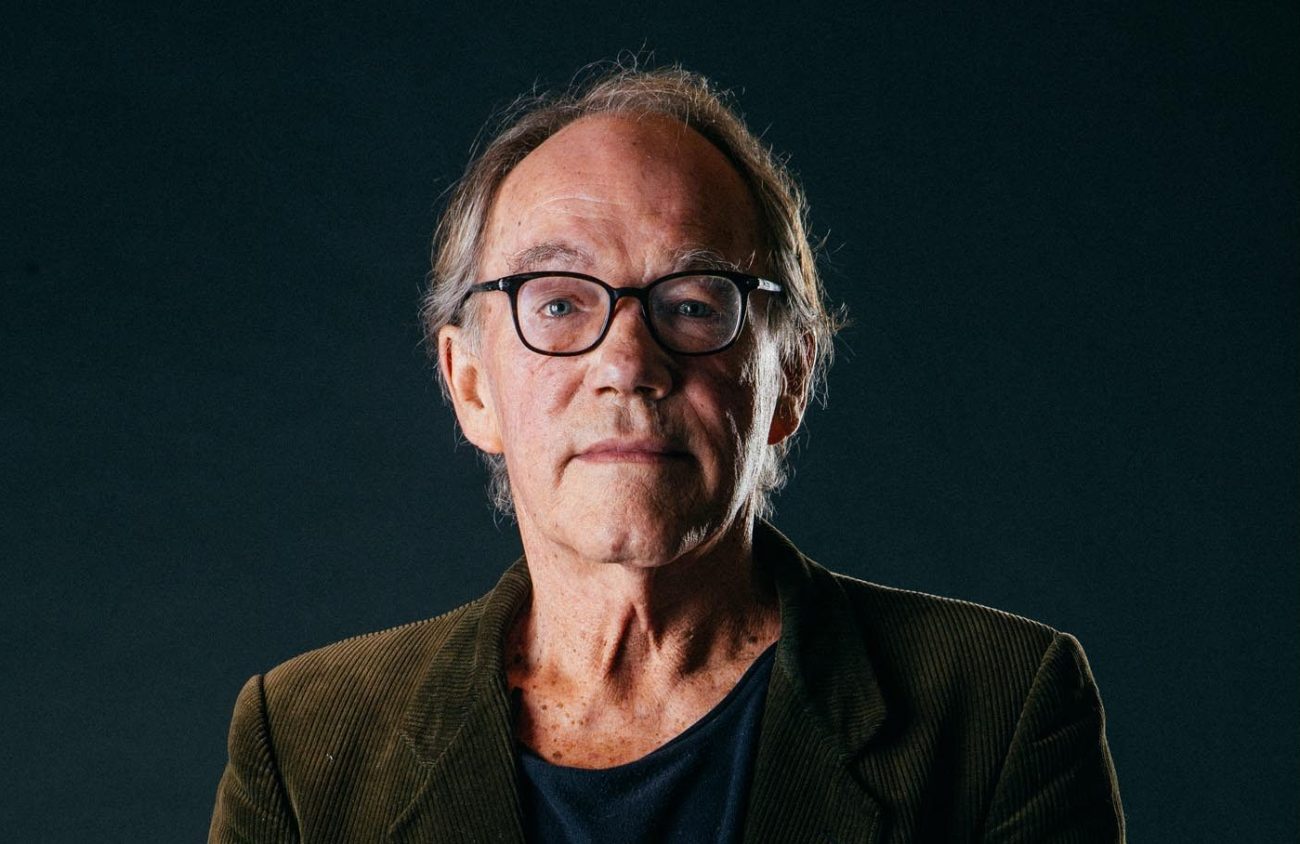
George Brown shaped Eugene for over half a century, from his longtime ownership of Kiva to his stint on the Eugene City Council. He moved to the area in 1970, starting a bookstore in Scarborough Faire, Eugene’s indoor hippie mall — the bookstore later turned into iconic downtown grocery The Kiva, which has been running strong since 1983.
The Kiva is where George met Melissa Brown, who would become his wife and Kiva co-owner in the early 2000s.
“I think he was a very fair and kind human for real. We wouldn’t have been able to be married and be business partners if he held me to a different standard than he held himself,” Melissa says. She says George was hard-working throughout his life, especially in the dedication he had for Kiva.
Brown died June 29 at age 79 from vascular disease. In addition to owning and running Kiva, he served on the Eugene City Council from 2009 to 2017, representing downtown Eugene.
The Kiva serves as a downtown grocery, deli, bookstore, gift shop and more, all with a unique Eugene flair. In the early days, George was known to frequently take trips to Portland and buy artsy cheeses and nuts to resell, and buy soap directly from Dr. Bronner’s garage and fruit juices from the RW Knudsen family to support other small businesses.
Melissa says George was always aware of the impact city politics had on local businesses and community members. George first moved to town in the ’70s at the height of the Central Eugene Project, a controversial urban renewal project that led to the demolition of 110 buildings and the eventual creation of an ultimately unsuccessful car-free pedestrian district in downtown Eugene, which was reversed in the 1980s.
George decided to officially become involved with politics when the city of Eugene voted to give Whole Foods a subsidy to build an $8 million parking garage, over the concerns of local businesses like Kiva. Whole Foods later shelved the project and opened a downtown site in 2016 without a subsidy.
George filed his bid to be Ward 1 city councilor in 2008 and won unopposed; he was unopposed again in his 2012 race.
Melissa says running for the City Council was a “big deal” in George’s decision to get sober 18 years ago. George’s father was involved in civic service in Wichita, Kansas, and George wanted to follow a similar path.
“I think he really profoundly felt like he wanted to give back, that he has something as a downtown business owner in Eugene to say and somebody who’d been living in the neighborhood since the early ’70s,” Melissa says.
George was passionate about how public funds were distributed when it came to urban renewal and how multi-unit property tax exemptions were being utilized. He voted against subsidies for the problematic Capstone student housing project, 13th and Olive, now known as The Hayward.
He was known for walking into City Council meetings with binders full of extensive information and research he had conducted. He was “always well prepared, always respectful of everyone. He and I usually agreed on things, but when people disagreed with him, he was respectful,” Betty Taylor says. Taylor served on the council from 1996 to 2021, governing alongside George Brown for his entire tenure.
After Eugene City Hall was torn down in 2014, Taylor and Brown used to sit outside before meetings at Lane County’s Harris Hall where the council met, and talk about the upcoming agenda.
Taylor says on her 100th birthday, George brought her a bottle of wine. “He was an expert in wine, literature and business — and he didn’t brag about anything,” Taylor says.
Brown was known as being part of the council’s liberal contingent and also known for bucking the trend. After the City Council made Fox News headlines across the country in 2011 for voting to say the Pledge of Allegiance four times a year instead of at every meeting, Brown, who had voted against mandating the Pledge at all, refused to say it at the meeting closest to July 4.
He was a strong proponent for saving iconic Eugene public landmarks like Civic Stadium — now Civic Park — and Kesey Square, which both faced possible sale to private entities.
After his tenure, he wanted to make sure his successor would be a good replacement and would be able to serve the needs of Ward 1. He coached Emily Semple and worked on getting her elected after seeing promise in her local leadership abilities. Semple had been a free speech proponent with Occupy Eugene, and Brown and Taylor had supported the protest camp’s stay in Washington-Jefferson Park as part of the Occupy Wall Street movement.
“George certainly changed the direction of my life,” Semple says. She began going to City Council meetings around 2011 and frequently advocated for the homeless. When she saw that George was stepping down for the 2016 election she knew she had to run.
“We cannot lose George’s voice, so I’ll do it,” Semple says. She met with George over coffee to help her figure out the logistics of her campaign, since she had no formal government background. “George really stepped up, he taught me so much. He was always calm and would work through things and kept me grounded. He canvassed and canvassed and canvassed.”
Melissa says in one election cycle George made it a personal goal to reach out to 8,000 houses in three months. Semple won a highly contested race and served on the Eugene City Council until 2025.
Melissa says she still finds pieces of pamphlets around the house from when George went canvassing daily. Semple and Melissa say George had this ability to stay calm through stressful situations. “He just had this innate understanding that there was always a way to work things out,” Melissa says.
Semple and Taylor admired George’s commitment to his family. George and Melissa have a child who is 22, George McKibben Brown, and a great Pyrenees named Big Baby. The Browns have had many pets in the past couple of years, and Melissa says George particularly loved dogs.
“My all-time favorite memory of him as a father was when we used to go to Yachats and when our son was little he was really into Thomas [the Tank Engine] train. George would draw train tracks in the sand and then they would run around on the train tracks,” Melissa says.
George had a massive green thumb with a collection of fruit trees, vegetables and cacti. The Browns have a greenhouse that houses plants from the Sonoran desert, plants native to Chihuahua, Mexico, and plants from the Mojave Desert. George could often be seen raking and sweeping around the trees and shrubbery around The Kiva. During his time in office and afterwards, he wanted the community to feel safe and welcoming for all.
Melissa says George was an avid reader and finished 227 books last year, spanning various subjects and genres. “He was endlessly curious and he just never stopped.” Kiva, true to its roots, has a book section with local authors as well as children’s books, fiction and nonfiction.
“He always felt very supported by our downtown community,” Melissa says. “You get so involved in people’s lives. They’re the people you see every day and you know if they’re having a good day or a bad day. I certainly know during this time, with his decline, how incredibly supported I felt by our neighborhood.”
This story has been updated.