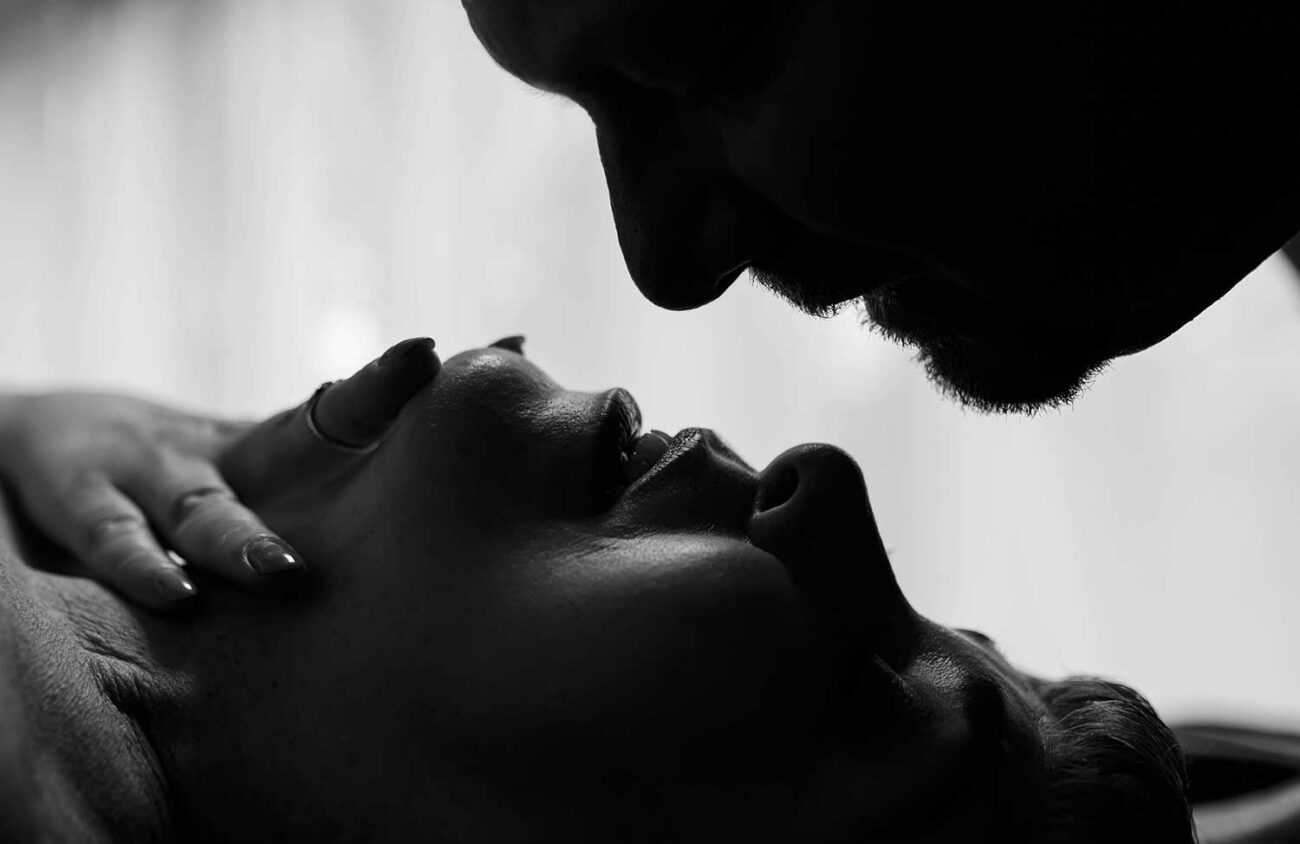
In Kelly Sibert’s Ember Bliss Boudoir studio is an eclectic collection of thrifted props. A combination of dark and moody furniture with a billowing white curtain evokes different moods in the space. A luxury pool table is a nod to how she bonded with her husband: late nights over green velvet, knocking colorful balls every which way.
Also in her studio is a full makeup counter — a tribute to her cosmetologist mother — and a lingerie closet. Sibert is in her eighth year of offering full-experience boudoir photoshoots. Boudoir photography is best defined by the emotions evoked by the images; mostly depicting women in lingerie, costume or nude.
“It’s not just about seeing yourself half naked or anything like that,” Sibert says. “It’s more about internally coming to terms with the insecurities that you just can’t help but see every time you look in the mirror.”
Boudoir is not one size fits all. It’s a complete journey from consultation to camera. There are several reasons one might book a shoot — which cost upwards of $1,000 at times — from weight loss journeys, to Christmas and Valentine’s Day gifts, to bridal and maternity shoots.
Some photos live in shoe boxes, never to be seen by anyone else. Others are displayed on websites, portfolios, magazines and museums. The popularity, despite the price tag, demonstrates boudoir is a personal decision and way of empowerment for the subjects.
After a client books with Sibert, they are sent a survey and instructed to lay out every nook, cranny, insecurity and boundary for the shoot. Next, Sibert gets on a phone call, sends outfit tips and conducts an in-studio consultation.
“A big part of feeling uncomfortable and nervous is you don’t know what to expect,” she says.
The success of a boudoir photoshoot comes down to posing. If a client’s biggest insecurity is their stomach, Sibert shoots from the back or has them hug their tummy. If a client’s biggest insecurity is their back rolls, Sibert directs them to stretch out on the couch or against the wall — catering to strengths.
The first time Sibert photographed a now longtime client, she says the woman broke down and shook, afraid the camera would only illuminate her insecurities.
“If they can’t even establish what they love yet,” Sibert says, “sometimes it’s really hard.” Often, the biggest help Sibert can be is a patient presence and listening ear.
There’s no body editing involved in her standard practice. Sibert will edit out acne, razor bumps, bruises — anything gone in two weeks. But scars, natural rolls and curves are kept in all their glory. “When people see their photos, their eyes go to the beauty first instead of the insecurity, but the insecurity isn’t covered up,” she says.
Sibert has had a nontraditional journey to the camera. Always knowing she wanted to help people, she went to school for 911 dispatching, medical assisting and web programming while photographing as a hobby.
“I am helping people, just not the way I thought I was going to,” she says. “I can do this for other people. And then inadvertently, do it for myself.” She got her own photos done after having her first baby.
Heather Mills of Heather Mills Photography found boudoir after shooting several weddings and being asked to add on boudoir as a gift for the groom. Since then, one of Mills’ nudescapes of a woman won second place at the Emerald Art Center PhotoZone juried exhibition photography competition this year. Her photography has also won The Register-Guard’s Official Community’s Choice Awards Eugene for the last five years.
She calls boudoir an art form that empowers women, one that is in direct defiance of what women see in the mirror or on their iPhone cameras.
Taking these photos is a life-changing process for the photographer as well. Mills says she’s struggled with eating disorders and her post-pregnancy body. Having and taking boudoir photos is a way to pave the process of healing.
“It impacts me to be able to sort of pass it on,” Mills says. Boudoir, she says, “equipped me to be able to see my beauty,” and being a photographer allows her “to be able to do that for other women, too.”
Shimizu Photography takes the art form in a different direction, composing fine art photography inspired by Renaissance paintings.
Originally from Japan, Kenji Shimizu lives by the saying ichigo ichie, which translates to “one time, one meeting.” He treats every moment of photography as a singular moment, never to happen again, and every photo as if it is for the subject alone.
His approach does not change when photographing fashion, flowers, objects or people in the nude. Every session is a collaborative relationship, with Shimizu meeting and talking to subjects beforehand. During the session, he projects all his images on a screen for the subject to see, so they know exactly what each image looks like.
“I am not taking photos for myself or for anyone else, but for the subjects who trusted me to bring their personality to each frame,” Shimizu says.
Shimizu’s photography was featured in Vogue Italia and his fine art boudoir is a part of the online platform PhotoVogue.
“I hope that each frame I create with my clients will be appreciated by my clients today, and will be appreciated by their family members for generations to come,” he says.
Ember Bliss Boudoir is at EmberBlissBoudoir.com and Heather Mills Photography is at HeatherMillsPhotography.com. Shimizu Photography can be found at ShimizuPhotography.com.