By Cynthia Lafferty
Greetings fellow plant lovers! As summer wanes and we earnestly wait for fall rains, let’s look at some of our summer and fall pollinator plants. These late summer and fall blooming flowers are very important additions to our landscape, providing nectar, host plants and food for birds and overwintering beneficial insects.
Several of our late summer flowers are workhorses in the garden, being an excellent choice for the back of a pollinator garden, the lowest front layer of a hedgerow or used as erosion control on steep areas. These drought-tolerant and deer-resistant flowers are also excellent choices for dry meridian strips. They all prefer sun to part-sun and need very little water once established.
Goldenrod (Solidago canadensis) is native throughout much of the U.S. and Canada, although we do have Solidago elongata, which is native to the Willamette Valley. By mid-August these golden flowers brighten our landscape, and provide host to several species of moths and butterflies, allowing them to complete their lifecycle. These flowers also provide nectar for hummingbirds. It is considered a keystone plant.
By fall, the seed heads are eaten by many songbirds including goldfinches, sparrows, towhees, pine siskins and dark eyed juncos. It is important to leave the goldenrod stalks to overwinter as they provide homes for many important insects.
Pearly everlasting (Anaphalis margaritacea) is a member of the sunflower family and has narrow, soft, grey-green leaves. It blooms from August through fall, having white pearly flowers with yellow centers. It has a lovely silhouette in the winter landscape and is excellent in dried flower arrangements. The plant is very hardy and long-lived and is used by many beneficial insects and butterflies. It was used historically for herbal infusions for colds and coughs and as a poultice for burns and joint pain.
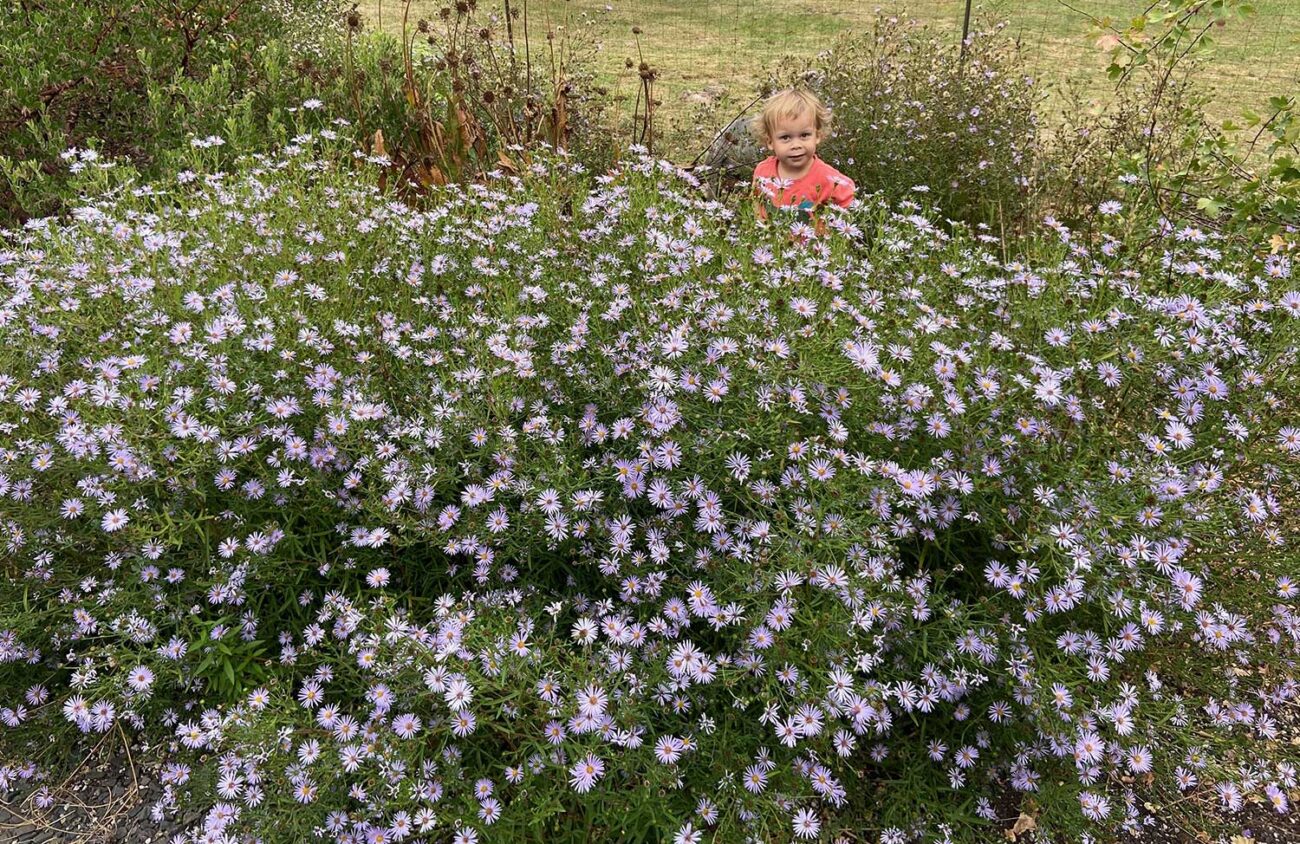
Douglas aster (Symphyotrichum subspicatum) is listed by Oregon State University as the highest pollinator plant for fall in western Oregon. This violet-lavender beauty has daisy-like blooms with a yellow center and blooms from August until the end of October, attracting and hosting large numbers of pollinator bees and butterflies. To force shorter and denser blooms, you can trim your clump back by about a foot in early July.
Here in Lane County, we also have two other asters: Hall’s aster, which has a much more delicate leaf and white to light pink daisy flower with a yellow center; and Pacific aster with a broader leaf.
Yarrow (Achillea millefolium) has ferny foliage and white to light pink flowers, it is an excellent plant for predator insects and host to many butterflies and bees.
The pink blooming checkermallows include rose checkermallow (Sidalcea virgata), Cusick’s checkermallow (Sidalcea cusickii), and Meadow checkermallow (Sidalcea campestris). Showy fleabane (Erigeron speciosus) with its lovely lavender blue daisies will also bloom again in September if trimmed back after it finishes blooming in July.
Other amazing late-summer and drought-tolerant blooms to be included in the pollinator garden are:
Showy milkweed (Asclepias speciosa) has fragrant salmon-colored flowers that start blooming in July and attract a host of butterflies and (hopefully) monarchs. By the third year, this plant will spread fast and needs space to grow.
Elegant tarweed (Madia elegans) blooms all summer with its bright yellow daisy flowers and sticky fragrant leaves that smell of pine and citrus. This annual will reseed and return each year to the spot it was grown. The flowers open in the morning and close during the afternoon to conserve moisture. Songbirds eat the dry seeds in autumn and winter. Historically, the seeds were collected by Indigenous people and ground into flour.
Want to get educated about native plants? Sept. 26 from 10 am to noon, Friends of Buford Park and Mt. Pisgah Native Nursery will have Topic Tables on native plants that thrive in the valley. Plus, some free plants and seeds! The address is: 34639 Frank Parrish Road. Call or text: Jan Jamieson 541-525-0264 for more information.
The Garden Palette is a monthly column coordinated by Kim Kelly. Writers include longtime EW garden columnist Rachel Foster, arborist Alby Thoumsin, Barbara and Dan Gleason of Wild Birds Unlimited and Cynthia Lafferty of Doak Creek Native Plant Nursery. Have a gardening question or tip? Email Gardening@EugeneWeekly.com.
Gardening Brought To You By Eugene Backyard Farmer