Of the 4,177 votes cast for Amber Smith in the 2026 primary election, none of those were cast by Smith herself. That’s because she did not vote, nor has she voted in 23 of the last 24 elections.
Smith’s name is the one on the Nov. 3 general election ballot as the Democratic candidate for Oregon’s House of Representatives District 12 after she won an uncontested May primary.
But Smith has not formed a committee, fundraised or campaigned. She has not responded to the press or anyone in the Democratic Party of Lane County. And her win meant a loss for former state Rep. Charlie Conrad who staged a write-in campaign.
After Eugene Weekly didn’t receive responses to phone calls and emails, and other media merely noted that she didn’t respond either, an EW and Catalyst Journalism Project reporter went to Smith’s Cottage Grove home.
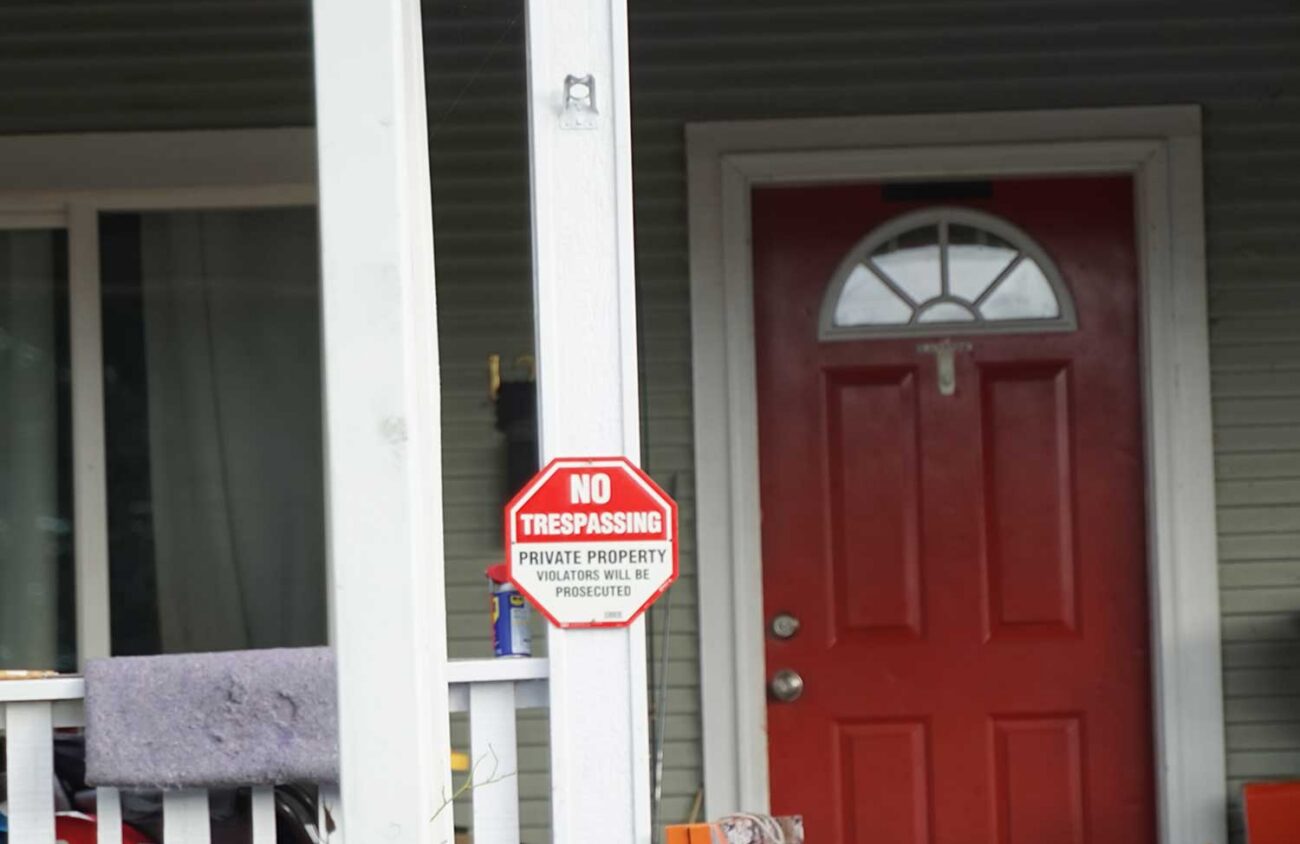
When Smith first filed to run, Lane County Democrats say a representative visited the house in hopes of meeting the District 12 candidate. The representative was told to come back twice, and on a third visit, a no trespassing sign appeared outside the house.
Eugene Weekly’s first knock on the door was met with a man who did not identify himself, a toddler looking through the window and barking dogs. The man took a note with a reporter’s contact information.
On EW’s second visit, a neighbor across the street said, “I do not know her,” when asked about Smith. Another knock on the door was met with a young woman who also did not identify herself. Smith was not home, she said through an inch-wide crack, and in response to a request to leave a message the woman said, “She’s probably not interested.”
According to Smith’s voter profile, she has been a registered Democrat since 2008, but did not cast a ballot between 2009-2026, except in the Nov. 5, 2024 general election.
Smith graduated North Eugene High School and currently works as a service provider for the state of Oregon. Her LinkedIn says she previously worked at HIV Alliance and Womenspace, which is now Hope and Safety Alliance.
“No one knows about her,” says Ron Shaheen, District 12 Democratic House District chair, “I’m voting for her, to get rid of Darin Harbick, and you can quote me on that.”
Harbick also did not respond to EW’s request for comment, but has issued press releases and is actively campaigning.
Smith filed to run March 5. Conrad, who previously served the 12th District as a Republican and had switched to the Independent Party, was running as a write-in candidate in the primary.
He sent Smith an email March 10, saying that with an endorsement from the Democratic Party and his history in Salem, he’d have a decent shot against Harbick, and ending with, “People over politics is not just my slogan, it is my belief and the way I served previously.”
On March 14, he posted on his campaign’s Facebook page saying Smith, “isn’t running a campaign — no fundraising, website, campaign manager, platform or interest connecting with the party (they tried, but she refused to talk to them). She is simply there to split the Democratic primary vote with the hope of turning the general election into a three-way race (to the Republican candidate’s benefit).”
On April 8, Smith emailed a response to Conrad, writing, “When I decided to run I looked on the Secretary of State’s website and saw no Democrat signed up to run. That bothered me. How am I splitting the Democratic vote when no Democrat signed up to run? I’m a hardworking mother trying to make ends meet in this terrible Trump economy.”
Smith continued, “I want to bring my perspective and my voice to Salem. I want to end this email to you on a point of agreement. People over politics is something I deeply believe in, and if elected is the mantra I will live by in Salem.”
But she did not run a campaign, or even vote for herself.
As a freshman legislator in 2023, Conrad voted yes on House Bill 2002, a reproductive health rights bill. “I did not hide that I was a pro-choice Republican,” he says. “My principles and values won the day.”
In the 2024 election, the Republican Party sought out Harbick, a Republican businessman backed by Oregon Right to Life. He got 82.5 percent of the votes in the primary and went on to win the seat against Democrat Michelle Emmons.
“The reason why I stayed as a Republican through that first primary, was again, because I wanted to see if I could be a moderate Republican voice,” Conrad says. “Clearly, I can’t. I got crushed.”
Before Smith’s filing, Conrad, now an Independent, conversed with leaders of the Lane County Democrats and recruited friends and family to campaign. He had hopes of his name on a general ballot with both an (I) and (D) next to it.
After the primary, Conrad dropped out of the race, and Harbick and Smith’s names are the only ones on the Nov. 3 general election ballot. Conrad says he could have kept soliciting friends and family and spending the $22,744.57 in contributions he received, but it was ultimately a losing battle.
The primary was an eye-opening experience as to how much the letter behind the name matters to voters, he says.
In Oregon’s District 6 Congressional race, Jason Faler ran a write-in campaign, and fell short of the 3,500 signatures a nonaffiliated candidate needs to appear on the ballot. In an open letter he wrote, “Oregon’s ballot access process is archaic, built like a moat that keeps ordinary citizens out while insiders stay comfortably inside.”
In 2021, a Florida state Republican senator was criminally charged with counts of a fake candidate scheme that sought to siphon votes away from a Democratic incumbent.
This year, a Nebraska Senate primary race made national headlines when Trump-supporting Democrat William Forbes, accused of being a GOP plant, lost the primary to Cindy Burbank, who dropped out of the race to clear the way for the independent candidate and the Nebraska Democratic Party endorsed the independent candidate, Dan Osborn.
Conrad says he really wants to emphasize the partisanship of Oregon’s elections, and that voters seem to vote for the letter — D or R — of the party, not the person. He adds, “And if we’re going to change our political system, we as voters have to change how we vote, and why we vote.”
Eugene Weekly reached out via the Oregon State Employee Search, to a Eugene-based number for Smith, but the person who answered the phone responded, “wrong number.”
This story was developed as part of the Catalyst Journalism Project at the University of Oregon School of Journalism and Communication. Catalyst brings together investigative reporting and solutions journalism to spark action and response to Oregon’s most perplexing issues. To learn more, visit CatalystJournalism.uoregon.edu.