In recent weeks, more than 200 residents from Springfield and across the region have swamped the Springfield City Council with emails and letters supporting a proposed state-of-the-art behavioral health campus in Gateway, as the council’s Nov. 2 decision deadline nears.
For the past several months, councilors have vacillated over granting PeaceHealth and Lane County the land-annexation approval they need for the International Way project.
And since September, advocates have stepped up their email lobbying. The tally: 185 individuals and several groups sent in comments backing the complex; just seven commenters opposed it. One opponent urged the council not to be swayed by the outpouring of support.
The low-key Springfield council rarely gets this kind of attention.
Project supporters include families devastated by mental illness or suicide; the Lane County sheriff; retired local police officers; a prominent Eugene sculptor; a security guard at the PeaceHealth RiverBend hospital; the 11-member board of the Lane County Medical Society; plus scores of doctors, nurses and health care professionals, many employed at RiverBend. PeaceHealth encouraged employees to submit comments.
“Jails and emergency rooms have become the primary sources of care for Lane County residents with the most severe mental health conditions,” wrote retired Springfield Police lieutenant Russ Boring. The facility would alleviate that, he said.
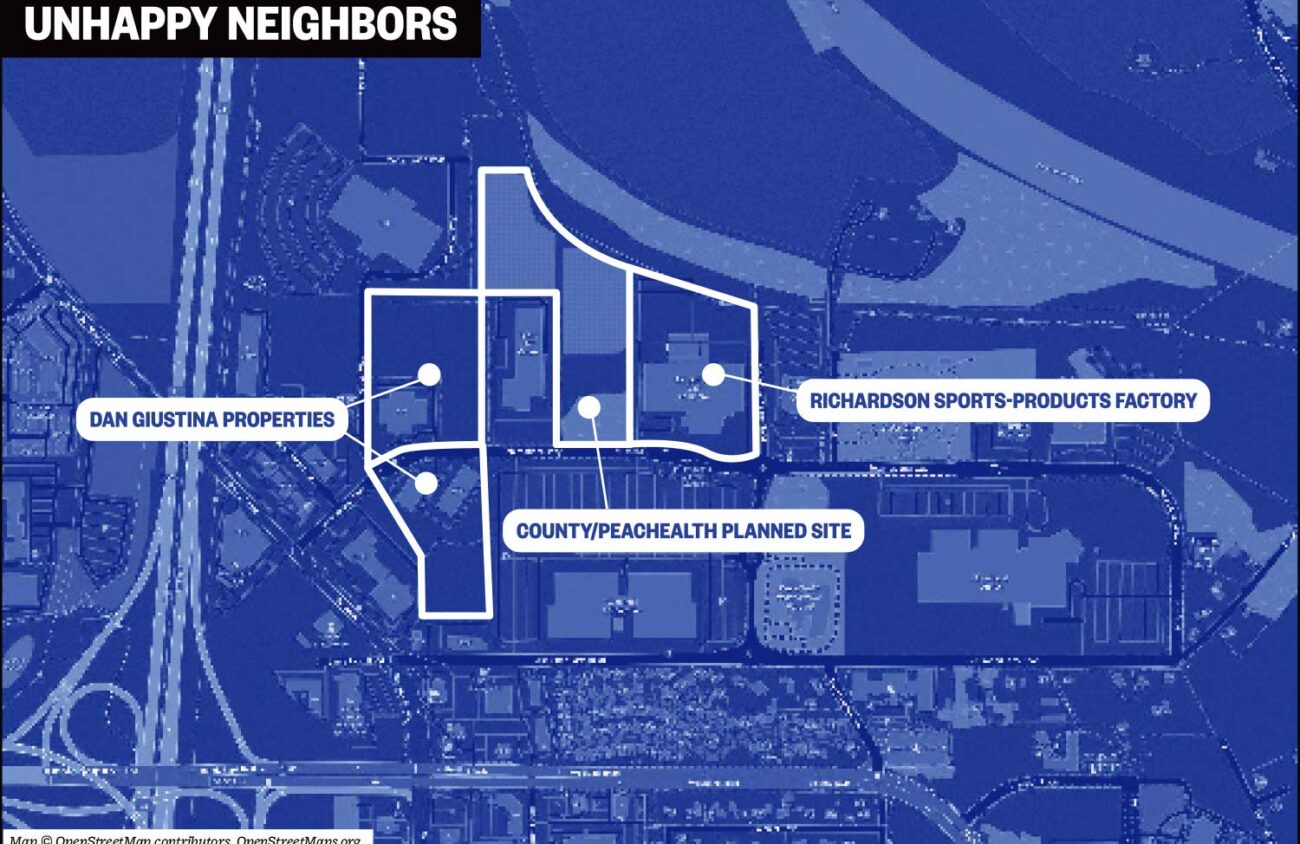
Opponents consist mainly of two companies that own property near the proposed site on International Way, and a business group, Common Sense for Springfield. The project is contrary to the “campus industrial” land-use designation of the site, and the facility’s patients and traffic might disrupt commercial and industrial neighbors, the group said.
“A planning system loses credibility if an application that does not satisfy [the city’s] standards can nevertheless advance because the applicant is a governmental entity, the project is popular, or sufficient political pressure is brought to bear,” Common Sense wrote in its comments.
Common Sense is headed by Joe Tokatly, owner/manager of local auto glass stores, and Brian Wells, a marketing executive at Rosboro, a lumber mill on Main Street in Springfield that is owned by a New York City private equity company.
Will the 11th-hour emails have an impact? The council closed the record on July 11; councilors are not supposed to take into account comments submitted after that.
Public turnout was thin at council hearings earlier this year on the annexation needed for the project. Most of the comment time was taken by PeaceHealth and the county and the two main opponents, real estate investor Dan Giustina and sports-equipment manufacturing executive Kelly Richardson, who own property near the site.
In subsequent discussions it became clear the council was split and wavering over which legal and land-use criteria it could or must use to approve or reject the annexation request.
The facility would have a 96-bed secure inpatient psychiatric hospital owned by PeaceHealth, and a 28-bed emergency behavioral health center run by Lane County. Few dispute the region needs the care. But where to put it?
The land-use arguments over the site are muddy.
The county in 2025 obtained a special “super-siting” law from the Oregon Legislature that minimizes Springfield’s ability to reject the project at that site. But the county and PeaceHealth need the council to annex the 18-acre parcel into city limits. The sides disagree on which criteria govern this. Must the council reject the application because the planned use isn’t “consistent” with campus-industrial zoning? Or can the council approve it because the project would benefit the community, the campus-industrial designation is broad enough to allow it, and the state law overrides local land-use rules?
Supporters of the project aren’t fussed about land-use niceties.
They argue the facility is urgently needed and the complex won’t unduly disturb the industrial neighborhood.
Here’s what some said in their submitted comments:
Lane County Sheriff Carl Wilkerson: “Our deputies regularly respond to individuals experiencing behavioral health crises…. Often, these individuals would benefit from targeted behavioral health treatment rather than being absorbed into the justice system and the further complications that can bring.” He continued, “This model has been successfully employed throughout the country and in our discussions with other agencies, we’ve learned there have been no adverse impacts to the communities or neighborhoods that the facilities are located within.”
Springfield resident Cameron Morris: “I know first-hand how difficult it is to lose a loved one to suicide. I know from personal experience just how difficult and frustrating it is as a parent to have a teen in mental crisis with nowhere to turn for help.”
Springfield residents Nicole Gooding and James Rochford: “Improving access to mental health care carries clear economic benefits for Springfield. When community members receive early, effective support, they are better able to remain employed, care for their families and contribute to the local economy.”
Doug Mozan, retired Eugene police lieutenant: “Few families have been untouched by mental illness, addiction or behavioral health crises.”
Area resident Terry Nash, who worked near PeaceHealth’s current secure behavioral health unit in Eugene: “I observed no incidents of unruly behavior. In fact, U of O students walk past that treatment center on a daily basis without issue. That is why I am surprised by the opposition from local business owners.”
B. Nott, a security guard at the RiverBend hospital: “When appropriate behavioral-health resources aren’t available, the community pays for the consequences through repeated ER visits, ambulance calls, law-enforcement responses, homelessness, incarceration, workplace disruption and family crises.”
Eugene sculptor Ellen Tykeson: “My friend, Michael Cole, tried to check himself into the [PeaceHealth] mental health care unit as a suicide risk four years ago and was denied care due to lack of space. He was told to drive himself to Portland where there might be care available. Rather than navigating this challenge he went home and two days later drowned himself in Lookout Point reservoir.”
Here’s what opponents say:
Common Sense for Springfield: “Denial of this annexation does not mean denial of the behavioral health project. It means only that the applicants have selected a property for which the proposed use does not satisfy the city’s existing planning framework.”
Area resident Holly Conway: “I have lived in towns before that have opened the door to behavioral health centers, and encouraged homeless shelters, and it was amazing how quickly it went from a family-friendly, safe place to have kids, to a place where I had to be careful about where I took my kids.”
Deborah Cater, nurse at PeaceHealth RiverBend: “The mental health crisis in America is profound. However, taking on this adventure I feel is wrong for the community. This crisis is much bigger than Eugene/Springfield [and] we alone cannot fix…This [project] will be an opportunity for other communities to send mentally ill patients & homeless people here for hospitalization.”
Christian Wihtol anchors the Bricks $ Mortar column. Reach him at Christian@EugeneWeekly.com.