There are a handful of movies I never tire of watching, and one of them is Rosemary’s Baby. That film, about the birth of Satan’s spawn in a Manhattan apartment, possesses a specific malevolence that, for me, hasn’t diminished one bit over the course of its half-century in existence.
Roman Polanski’s 1968 masterpiece, only nominally a horror film, is too rich and complex to begin to dissect here, but for my purposes I’d like to mention just one aspect of the strange magnetism it exhibits.
By dropping a longstanding conspiracy of Satanists into the middle of everyday New York in the turbulent ’60s — gritty, loud, hectic, mundane — Polanski conjures a sense of authenticity that is at once disorienting and disarming. He makes the work of Satan look distinctly urban and merely ho-hum, carried out by chatty, annoying neighbors who knit and bake chocolate mousse in their spare time.
First-time director Ari Aster achieves a similar effect in Hereditary, a new horror film that rivals Rosemary’s Baby in its willingness to combine an elemental evil with the awkward fumbling and fretting of recognizable reality, and to push the logic of its narrative past the brink of madness and into a kind of hysterical epiphany.
At the end of Rosemary’s Baby, one of the Satanists gathered for the birth of the Prince of Darkness snaps cheerful photos of the new infant with a Nikon, while others argue about who gets to hold the baby next. It’s this absurdist mingling of narcissistic concern and cosmological threat that Hereditary taps into. It dares you to laugh.
At the center of it all is Toni Collette, who delivers a performance of such unhinged force that it upends everything we’ve come to expect from horror movies. As a woman coping with the recent death of her distant, authoritarian mother, Collette’s Annie is the portrait of confused grief; as an artist who creates miniature dioramas of her life, she is at once self-absorbed and controlling, with a martyr’s streak a mile wide. Watching distraught Annie react to the rising terror engulfing her, I kept thinking, That’s exactly what I would do. Collette’s performance, a livewire of astounded incomprehension, breaks down all resistance to disbelief. She is almost too real.
And then her world utterly collapses, plunging her and her family into a living hell that, on its surface, is the timeless stuff of tragedy — and forget about whatever supernatural evil may or may not be lurking beneath the devastated surface. Hereditary, along with its horror tropes, is a shattering tale of loss.
The shocks this film provides are significant and impressive — and rather than being cheap scares, these sudden twists and turns reveal, in the final reckoning, a superstructure of inexorable malevolence that mirrors the seemingly random tragedies that befall this family.
I wish I could tell you more, but the plot of this movie is so tightly woven that it took me a second viewing to fully comprehend the seamlessness of Aster’s screenplay, which is liberally sprinkled with omens and portents ranging from walnuts to Sophocles.
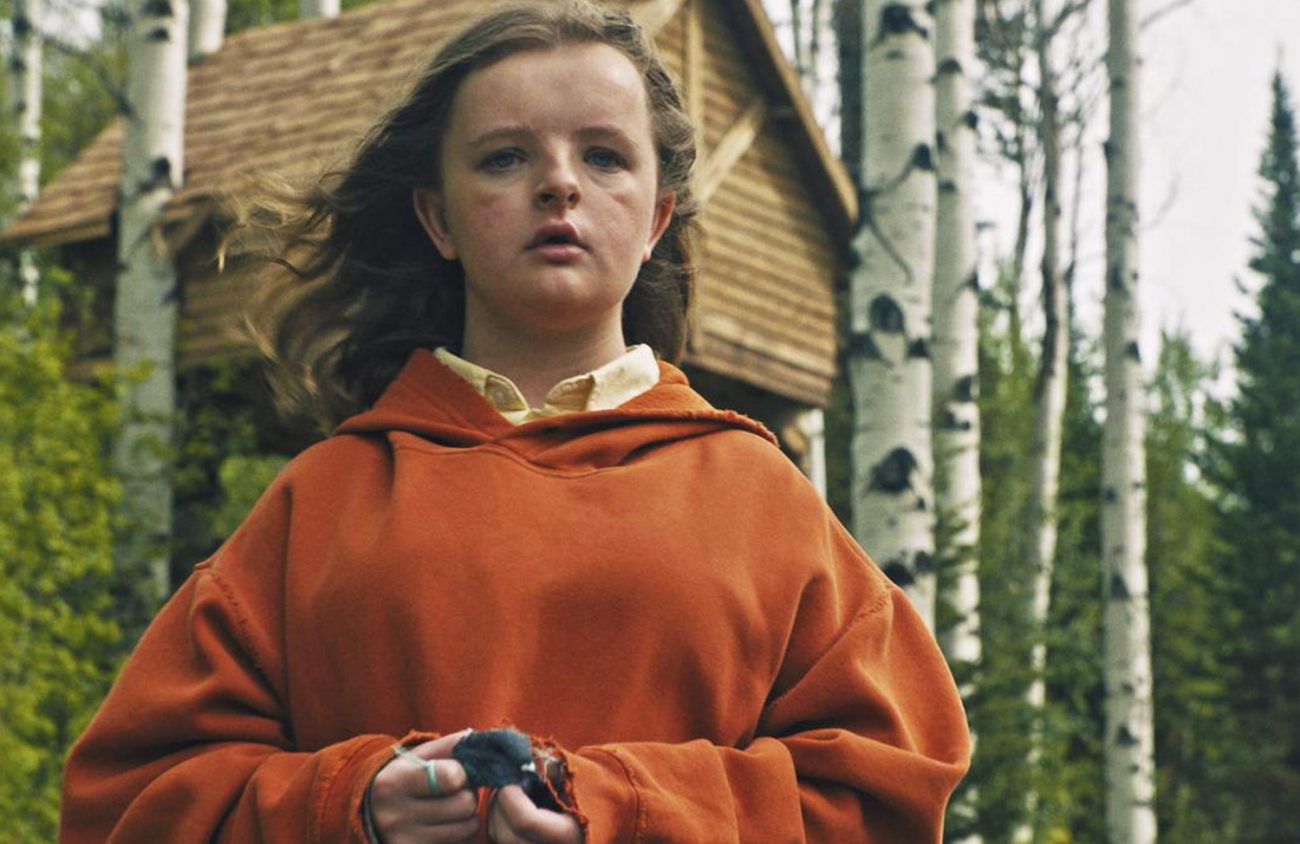
As good as the writing and directing are, Hereditary is driven primarily by its performances, which amount to a kind of chamber piece for five actors. Collette, already noted, should get an Oscar nomination; she’s that good. But Gabriel Byrne, as Annie’s long-suffering husband Steve, is certainly no slouch, and Alex Wolff as Peter, her teenaged son, and Milly Shapiro as her ethereally weird younger daughter Charlie, are compelling as well.
And a big nod to the wonderful Ann Dowd (Joan), whom you’ll recognize from The Handmaid’s Tale (Aunt Lydia!) as well as HBO’s The Leftovers. Dowd has emerged, seemingly mid-stride, as one hell of a character actor. I hope it doesn’t give too much away to say that she fulfills much the same function as Ruth Gordon did in her Oscar-winning turn as the nosy, meddlesome friend Minnie Castevet in Rosemary’s Baby.