In 2002, a young Christopher Nolan was briefly hired to direct the blockbuster Troy, based on Homer’s Iliad. But after Wolfgang Petersen’s Batman v Superman project was canceled, Petersen reclaimed Troy, producing a mediocre film and allowing Nolan to redefine the superhero genre with Batman Begins.
Twenty-four years later, Nolan finally got his shot at Homer, and as always, he didn’t miss.
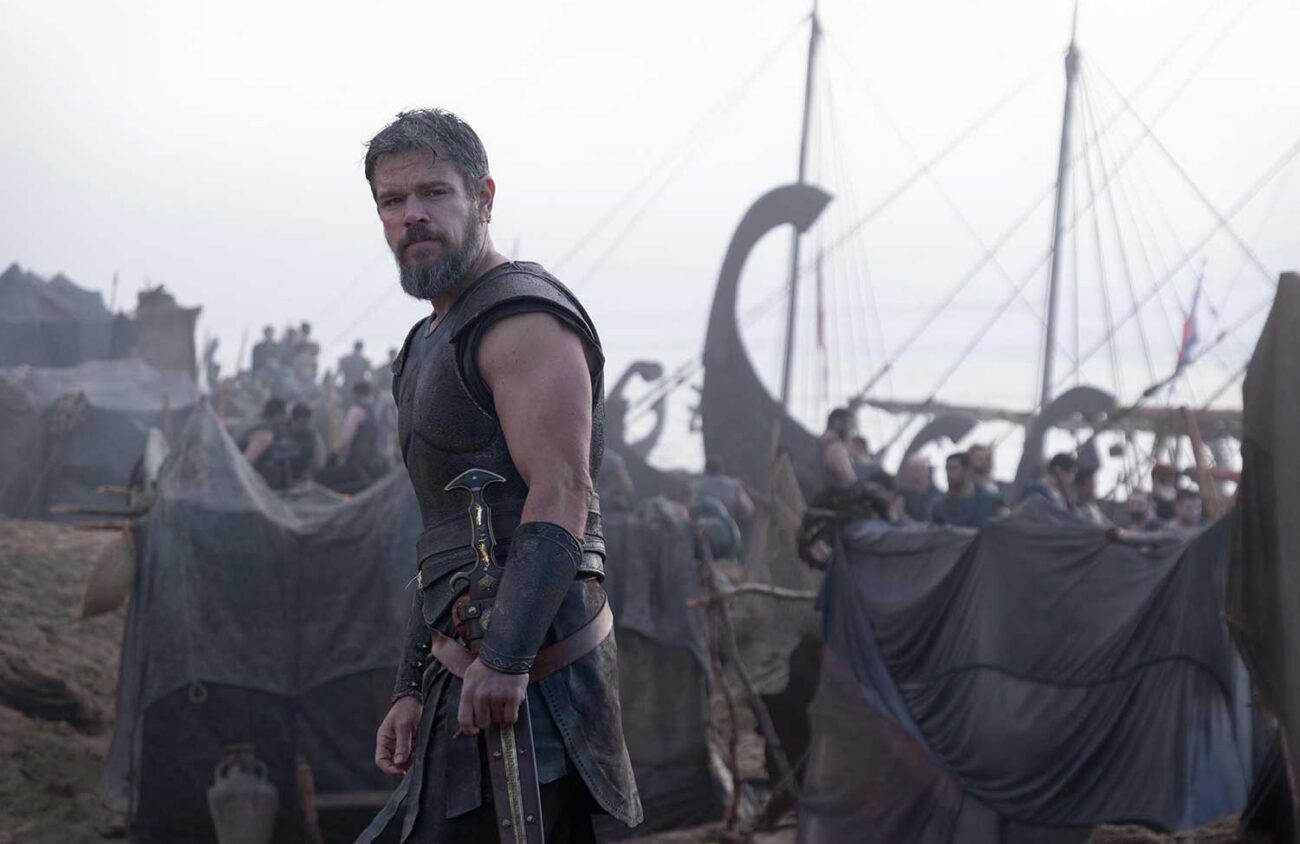
Released July 17, Nolan’s first film since 2023’s Oppenheimer is a masterclass in action filmmaking. In an era of 360-degree green screens and fully digital worlds, Nolan’s Odyssey, filmed entirely with 70mm IMAX cameras, plants you firmly in the world of ancient Greece with real actors inhabiting real spaces and brutal physicality that’s as confronting as it is awesome.
The story follows Odysseus, played by Matt Damon, as he and his crew battle their way back from the Trojan War, hounded at every step by hostile islanders, mythical beasts and the wrath of the gods themselves.
The film handles the nonlinear storytelling of the Homeric epic very well, utilizing Odysseus’ detainment on Calypso’s island as a framing device for him to slowly piece together the story of how he got there to begin with. Simultaneously, his son, Telemachus, goes to search for news of his father, hoping to rid his home of the suitors who defile the family home and seek the hand of his mother, Penelope.
While Matt Damon as Odysseus and Tom Holland as Telemachus did very well in their roles, there was nothing earth-shattering or career-defining about either performance. However, I also don’t think you could’ve found two better leading men in Hollywood for these roles. It’s hard to be the definitive version of a character who has existed in various forms for 3,000 years.
Anne Hathaway truly shone as Penelope, embodying the role with a burning intensity and anger that belies her character’s inner despair. Her natural beauty, alongside her costuming and makeup, projects a regal, almost divine image, holding your attention whenever she’s onscreen.
The film brings tangibility and human feeling to the sometimes hard-to-picture or unrealistic Homeric text. The crew’s transformation on the island of Circe goes from a magic trick in the text to a brutal and terrifying display of viscera on screen that had the entire audience grimacing. On the contrary, monsters like Scylla remain otherworldly and indescribable, adding to the acute feeling of terror that spreads through the crew.
Another highlight was the incredible and highly eclectic ensemble of character actors supporting the leads.
John Leguizamo is excellent as Eumaeus, the loyal blind swineherd who is given a heavily extended role from his part in the text.
Lupita Nyong’o brings a previously untapped depth to Helen of Troy, portraying her as a woman destroyed physically and mentally by the trauma of the Trojan War and not just a passive trophy. Nyong’o also plays Helen’s sister Clytemnestra in a dual performance.
Finally, Robert Pattinson gives a great performance as Antinous, the worst of all Penelope’s suitors. It’s a joy to watch Pattinson have fun in the role and bully Holland’s Telemachus, and he does so with gleeful cruelty that masks a deep but obvious cowardice.
The presence of the gods is constant in Nolan’s Odyssey, but not in the way you might expect. Instead of bearded men throwing thunderbolts, you experience the wrath of the gods as Odysseus’ crew does: through violent and terrifying weather that booms through the seats in IMAX and wordlessly shows just how angry the gods are with poor Odysseus.
The only god you actually get to see in the film is Athena, played stoically by Zendaya as a guiding force for Odysseus along his quest.
The Darth Vader-like appearance and demeanor of Agamemnon, played by Benny Safdie, was one of many bold decisions by Nolan. The armor they put him in borders on camp, and it’s out of line with the tone of the rest of the film.
The film also completely omits the text’s sequence on the island of Phaeacia. While it helps the film keep its fast pace, its removal takes away from the catharsis of the finale since Odysseus literally just washes up on his home island of Ithaca right after leaving Calypso.
While I highly enjoyed The Odyssey and easily consider it one of the best films I’ve seen this year, I can’t help but feel like it could’ve gone even further with its scale. The film goes at a breakneck pace, with several important scenes being only minutes long, and is over before you know it despite its 173-minute runtime.
It’s hard to feel like Odysseus has been stuck in one place for years when we’re constantly bouncing all around from scene to scene and place to place, and then he’s just back home. You’re told he’s been on Calypso’s island for seven years, but when you’re only there for a few minutes of total screen time, the effect doesn’t really work.
That aside, the task of condensing one of the most sprawling epics in history into a compelling, sub-three-hour film is an achievement in and of itself.
Beyond that, The Odyssey is an action-packed, brutal journey that I can’t recommend enough. While other premium large formats may suffice in a pinch, the film was made to be viewed in IMAX, and that’s the way you should see it.
The Odyssey is playing in IMAX at Regal Valley River Center, and in small format at Cinemark Springfield-Eugene and Metro Cinemas on Broadway. It is set to screen until August 5.