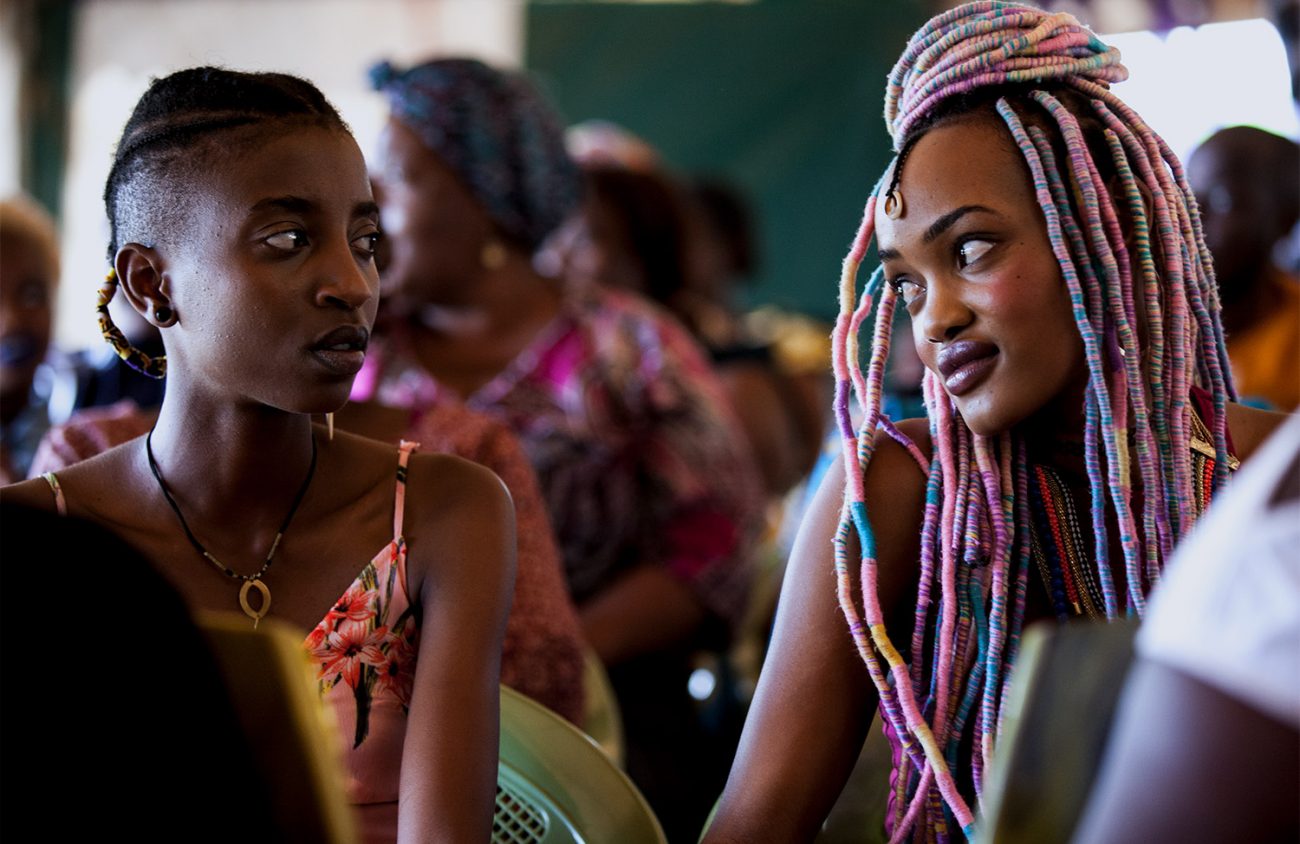
Two beautiful, spirited young women living in a bustling urban capital meet up, crush out, flirt, fall in love. It’s rough going for them — a classic instance of “forbidden” love, whatever that really means. First of all, the girls’ fathers are political rivals. And the girls hail from different social groups. Their friends aren’t really friends.
More crucial, though, is the homophobia they face, alone and together, foisted upon them by pinched, persecuting Christians, retrograde traditionalists, overprotective parents, envious town gossips and, eventually, by the bigoted bashers emboldened and incited by all of the above.
Otherness is always a bitch. The closet is safe, and then it’s suffocating.
Ten to one your imagination has already located the details of this story in these United States, either in the wretched here and now, or more likely in some grainy 1950s version of our McCarthyite past. After all, mystery writer Patricia Highsmith originally published her 1952 novel of besieged lesbian romance, The Price of Salt, under the pseudonym Claire Morgan — such is the price of taboo and intolerance.
Thank heavens, then, for the missionary zeal of cinema, which cracks open the familiar within the unfamiliar in a universalizing gesture of human understanding. Rafiki (which means “friend” in Swahili) is set not in the U.S. but in the Kenyan capitol of Nairobi, where colors and exuberance burst to the exact extent that they appear increasingly to be leached from our own landscape. Beneath the rainbow, however, the same tensions broil.
Rafiki tells the tender, embattled story of Kena (Samantha Mugatsia) and Ziki (Sheila Munyiva), who come together with all the innocence of young love only to be tested and torn at by the numerable forces of disapproval and persecution. The film has the straightforward propulsion and narrow intent of an After School Special, and yet it contains enough depth and subtlety — especially in the wonderful lead performances — to avoid simple didacticism. It tells an old story with pure heart, and it embeds its social justice concerns within the fabric and rhythms of Kenyan daily life and, beyond that, the eternal fable of personal connection.
Director Wanuri Kahiu deftly balances vibrant, expansive scenes of Kenyan street life with more-intimate peeks into the relationship between Kena and Ziki, evoking a very specific sense of time and place that only heightens the story’s emotional impact. She does for Nairobi what Spike Lee did for Brooklyn in Do the Right Thing. The comparison is not inapt. Like Lee’s movie, Rafiki is grounded in the grit of the street — its noises and colors and commotion — the better to evoke the many currencies feeding its intimate human drama.
What comes of all this is something joyous and affirmative, despite the injustice and intolerance endured by Kena and Ziki, or maybe because of such difficulties. Rafiki, in the end, is about overcoming, and though the film’s focus is LGBTQ rights in Kenya, its themes are timeless and universal. Freedom is a struggle and a fight, and art reminds us of that by bestowing dignity to acts of integrity.
Speaking of all that, the very act of making this film was, in a sense, an act of integrity. Unable to secure funding in Kenya, the filmmakers reached out, receiving production help from partners in Europe, Lebanon and the U.S. And once made, the movie was banned in Kenya “due to its homosexual theme and clear intent to promote lesbianism in Kenya contrary to law.” Possessing it was a prosecutable offense. The director sued the government, eventually getting the ban lifted. Rafiki was the first Kenyan film to be screened at Cannes, in 2018. (Only through May 9, at Bijou Art Cinemas)
A Note From the Publisher

Dear Readers,
The last two years have been some of the hardest in Eugene Weekly’s 43 years. There were moments when keeping the paper alive felt uncertain. And yet, here we are — still publishing, still investigating, still showing up every week.
That’s because of you!
Not just because of financial support (though that matters enormously), but because of the emails, notes, conversations, encouragement and ideas you shared along the way. You reminded us why this paper exists and who it’s for.
Listening to readers has always been at the heart of Eugene Weekly. This year, that meant launching our popular weekly Activist Alert column, after many of you told us there was no single, reliable place to find information about rallies, meetings and ways to get involved. You asked. We responded.
We’ve also continued to deepen the coverage that sets Eugene Weekly apart, including our in-depth reporting on local real estate development through Bricks & Mortar — digging into what’s being built, who’s behind it and how those decisions shape our community.
And, of course, we’ve continued to bring you the stories and features many of you depend on: investigations and local government reporting, arts and culture coverage, sudoku and crossword puzzles, Savage Love, and our extensive community events calendar. We feature award-winning stories by University of Oregon student reporters getting real world journalism experience. All free. In print and online.
None of this happens by accident. It happens because readers step up and say: this matters.
As we head into a new year, please consider supporting Eugene Weekly if you’re able. Every dollar helps keep us digging, questioning, celebrating — and yes, occasionally annoying exactly the right people. We consider that a public service.
Thank you for standing with us!
Publisher
Eugene Weekly
P.S. If you’d like to talk about supporting EW, I’d love to hear from you!
jody@eugeneweekly.com
(541) 484-0519