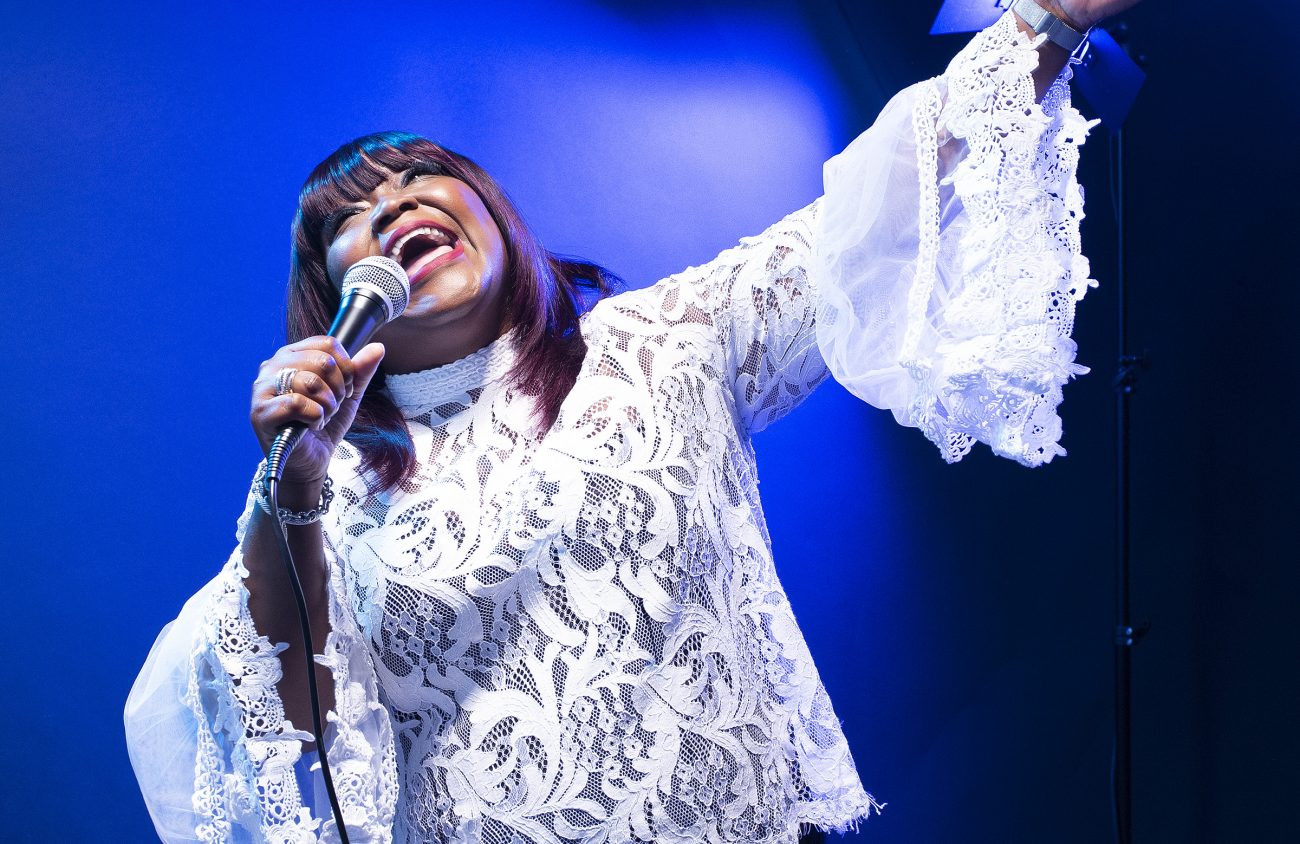
In her more-than-20-year career, blues singer Shemekia Copeland has not been one to shy away from addressing difficult subjects in her music. And in the era of unprecedented times and uncertainty, Copeland’s newest album brings a needed clarity to issues facing America today.
Copeland will discuss her 2020 album Uncivil War and perform several songs at a live virtual event hosted by the Oregon State University College of Liberal Arts on Feb. 17. The webcast will feature Copeland as a part of the college’s American Strings Series — segments of music and conversation by artists across various genres.
“We will be talking about the latest album Uncivil War,” Copeland says in a phone interview about the event. “We finished this project at the end of 2019, and had no idea what was in store for 2020.” Despite the challenge of releasing music in the last year, Copeland says she is proud of the record, which was nominated for five Blues Music Awards.
Previously, Copeland was nominated for three Grammy Awards including best blues album. Her music takes on the deep and personal tones of traditional and electronic blues with influences of R&B.
Her project Uncivil War tells different stories of troubling times in America including topics of climate change, violence and racism. The song “Clotilda’s on Fire” discusses a shipwrecked vessel that is thought to be the last slave ship to bring African captives to America.
The song’s emotional and haunting lyrics describe the atrocities of the ship and what it meant for those on board. Copeland’s rich voice brings the song to life as she sings, “Born to steal bodies, born to sell, she had her own special place in hell. Clotilda’s on fire off the Alabama coast.”
Other songs, like “Money Makes You Ugly,” discuss greed. The title track draws parallels between racism and division in America’s past and today, mentioning that the old wounds are still opened. In the song, Copeland wonders how long the uncivil war and the fighting will continue.
“Uncivil War is about what is going on in our country,” Copeland says.
Her previous music also brings in themes of issues and racism in America. She says that she will keep using music to tackle these discussions.
“I’m Black in America so racism is something I have to deal with all the time. I’ll keep making music like that until it doesn’t happen anymore.” She doesn’t think that will happen in her lifetime, based on current events. “But I’m always hopeful,” Copeland says.
She adds that this is her second virtual performance since COVID-19. Though she misses live shows and audiences, she is excited and happy to be doing this show.
Copeland performs virtually at 5 pm on Wednesday, Feb. 17. Register at http://beav.es/Jdz to receive a free link to watch the webcast.
A Note From the Publisher

Dear Readers,
The last two years have been some of the hardest in Eugene Weekly’s 43 years. There were moments when keeping the paper alive felt uncertain. And yet, here we are — still publishing, still investigating, still showing up every week.
That’s because of you!
Not just because of financial support (though that matters enormously), but because of the emails, notes, conversations, encouragement and ideas you shared along the way. You reminded us why this paper exists and who it’s for.
Listening to readers has always been at the heart of Eugene Weekly. This year, that meant launching our popular weekly Activist Alert column, after many of you told us there was no single, reliable place to find information about rallies, meetings and ways to get involved. You asked. We responded.
We’ve also continued to deepen the coverage that sets Eugene Weekly apart, including our in-depth reporting on local real estate development through Bricks & Mortar — digging into what’s being built, who’s behind it and how those decisions shape our community.
And, of course, we’ve continued to bring you the stories and features many of you depend on: investigations and local government reporting, arts and culture coverage, sudoku and crossword puzzles, Savage Love, and our extensive community events calendar. We feature award-winning stories by University of Oregon student reporters getting real world journalism experience. All free. In print and online.
None of this happens by accident. It happens because readers step up and say: this matters.
As we head into a new year, please consider supporting Eugene Weekly if you’re able. Every dollar helps keep us digging, questioning, celebrating — and yes, occasionally annoying exactly the right people. We consider that a public service.
Thank you for standing with us!
Publisher
Eugene Weekly
P.S. If you’d like to talk about supporting EW, I’d love to hear from you!
jody@eugeneweekly.com
(541) 484-0519