Eugene Weekly’s Earth Day Issue:
Carpe the Carp Stalking the elusive *Kentucky tunain Oregon waters
Pretty, Bad Mute swans in Oregonû
Bees, Baby, Baby, Bees Nonnatives make the world go round
Dont Feed the Birds Wild turkeys are really feral
Not So Big, Not So Bad Wolves return to Oregon, cause a ruckus in Congress
Will Work for Food Nonnative earthworms move slow, compost fast
Crawfish, Crawdad, Crayfish Whatever you call them … theyre invading Oregon
Pretty, Bad
Mute swans in Oregonû
by Eliot Treichel
øI wish they were ugly,” says Rick Boatner, Oregon Department of Fish and Wildlifes invasive species and wildlife integrity coordinator, øbut theyre really quite beautiful.”
Hes speaking of the mute swan, the only bird on the Oregon Invasive Species Councils 100 Worst list ‹ a bird that is decidedly not ugly. øThey get peoples emotions up,” Boatner says, in no small part because of their looks. øThese are political birds.”û
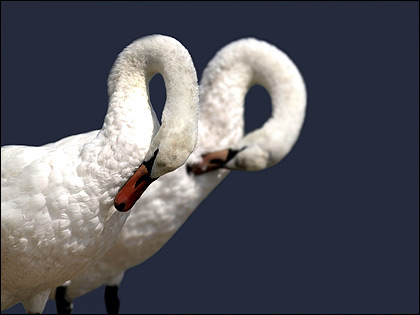 |
The mute swan (Cygnus olor), a native of northern and central Eurasia, was brought to the U.S. late in the 19th century to decorate parks and estates. Its easy to see why: On water, mute swans move with grace. Their all-white plumage and long, elegant necks are arresting. In mating rituals, two birds will sometimes face one another and gently touch heads ‹ their mirrored necks forming the iconic shape of a heart.
While they are less vocal than other swans, mute swans are not actually mute. And in contrast to their refinement, they can be quite aggressive, hissing at and attacking other waterfowl, dogs and even people when they feel their territory is being invaded. Its this aggressiveness, along with their lack of natural predators and their heavy consumption of submerged aquatic vegetation, that makes the mute swan so threatening to native wildlife.
Mute swans dont appear to migrate, and their yearlong use of an area thins the amount of food available to transitional birds, including trumpeter and tundra swans. Not only do mute swans pull up vegetation by the roots, they also forcefully paddle with their feet, breaking whole plants loose. Without the shelter provided by submerged vegetation, fish hatchlings, native turtles and even microinvertebrates, those little creatures that make up such an important part of the food chain, are harmed.
Boatner says ODFW doesnt have a very clear count on the number of mute swans in the wild. Certainly the numbers arent as daunting as they are around the Great Lakes and Chesapeake Bay, where a few escaped birds turned into flocks of several thousand and are still growing.
In Oregon, mute swans are classified as a controlled species. Some landowners utilize the birds to help manage Canada goose populations, while others still keep them as ornamentals. Although it is illegal to import mute swans, it is legal to possess and sell them as long as the males are neutered or the birds wings are pinioned (clipped so they cant fly). Do residents always follow the law? According to Boatner, no.
øMost people dont even consider if there are laws or regulations in place before purchasing swans,” he says, noting how easy it is to get birds today via the internet.
When ODFW receives notice of a mute swan in the wild, they will lethally remove it. In other cases they try to work directly with landowners, who oftentimes use other control measures such as addling or oiling eggs so they wont hatch.
While it likely will be impossible to eradicate mute swans from Oregon, it may still be possible to keep the population in check. To Boatner, good information is crucial: øThere is not enough manpower or funding to monitor or eradicate all invasive species, so education is a key factor to protect the state.”
ûThe idiom øswan song” refers to an individuals final act before retirement. It comes from the old belief that mute swans were silent during their lives, right up to their deaths, when they would sing an exquisite song. Its an eerily lovely image, but also a legend. For many folks concerned about invasive species, itd be okay if mute swans sang goodbye ‹ even better if they never really stayed in the first place.û