
Biking the Interchange
ODOTs I-5/Beltline path plan has six underpasses
By Alan Pittman
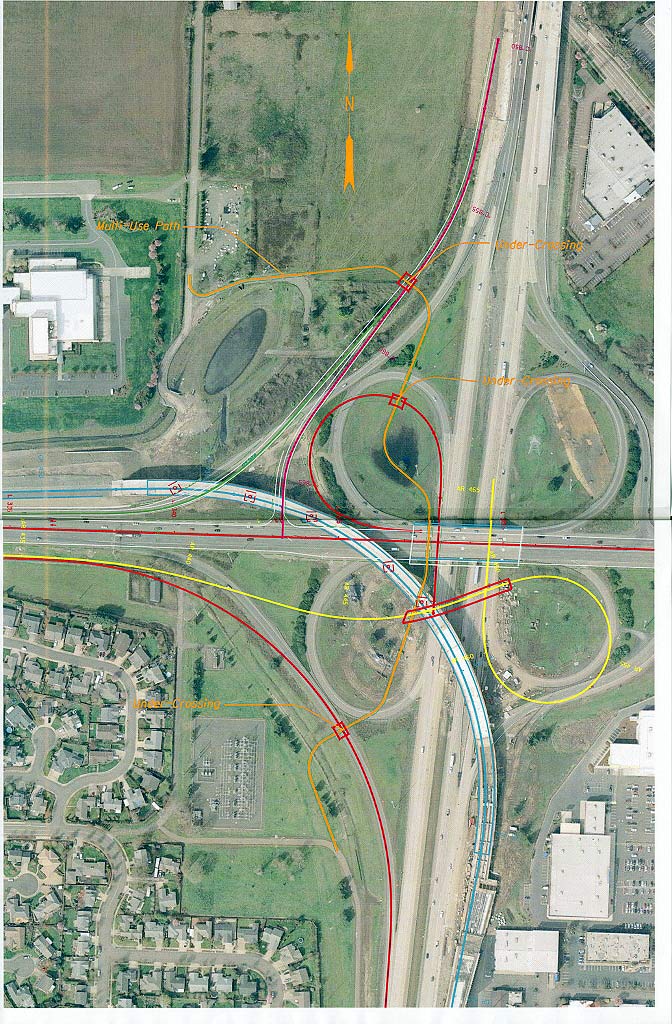
People on bikes and foot will finally have a way to cross the great wall of Beltline in north Eugene, but they may have to go through a warren of underpasses to do it.
The Oregon Department of Transportation (ODOT) unveiled draft plans for a long-sought bike path under or over the Beltline freeway that severs north and south Eugene. The proposed $1 million route would include six underpasses winding through ODOTs I-5 Beltline, $200 million highway spaghetti interchange project.
Members of the Eugene Bicycle and Pedestrian Advisory Committee (BPAC) questioned why ODOT wouldnt build a single bike bridge with a safe, direct connection rather than the complex system of underpasses.
The proposed plan creates a “rabbit warren” of safety issues, BPAC member David Gizara said. “Why are you building so many things? Why arent you doing a straight line?”
Anya Dobrowolski said many women may not feel safe going under the roads. “The night time issues are huge,” she said.
BPAC city staffer Lindsay Selser said an existing narrow underpass under the railroad tracks in southeast Eugene near I-5 is “horrible, stinky, smelly, creepy, gross.” She said, “its where attacks happen in my head.”
But ODOTs project leader Anne Sanders said the state highway department quickly dismissed the bike bridge alternative. “Economically and practically, it wasnt going to be an option.”
ODOT interchange designer Carl Deaton said he started to look at a bike bridge, but found that at an acceptable grade, it would have to be “very long” to get over the elevated flyover ramp and need more right of way. He estimated such a big bridge could cost roughly $6 million, almost three times the cost of the new bike suspension bridge over I-5 to the Gateway Mall. “I knew it was a big cost; I knew Id have to start taking homes, so I stopped,” Deaton said.
“We really dont have the budget for it,” Sanders said.
Gizara made a motion that BPAC formally ask ODOT to perform a more complete analysis of a bridge.
Gizara said a bridge crossing will be more used than the undercrossings and could serve growth and big employers in the area like the new hospital. “Cutting it down to that one crossing is going to be money well spent,” he said. “How much are you spending on cars?”
But BPAC member Fred Tepfer, a UO planner, said many people wouldnt want to climb such a long, tall bridge to get over Beltline. “Its ridiculously long,” he said. “There is no good solution here, so Im not sure spending more money is better.”
Gizaras motion died for a lack of consensus on BPAC.
Deaton said the underpasses would have more open, slanted walls and possibly lighting to increase safety.
Another option would be one longer underpass under Beltline. But Deaton said that would add the expense of a new Beltline road bridge to the interchange project.
“Long tunnels are enormously scary to people,” Tepfer also said.
Another option not discussed at the BPAC meeting would be to move the bike bridge farther west to avoid the flyover and cross at a lower point. But that could require buying a right of way from The Register-Guard headquarters.
BPAC members thanked ODOT for working on the bike connection. A way to get past the Beltline wall has long been sought by local bicyclists. Busy Coburg Road offers only a long and dangerous detour. The path would connect to existing paths leading to the riverfront paths and Gateway mall and could be heavily used by neighborhoods and commuters to businesses on Chad Drive and/or recreational cyclists heading to rural routes.
A version of this story first appeared at EugeneCycles.com
 |
|
source: ODOT
|