
The Way Forward
Exploring ecologically sustainable thinking
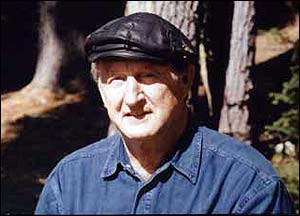
By Chet Bowers
 |
When I wrote The Culture of Denial (1997) most university faculty were in denial that the ecological crisis has any implications that might lead them to question whether the deep cultural assumptions and silences reinforced in their courses contribute to ecologically sustainable lifestyles. The exceptions were faculty in the sciences, and the occasional faculty member who focused on environmental issues from a disciplinary perspective.
Now most departments in universities have several faculty members who are addressing the connections between various cultural practices and the ecological crisis. However, the same patterns persist -— with environmental issues being framed by the conceptual traditions of the discipline. That is, the philosophy and English professors introduce students to environmental writers and eco-criticism, history professors assign readings by environmental historians, professors in architecture and urban planning introduce systems thinking, the word “sustainability” now appears more often in business courses, and science professors, while encouraging students to understand the micro and macro levels of the Earth’s ecosystems, continue to hold to the idea that they are not responsible for how political and economic forces turn their discoveries into surveillance systems that are putting us on the slippery slope of becoming a police state, and technologies that bring the production of food more under corporate control — to cite just two examples of denial.
The other significant change is the accelerated effort to reduce the carbon footprint of the campus infrastructure. Unfortunately, the late 20th century patterns of thinking acquired in graduate school continue to go unquestioned by most faculty. The result is that faculty who address environmental issues are still a minority in most departments. If students take an environmental course or two, the majority of their courses taken from faculty in the social sciences, humanities, and such professional schools as education will still reinforce many of the same deep cultural assumptions that gave conceptual direction and moral legitimacy to the individualistic/ consumer-dependent/ industrial culture that is ecologically unsustainable.
What will be missing in the education of most students is knowledge of how the language they take for granted, even when thinking about environmental issues, carries forward the misconceptions and silences of earlier eras lacking an awareness of environmental limits. Nor will the students graduate with a knowledge of how participating in the local cultural commons reduces their dependence upon consumerism. The knowledge of the technological and ideological forces enclosing what remains of the cultural and environmental will also be a missing part of their education.
One of the double-binds in the education of academics can be traced to the need to specialize within a niche area of their discipline in order to make an original scholarly contribution. This specialized area of inquiry reduces the ability to engage in substantive discussions of the ecologically problematic cultural issues that transcend the conceptual boundaries between disciplines. The penchant of academics to argue from entrenched conceptual positions, as well as their reliance on the tradition of academic freedom to justify their right to pursue what they assume is their cutting-edge conceptual agenda, have led to the failure to bring about fundamental reforms that cut across the disciplines.
In order to promote a discussion of the conceptual reforms that have implications for all academic disciplines as well as for public school teacher who reproduce the silences of their professors, the following conversations will be held from 9 to 10:30 am Saturdays over the next three months at the Many Nations Longhouse on campus:
• Nov. 5 — How the metaphorical nature of the language used in university and public school classes, as well as in the popular media, carries forward the misconceptions and silences of earlier eras when there was no awareness of environmental limits.
• Nov. 19 — The nature of educational reforms that contribute to revitalizing the less monetized traditions of self-sufficiency and mutual support within the local cultural commons, and to an awareness of the cultural forces that are integrating them into the market economy that continues to displace workers through outsourcing and computer-driven automaton.
• Dec. 3 — How computer-mediating learning carries forward the print-based traditions of cultural storage and communication that undermines the exercise of ecological intelligence and the culturally diverse cultural commons.
• Jan. 14 — The way forward in an era of political and ecological uncertainties: Learning to use our political language in a more historically accurate and ecologically accountable manner.
• Jan. 28 — Strategies for initiating 21st century ways of thinking within public schools and universities.
Chet Bowers (chetbowers@earthlink.net) is an adjunct professor of environmental studies at UO. His most recent books are Perspectives on the Ideas of Gregory Bateson, Ecological Intelligence, and Educational Reforms, and University Reforms in an Era of Global Warming.