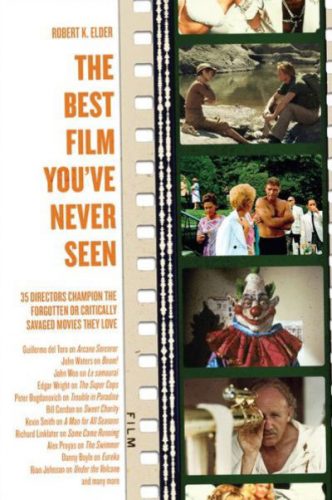
Journalist Robert K. Elder has authored one of those cool, catch-all books about the movies that should appeal to film fans of every stripe and persuasion. The Best Films You’ve Never Seen compiles interviews with directors defending their favorite overlooked or critically dismissed films. Elder, editor-in-chief for Chicago Sun-Times Media Local, calls such films “outcast classics.”
Whether it’s Danny Boyle (28 Days Later) digging into the erratic pleasures of Nicolas Roeg’s Eureka, John Dahl (Rounders) discussing David Lynch’s Twin Peaks: Fire Walk with Me or Richard Linklater (Before Sunrise) extolling the virtues of Vincente Minnelli’s Some Came Running, Elder’s book is a treasure trove for anyone interested in the distinct pleasures of (re)discovering great — flawed, strange, difficult, but great — movies. EW caught up with Elder before he heads to the Bijou (on 13th Avenue) to host the screening of A Man For All Seasons and to discuss his book 7 pm Thursday, Oct. 17.
Why a book on critically savaged or forgotten films as presented by the directors who love them?
My challenge to these directors was: Let’s rewrite film history together. I wanted them to defend movies that were close to their hearts but for some reason had been dismissed by critics and/or lost to the general public. It’s the kind of conversations film geeks have all the time — but I wanted to give it the actual weight of a book and try to bring these films to new audiences.
Between concept and execution, how did this project change? Did it turn out how you expected, and/or were you surprised by the results?
The project itself didn’t change, though I did — I found myself loving films because the directors I talked to loved them, even if they were not my cup of tea upon first viewing. I also found myself arguing with directors about what belonged in the book and what didn’t. For example, Kevin Smith chose A Man For All Seasons, which we are showing [Oct. 17] at the Bijou. Since it swept the Oscars in 1966, including Best Actor and Best Film, I argued that it didn’t belong in the book. But Smith stuck to his guns and said, “That makes it even more tragic, because no one ever talks about it anymore.” And he was right. It’s an extraordinary movie that everyone needs to see.
If you can answer sweepingly, do you find there are universal qualities in great movies that somehow fall through the cracks? Why do these movies fail in the broad sense?
Some, like Orson Welles’ F For Fake, were simply ahead of their time. Audiences weren’t ready for them. Others might have failed commercially, but have longer lives with audiences (It’s a Wonderful Life, though not in the book, is the prime example). Still others were smaller movies that hit a chord with the directors who chose them: The Super Cops was hugely influential on Edgar Wright (Hot Fuzz), and Atom Egoyan loved The Homecoming so much that he later cast star Ian Holm in The Sweet Hereafter.
What are some of your favorite interviews?
I dare you to read John Waters praising Boom! — a box office bomb with Elizabeth Taylor and Richard Burton — and not see the world through his eyes. The same goes for Warm Bodies director Jonathan Levine’s reassessment of Can’t Stop the Music. That’s right, the Village People musical.
Finally, I noticed you haven’t had a chance to discuss your own personal forgotten or savaged classic. Is there one particular film you’d like to champion here?
I love a few films that never found an audience. First among them is Panic, one of two films made by Homicide: Life on the Street director Henry Bromell. It’s about two generations of hit men, played by Donald Sutherland and William H. Macy. I also think Robert Towne’s Without Limits — also starring Donald Sutherland — is amazing. It’s the second of two films about Steve Prefontaine, this one with Billy Crudup in the lead.