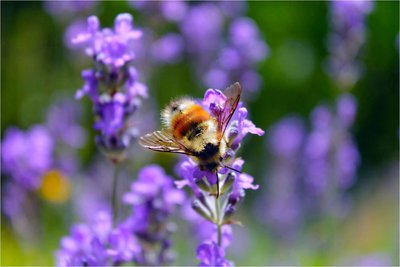
Most people are happy to see a decline in insects as the winter months set in. But beekeepers across America have watched their bees disappearing, and if they go away permanently then the effects could be dire. Last week the Oregon Department of Agriculture (ODA) announced that it will begin requiring specific label statements restricting use of products containing the active ingredients dinotefuran and imidacloprid, which have been linked to bee deaths.
“The problem is that every year bees are dying and not coming back,” Lisa Arkin, executive director of Beyond Toxics, says. “This is a topic that should be near and dear to everyone’s heart because bees pollinate everyone’s food.”
Beyond Toxics and other organizations cite studies that blame a class of pesticides called neonicotinoids for the drop off in bees. Dinotefuran and imidacloprid belong to the class, which many refer to as “neonics.”
On Nov. 21, Beyond Toxics took 12,000 signatures to the state capitol and presented them to Katy Coba, the director of the ODA. They highlighted a number of problems the epidemic of bee death has presented to Oregon, specifically naming an instance in Wilsonville where 50,000 bees died suddenly in a parking lot where neonics had been sprayed on linden trees.
“We take these incidents seriously and we are stepping up both our regulatory and educational efforts,” Coba said in a Nov. 21 press release. The agency says it will be strengthening its “outreach and education efforts to pesticide users regarding pollinator protection.” ODA is requiring, as a condition of annual registration for 2014, an Oregon-specific label statement on dinotefuran and imidacloprid products being sold or distributed prohibiting these products from being used on linden, basswood or Tilia tree species.
Coba said she also sent a letter to the Environmental Protection Agency requesting additional evaluation of these and other neonics to determine if national limitations should be placed on these pesticides.
Locally, businesses such as Jerry’s Home Improvement have included information in their pesticides aisle about the dangers of such chemicals as well as putting products known to harm bees in a less prominent position, both actions Arkin says are highly appreciated by activists.
Other groups such as Healthy Bees = Healthy Gardens have taken to grassroots measures to eliminate pesticide use person by person. Doug and Jen Hornaday, founders of Healthy Bees = Healthy Gardens, created a Friends of Healthy Bees pledge, which they say many have signed and has eliminated pesticide use in at least four neighborhoods around Eugene.
“This was a huge win for bees in our area,” Doug Hornaday says.
Beyond Toxics is currently working with the city of Eugene to employ measures to protect beekeepers and agriculture. The group is also working with the Oregon League of Conservation Voters in similar strides.