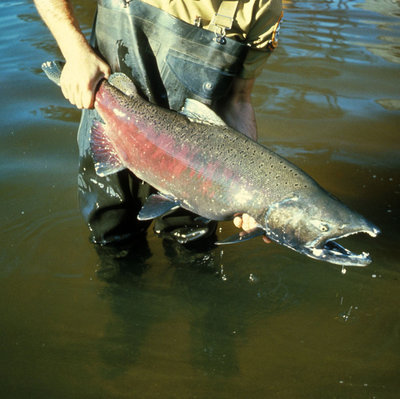
It’s a tough time to be a Chinook salmon, but members of the McKenzie Flyfishers and the Steamboaters are trying to make things easier for the threatened fish. Concerned by what they say are poor management practices in hatcheries that allow wild fish to breed with hatchery fish, changing their genetic integrity and making them less fit for survival, the Western Environmental Law Center (WELC) filed a lawsuit Dec. 2 against the Oregon Department of Fish and Wildlife (ODFW) and the U.S. Army Corps of Engineers in a move to stop these agencies from violating the Endangered Species Act (ESA) and to encourage government agencies to work together to come up with a genetic management plan.
“The number of fish used by the fishery is far in excess of what is appropriate in the basin, particularly in the main stem where there is a lot of intermingling of hatchery and wild fish,” says Pete Frost, attorney for WELC. “To operate legally, the hatchery needs a genetic management plan, and there isn’t one for this hatchery. McKenzie Flyfishers is not going to prejudge what that plan may do, but at this stage they are seeking to compel these agencies to comply with the ESA.”
Chinook salmon are considered threatened in the Willamette River basin under the ESA. According to the lawsuit, 46,000 adult spring Chinook salmon returned to the McKenzie River in 1941, but with the introduction of dams and hatchery practices, those numbers have dropped dramatically. Studies of steelhead and trout show that fish raised in hatcheries don’t face the same obstacles to survival that wild fish face, and as they breed and pass along their genes, they lose their natural ability to survive that wild fish have developed over many generations. Dave Thomas, secretary for the McKenzie Flyfishers, says that when hatchery salmon genes mix with wild salmon genes, the original genetic integrity of the salmon becomes lost.
According to Arlen Thomason, a retired molecular biologist and board member of the McKenzie Flyfishers, about 1,000 wild Chinook salmon now return to the McKenzie River, supplemented by 8,000 hatchery-raised salmon.
“There’s a big difference between hatchery salmon and wild salmon,” Thomas says. “The descendents of those hatchery fish are less fit, and when they interbreed, they contaminate the wild population.”
ODFW Fish Communications Coordinator Jessica Sall says that it is not ODFW’s policy to comment on active lawsuits. The lawsuit compels ODFW and the U.S. Army Corps of Engineers to release fewer hatchery spring Chinook salmon into the McKenzie River and requests that the rate of genetic introgression be better managed to prevent further intermingling and loss of genetic integrity.